Starvard.Retour
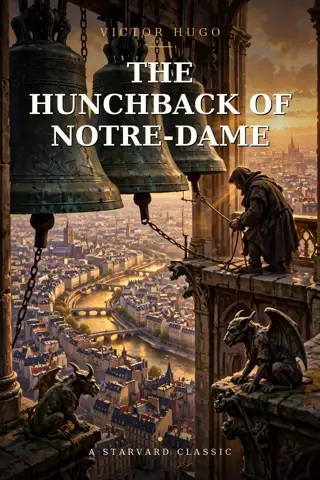
Cover of The Hunchback of Notre-Dame

Starvard · The Masters Library

The Hunchback of Notre-Dame

par Victor Hugo · 61 parties · about 15 hours 14 minutes de lecture

Finn, your Starvard guide

Bonjour, je m'appelle Finn et je vais t'aider à comprendre ce livre.

Le voici, expliqué comme si tu avais 10 ans :

Quasimodo est le sonneur de cloches sourd et bossu de la cathédrale Notre Dame, moqué par tout Paris, amoureux de la danseuse Esmeralda, qui est gentille avec lui une fois et qui attire l'attention d'hommes puissants et méchants. Hugo l'a écrit pour sauver la cathédrale elle-même, que Paris laissait tomber en ruine, et il l'a remplie de foules, de gargouilles et de tragédie.

À propos de Finn >

Le livre complet se lit en anglais. Voici tous les chapitres :

Chapitres

Preface2 min Chapter I: The Grand Hall26 min Chapter II: Pierre Gringoire16 min Chapter III: Monsieur the Cardinal12 min Chapter IV: Master Jacques Coppenole16 min Chapter V: Quasimodo12 min Chapter VI: Esmeralda4 min Chapter I: From Charybdis to Scylla5 min Chapter II: The Place de Grève4 min Chapter III: Kisses for Blows17 min Chapter IV: The Inconveniences of Following a Pretty Woman Through the Streets in the Evening7 min Chapter V: Result of the Dangers4 min Chapter VI: The Broken Jug34 min Chapter VII: A Bridal Night17 min Chapter I: Notre-Dame15 min Chapter II: A Bird’s-Eye View of Paris47 min Chapter I: Good Souls6 min Chapter II: Claude Frollo10 min Chapter III: Immanis Pecoris Custos, Immanior Ipse14 min Chapter IV: The Dog and His Master2 min Chapter V: More About Claude Frollo12 min Chapter VI: Unpopularity1 min Chapter I: Abbas Beati Martini18 min Chapter II: This Will Kill That28 min Chapter I: An Impartial Glance at the Ancient Magistracy20 min Chapter II: The Rat-Hole8 min Chapter III: History of a Leavened Cake of Maize38 min Chapter IV: A Tear for a Drop of Water17 min Chapter V: End of the Story of the Cake1 min Chapter I: The Danger of Confiding One’s Secret to a Goat26 min Chapter II: A Priest and a Philosopher Are Two Different Things17 min Chapter III: The Bells4 min Chapter IV: Ἀνάγκη24 min Chapter V: The Two Men Clothed in Black10 min Chapter VI: The Effect Which Seven Oaths in the Open Air Can Produce7 min Chapter VII: The Mysterious Monk14 min Chapter VIII: The Utility of Windows Which Open on the River15 min Chapter I: The Crown Changed Into a Dry Leaf17 min Chapter II: Continuation of the Crown Which Was Changed Into a Dry Leaf8 min Chapter III: End of the Crown Which Was Turned Into a Dry Leaf5 min Chapter IV: Lasciate Ogni Speranza—Leave All Hope Behind, Ye Who Enter Here27 min Chapter V: The Mother9 min Chapter VI: Three Human Hearts Differently Constructed30 min Chapter I: Delirium21 min Chapter II: Hunchbacked, One-Eyed, Lame8 min Chapter III: Deaf5 min Chapter IV: Earthenware and Crystal20 min Chapter V: The Key to the Red Door4 min Chapter VI: Continuation of the Key to the Red Door5 min Chapter I: Gringoire Has Many Good Ideas in Succession.—Rue des Bernardins17 min Chapter II: Turn Vagabond4 min Chapter III: Long Live Mirth14 min Chapter IV: An Awkward Friend36 min Chapter V: The Retreat in Which Monsieur Louis of France Says His Prayers56 min Chapter VI: Little Sword in Pocket2 min Chapter VII: Châteaupers to the Rescue4 min Chapter I: The Little Shoe62 min Chapter II: “La Creatura Bella Bianco Vestita”17 min Chapter III: The Marriage of Phoebus1 min Chapter IV: The Marriage of Quasimodo4 min Note8 min

Preface

A few years ago, while visiting or, rather, rummaging about Notre-Dame, the author of this book found, in an obscure nook of one of the towers, the following word, engraved by hand upon the wall:—

ΆΝÁΓΚΗ.

These Greek capitals, black with age, and quite deeply graven in the stone, with I know not what signs peculiar to Gothic caligraphy imprinted upon their forms and upon their attitudes, as though with the purpose of revealing that it had been a hand of the Middle Ages which had inscribed them there, and especially the fatal and melancholy meaning contained in them, struck the author deeply.

He questioned himself; he sought to divine who could have been that soul in torment which had not been willing to quit this world without leaving this stigma of crime or unhappiness upon the brow of the ancient church.

Afterwards, the wall was whitewashed or scraped down, I know not which, and the inscription disappeared. For it is thus that people have been in the habit of proceeding with the marvellous churches of the Middle Ages for the last two hundred years. Mutilations come to them from every quarter, from within as well as from without. The priest whitewashes them, the archdeacon scrapes them down; then the populace arrives and demolishes them.

Thus, with the exception of the fragile memory which the author of this book here consecrates to it, there remains today nothing whatever of the mysterious word engraved within the gloomy tower of Notre-Dame—nothing of the destiny which it so sadly summed up. The man who wrote that word upon the wall disappeared from the midst of the generations of man many centuries ago; the word, in its turn, has been effaced from the wall of the church; the church will, perhaps, itself soon disappear from the face of the earth.

It is upon this word that this book is founded.

March, 1831.