 Starvard.뒤로Starvard.뒤로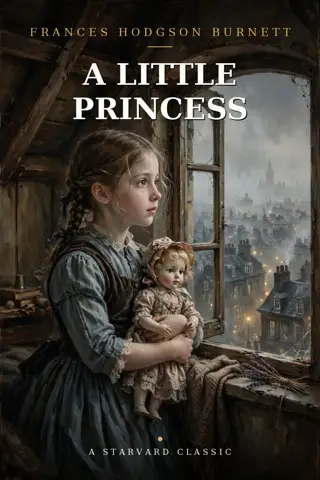
Starvard · The Masters Library

안녕하세요, 저는 Finn입니다. 이 책을 이해할 수 있도록 도와드릴게요.
10살 아이에게 설명하듯 말하면 이렇습니다:
Sara Crewe는 London 기숙학교의 스타 학생으로, 부유하고 다정하며 이야기하기에 뛰어난데, 아버지가 India에서 빈털터리로 죽었다는 소식이 오고 그녀는 하녀 소녀로 다락방에 옮겨져요. Sara는 자기가 변장한 공주인 척, 그리고 어쨌든 모든 사람을 왕족처럼 대접하는 것으로 살아남아요. 예의가 용기의 한 형태라는 이야기예요.
책 전체는 영어로 읽습니다. 모든 장은 여기 있습니다:
I do not know whether many people realize how much more than is ever written there really is in a story—how many parts of it are never told—how much more really happened than there is in the book one holds in one’s hand and pores over. Stories are something like letters. When a letter is written, how often one remembers things omitted and says, “Ah, why did I not tell them that?” In writing a book one relates all that one remembers at the time, and if one told all that really happened perhaps the book would never end. Between the lines of every story there is another story, and that is one that is never heard and can only be guessed at by the people who are good at guessing. The person who writes the story may never know all of it, but sometimes he does and wishes he had the chance to begin again.
When I wrote the story of “Sara Crewe” I guessed that a great deal more had happened at Miss Minchin’s than I had had time to find out just then. I knew, of course, that there must have been chapters full of things going on all the time; and when I began to make a play out of the book and called it A Little Princess, I discovered three acts full of things. What interested me most was that I found that there had been girls at the school whose names I had not even known before. There was a little girl whose name was Lottie, who was an amusing little person; there was a hungry scullery-maid who was Sara’s adoring friend; Ermengarde was much more entertaining than she had seemed at first; things happened in the garret which had never been hinted at in the book; and a certain gentleman whose name was Melchisedec was an intimate friend of Sara’s who should never have been left out of the story if he had only walked into it in time. He and Becky and Lottie lived at Miss Minchin’s, and I cannot understand why they did not mention themselves to me at first. They were as real as Sara, and it was careless of them not to come out of the story shadowland and say, “Here I am—tell about me.” But they did not—which was their fault and not mine. People who live in the story one is writing ought to come forward at the beginning and tap the writing person on the shoulder and say, “Hallo, what about me?” If they don’t, no one can be blamed but themselves and their slouching, idle ways.
After the play of A Little Princess was produced in New York, and so many children went to see it and liked Becky and Lottie and Melchisedec, my publishers asked me if I could not write Sara’s story over again and put into it all the things and people who had been left out before, and so I have done it; and when I began I found there were actually pages and pages of things which had happened that had never been put even into the play, so in this new Little Princess I have put all I have been able to discover.
Frances Hodgson Burnett.