 Starvard.뒤로Starvard.뒤로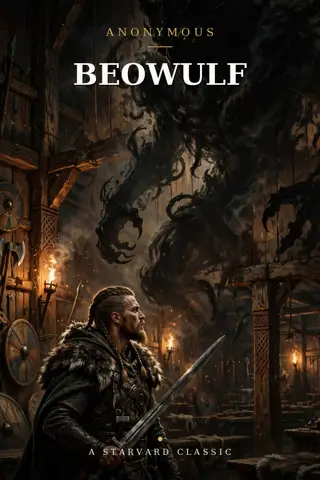
Starvard · The Masters Library

안녕하세요, 저는 Finn입니다. 이 책을 이해할 수 있도록 도와드릴게요.
10살 아이에게 설명하듯 말하면 이렇습니다:
Grendel이라는 괴물이 Denmark 왕의 큰 홀을 공포에 떨게 하며 밤마다 전사들을 잡아먹는데, 젊은 영웅 Beowulf가 바다를 건너 와 맨손으로 괴물과 싸우고, 그다음 검은 호수 아래에서 그 어미와 싸우며, 마침내 늙은 왕이 되어 용과 마주해요. 영어로 된 가장 오래된 장편 시로, 천 년 된 작품이며, 술관과 장례식의 세계에서 불렸어요.
책 전체는 영어로 읽습니다. 모든 장은 여기 있습니다:
The present work is a modest effort to reproduce approximately, in modern measures, the venerable epic, Beowulf. Approximately, I repeat; for a very close reproduction of Anglo-Saxon verse would, to a large extent, be prose to a modern ear.
The Heyne-Socin text and glossary have been closely followed. Occasionally a deviation has been made, but always for what seemed good and sufficient reason. The translator does not aim to be an editor. Once in a while, however, he has added a conjecture of his own to the emendations quoted from the criticisms of other students of the poem.
This work is addressed to two classes of readers. From both of these alike the translator begs sympathy and co-operation. The Anglo-Saxon scholar he hopes to please by adhering faithfully to the original. The student of English literature he aims to interest by giving him, in modern garb, the most ancient epic of our race. This is a bold and venturesome undertaking; and yet there must be some students of the Teutonic past willing to follow even a daring guide, if they may read in modern phrases of the sorrows of Hrothgar, of the prowess of Beowulf, and of the feelings that stirred the hearts of our forefathers in their primeval homes.
In order to please the larger class of readers, a regular cadence has been used, a measure which, while retaining the essential characteristics of the original, permits the reader to see ahead of him in reading.
Perhaps every Anglo-Saxon scholar has his own theory as to how Beowulf should be translated. Some have given us prose versions of what we believe to be a great poem. Is it any reflection on our honored Kemble and Arnold to say that their translations fail to show a layman that Beowulf is justly called our first epic? Of those translators who have used verse, several have written from what would seem a mistaken point of view. Is it proper, for instance, that the grave and solemn speeches of Beowulf and Hrothgar be put in ballad measures, tripping lightly and airily along? Or, again, is it fitting that the rough martial music of Anglo-Saxon verse be interpreted to us in the smooth measures of modern blank verse? Do we hear what has been beautifully called “the clanging tread of a warrior in mail”?
Of all English translations of Beowulf, that of Professor Garnett alone gives any adequate idea of the chief characteristics of this great Teutonic epic.
The measure used in the present translation is believed to be as near a reproduction of the original as modern English affords. The cadences closely resemble those used by Browning in some of his most striking poems. The four stresses of the Anglo-Saxon verse are retained, and as much thesis and anacrusis is allowed as is consistent with a regular cadence. Alliteration has been used to a large extent; but it was thought that modern ears would hardly tolerate it on every line. End-rhyme has been used occasionally; internal rhyme, sporadically. Both have some warrant in Anglo-Saxon poetry. (For end-rhyme, see here, see here; for internal rhyme, see here, see here.)
What Gummere1 calls the “rime-giver” has been studiously kept; viz., the first accented syllable in the second half-verse always carries the alliteration; and the last accented syllable alliterates only sporadically. Alternate alliteration is occasionally used as in the original. (See here, see here.)
No two accented syllables have been brought together, except occasionally after a caesural pause. (See here and see here.) Or, scientifically speaking, Sievers’s C type has been avoided as not consonant with the plan of translation. Several of his types, however, constantly occur; e.g. A and a variant (/ × | / ×) (/ × × | / ×); B and a variant (× / | × /) (× × / | × /); a variant of D (/ × | / × ×); E (/ × × | /). Anacrusis gives further variety to the types used in the translation.
The parallelisms of the original have been faithfully preserved. (E.g., see here and see here: “Lord” and “Wielder of Glory”; see here, see here, see here; see here and see here; see here and see here; see here and see here.) Occasionally, some loss has been sustained; but, on the other hand, a gain has here and there been made.
The effort has been made to give a decided flavor of archaism to the translation. All words not in keeping with the spirit of the poem have been avoided. Again, though many archaic words have been used, there are none, it is believed, which are not found in standard modern poetry.
With these preliminary remarks, it will not be amiss to give an outline of the story of the poem.