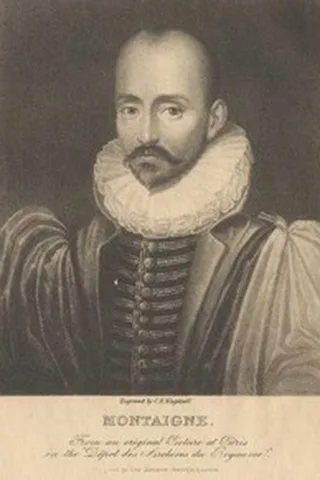

Hello, my name is Finn, and I'm going to help you understand this book.
Here it is, explained like you are 10:
Montaigne was a French judge who quit his job, climbed into a tower, and started writing about himself. He wrote about thumbs, smells, coaches, cannibals, sleep, and his cat. He knew he changed his mind all the time, so he kept it all in. Reading him is like talking to the wisest, funniest old friend in the world, who just happens to have lived four hundred years ago.
Montaigne retired from public life at thirty-eight, telling his family he was done, and settled into a tower library with a thousand books and beams painted with quotations. There, over twenty years and three published books, he wrote essays about himself as a way of studying mankind: his memory, his digestion, his fears, his cat, his opinions about everything from thumbs to cannibals to the education of children.
He invented the form he named: the essai, an attempt, a trial. He does not lecture. He weighs, doubts, contradicts himself, and writes down the weather of his own mind, because, as he says, he has no being except in halves. His motto question, 'What do I know?', hangs over every page.
Nobody reads all 107 essays straight through on the first try, and Montaigne would not have asked you to. Dip in anywhere, follow the titles that call to you, and let the short ones lead you to the long rivers like the Apology for Raymond Sebond and Of Experience. You are not reading a system; you are making a friend across four centuries.
In 1571 a French judge retired to a tower on his estate to think, and invented the essay by writing about whatever crossed his mind: books, thumbs, cannibals, coaches, drunkenness, his cat. Montaigne studies himself honestly because, he says, every man bears the whole stamp of the human condition. Three books, one hundred and seven essays, and the most companionable voice of the Renaissance.
The first chapter
READER, thou hast here an honest book; it doth at the outset forewarn thee that, in contriving the same, I have proposed to myself no other than a domestic and private end: I have had no consideration at all either to thy service or to my glory. My powers are not capable of any such design. I have dedicated it to the particular commodity of my kinsfolk and friends, so that, having lost me (which they must do shortly), they may therein recover some traits of my conditions and humours, and by that means preserve more whole, and more life-like, the knowledge they had of me. Had my intention been to seek the world’s favour, I should surely have adorned myself with borrowed beauties: I desire therein to be viewed as I appear in mine own genuine, simple, and ordinary manner, without study and artifice: for it is myself I paint. My defects are therein to be read to the life, and any imperfections and my natural form, so far as public reverence hath permitted me. If I had lived among those nations, which (they say) yet dwell under the sweet liberty of nature’s primitive laws, I assure thee I would most willingly have painted myself quite fully and quite naked. Thus, reader, myself am the matter of my book: there’s no reason thou shouldst employ thy leisure about so frivolous and vain a subject. Therefore farewell.
Continue: Book I: That Men by Various Ways Arrive at the Same End
Source: Project Gutenberg. Author died 1592. Charles Cotton translation. Public domain worldwide. Share this book: WhatsApp
 Starvard