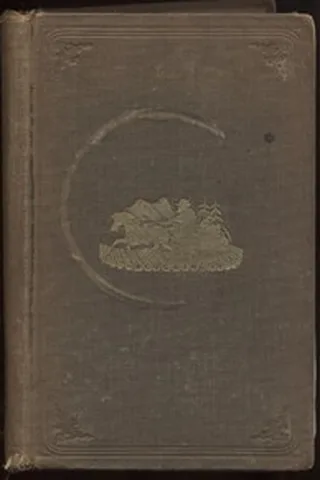

Hello, my name is Finn, and I'm going to help you understand this book.
Here it is, explained like you are 10:
Before he was famous, Mark Twain headed west to Nevada and California chasing silver, adventure, and a new start. He rode stagecoaches, tried mining, met rough characters, and failed at almost everything except noticing how funny it all was. This book mixes true memories with tall tales, deserts, storms, and wild frontier towns. Twain exaggerates, sure, but his eye for people is honest. It is a long, laughing ride across young America.
In 1861 the young Mark Twain, fleeing the Civil War and a brief, comic career as a Confederate volunteer, followed his brother Orion to Nevada Territory, where Orion had a government post and Sam Clemens had hopes of getting rich. He failed at mining, succeeded at newspaper work, and turned the whole scramble into this book in 1872, his sequel in spirit to The Innocents Abroad and one of the funniest accounts of the American West ever written.
Seventy nine loose, digressive chapters ride the overland stage across the plains, endure sagebrush and alkali, chase silver fortunes in Nevada, visit Salt Lake City and the Mormons, report for the Virginia City paper, retell tall tales like the celebrated jumping frog's companion pieces, and end with a voyage to Hawaii, then the Sandwich Islands, and California. Appendices treat Mormon history with unexpected seriousness. Twain mixes fact, embroidery and outright yarn spinning, and warns you, cheerfully, not to trust him too far.
Under the jokes lies a real record of a raw, violent, hopeful frontier. Western historians quote it and humorists study it. Readers who like their history loud, tall and true in feeling will roar through it.
Mark Twain went west in 1861 as secretary to his brother, the new secretary of Nevada Territory, and spent years knocking about mining camps, newspaper offices, and the Sandwich Islands. Roughing It, published in 1872, turns those years into seventy nine chapters of stagecoach rides, silver fever, and tall tales, with appendices on Mormon history. It offers Twain before fame, learning the comic voice America still quotes.
Mark Twain called this book, in the prefatory he signed as the author, merely a personal narrative, a record of several years of variegated vagabondizing, meant to help the resting reader while away an idle hour. In 1861 he fled the Civil War westward as private secretary to his brother Orion, secretary of Nevada Territory, and Roughing It, published in 1872, turns that journey and the years after it into 79 chapters and two appendices.
The stagecoach ride west opens it: the Pony Express, Slade the outlaw superintendent, Salt Lake City and Brigham Young, then Carson City, silver fever, prospecting, quartz mills, flush times in Virginia City, San Francisco and an earthquake, and finally the Sandwich Islands, their legislature, a royal funeral and the volcano. The chapter headings, reproduced from the contents, are comic catalogues in themselves. Appendix A sketches Mormon history and Appendix B gives the Mountain Meadows Massacre.
Twain warns that some incidents are overdrawn; the tall tale is part of the contract. Underneath sits the best eyewitness account of the mining West in its first frantic decade, by the writer who invented its legend.
Edition: Text: Project Gutenberg ebook 3177.
The first chapter
This book is merely a personal narrative, and not a pretentious history or a philosophical dissertation. It is a record of several years of variegated vagabondizing, and its object is rather to help the resting reader while away an idle hour than afflict him with metaphysics, or goad him with science. Still, there is information in the volume; information concerning an interesting episode in the history of the Far West, about which no books have been written by persons who were on the ground in person, and saw the happenings of the time with their own eyes. I allude to the rise, growth and culmination of the silver-mining fever in Nevada--a curious episode, in some respects; the only one, of its peculiar kind, that has occurred in the land; and the only one, indeed, that is likely to occur in it.
Yes, take it all around, there is quite a good deal of information in the book. I regret this very much; but really it could not be helped: information appears to stew out of me naturally, like the precious ottar of roses out of the otter. Sometimes it has seemed to me that I would give worlds if I could retain my facts; but it cannot be. The more I calk up the sources, and the tighter I get, the more I leak wisdom. Therefore, I can only claim indulgence at the hands of the reader, not justification.
THE AUTHOR.
Source: Project Gutenberg. Published 1872. Author died 1910. Public domain worldwide. Share this book: WhatsApp
 Starvard