
Hello, my name is Finn, and I'm going to help you understand this book.
Here it is, explained like you are 10:
Dr. Primrose is a kind country priest with a good wife and six children. At first they have plenty: a fine house, money saved, and happy days by the fire. Then bad luck comes again and again. The money is lost, the house burns, and worse troubles follow, even prison. But the family does not stop loving each other, and they do not stop being kind. That is the whole secret of this gentle story.
Oliver Goldsmith published The Vicar of Wakefield in 1766, and readers have loved it ever since for its warmth. The teller is Dr. Primrose himself, a country clergyman who opens his story in comfort: a good living, a devoted wife, and six children he is absurdly proud of, two daughters ready for the world and sons full of plans.
Then the losses begin, and they do not stop. A merchant's failure wipes out the family's fortune. They move to a poorer parish, try to keep up appearances, and are cheated and mocked. Their house burns. One daughter is betrayed by the squire who seemed their friend; the vicar lands in prison for debt, preaching to his fellow prisoners. Yet the family's tone never turns bitter: they joke, sing, and forgive.
Goldsmith was often poor, in debt, and beholden to booksellers himself, which may explain the book's tenderness toward failure. It lasts because it argues, without preaching, that a family's wealth is its character. Generations of readers, including Goethe and Dickens, have kept it by them as the quiet novel that consoles.
Oliver Goldsmith published The Vicar of Wakefield in 1766. Dr. Primrose, a country clergyman, begins rich in the only wealth he values: a wife, six children, and a contented parish. Then fortune falls, and falls again: money lost, home burned, a daughter betrayed, a son imprisoned, and the vicar himself jailed for debt. Through it all the family keeps its gentleness, and the novel keeps its smile.
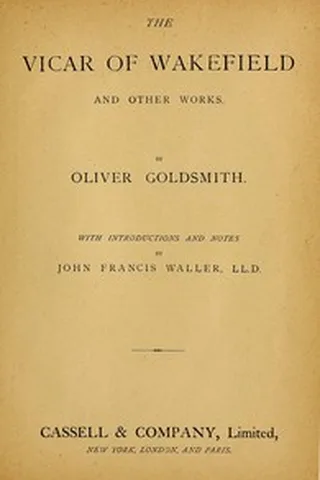
The title page calls it a tale, supposed to be written by himself, and sets a Latin motto over it: hope, ye miserable; beware, ye fortunate. Goldsmith's own advertisement then disarms the critics in advance: there are an hundred faults in this thing, he says, and an hundred things might be said to prove them beauties, but a book may be amusing with numerous errors.
The advertisement also gives the hero his measure: Dr. Primrose unites in himself the three greatest characters upon earth, a priest, an husbandman, and the father of a family, ready to teach and ready to obey, simple in affluence and majestic in adversity. Thirty two chapters follow, from the description of the family of Wakefield through family misfortunes, the happiness of a country fire side, and fresh calamities, to the prison chapters near the close.
It is a comedy that walks through sorrow and comes out smiling. Goldsmith asks, in the advertisement, whom such a character can please in an age of opulence; two and a half centuries have answered: nearly everyone.
Edition: Text: Project Gutenberg ebook 2667.
The first chapter
There are an hundred faults in this Thing, and an hundred things might be said to prove them beauties. But it is needless. A book may be amusing with numerous errors, or it may be very dull without a single absurdity. The hero of this piece unites in himself the three greatest characters upon earth; he is a priest, an husbandman, and the father of a family. He is drawn as ready to teach, and ready to obey, as simple in affluence, and majestic in adversity. In this age of opulence and refinement whom can such a character please? Such as are fond of high life, will turn with disdain from the simplicity of his country fire-side. Such as mistake ribaldry for humour, will find no wit in his harmless conversation; and such as have been taught to deride religion, will laugh at one whose chief stores of comfort are drawn from futurity.
OLIVER GOLDSMITH.
Source: Project Gutenberg. Published 1766. Author died 1774. Public domain worldwide. Share this book: WhatsApp
 Starvard