
Hello, my name is Finn, and I'm going to help you understand this book.
Here it is, explained like you are 10:
Catherine Sloper is quiet and plain, and she will one day be rich. Her father is a clever doctor who loves her but does not think much of her mind. Then Morris Townsend comes to call. He is good looking, kind in his words, and poor. Catherine falls in love. Her father says Morris only wants her money, and he will not allow the marriage. Catherine must choose what to do, and live with it.
Catherine Sloper lives with her widowed father in a fine house on Washington Square in New York. She is dutiful, plain spoken, and not quick in company, and her father, Dr. Austin Sloper, a brilliant doctor, privately judges her dull. Her lively Aunt Penniman loves romance and matchmaking. Into this house comes Morris Townsend, handsome, charming, and without money or work, and Catherine, who has never been courted, gives him her whole heart.
Dr. Sloper investigates Morris and concludes he is a fortune hunter. When Catherine will not give him up, the doctor takes her to Europe for a year, hoping distance will cool her, and threatens to cut her inheritance if she marries without his consent. Morris, learning the money may never come, breaks the engagement himself. Catherine refuses every later chance, even Morris again years afterward, and settles into a calm, self possessed spinsterhood.
Henry James published the novel in 1881, and it remains his most approachable story: short, clear, and quietly devastating. He takes no side cheaply. The father is right about Morris and still cruel, Catherine seems passive and proves strongest, and the plain style lets small conversations carry the weight of a whole life.
Catherine Sloper is plain, shy, and very rich, the only child of Dr. Austin Sloper, a celebrated New York physician. When the handsome, penniless Morris Townsend courts her, her father is certain the man wants her fortune, not her, and forbids the match. Henry James, in this short, sharp novel first published in 1881, watches three stubborn people hold their ground until love, money, and pride have each taken their toll.
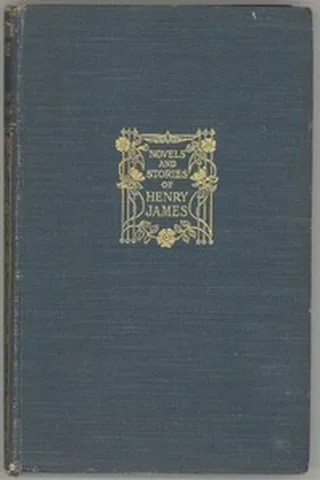
The title page of this text reads Washington Square by Henry James, Macmillan and Co., London, 1921, and the copyright page states the fact that matters most: first published in 1881. The Project Gutenberg text was transcribed from that 1921 Macmillan edition, so the wording here is the early novel as its later readers inherited it, forty years on from its first appearance.
Chapter One opens not with Catherine but with her father. James spends his first pages on Dr. Sloper: a scholarly, witty, thoroughly honest physician, a local celebrity in New York, whose learning and skill were evenly balanced and who always left behind him an inscrutable prescription. Only through that careful portrait of reputation and judgment do we reach his marriage, his dead son, and his daughter.
Read the opening as the book's method in miniature. James establishes how a man is seen, and how he sees, before the quiet contest over Morris Townsend begins. The drama that follows is all drawing rooms and decisions, and its force comes from exactly this patience about character, money, and motive.
Edition: Transcribed from the Macmillan edition of 1921; first published in 1881. Text: Project Gutenberg ebook 2870.
The first chapter
DURING a portion of the first half of the present century, and more particularly during the latter part of it, there flourished and practised in the city of New York a physician who enjoyed perhaps an exceptional share of the consideration which, in the United States, has always been bestowed upon distinguished members of the medical profession. This profession in America has constantly been held in honour, and more successfully than elsewhere has put forward a claim to the epithet of “liberal.” In a country in which, to play a social part, you must either earn your income or make believe that you earn it, the healing art has appeared in a high degree to combine two recognised sources of credit. It belongs to the realm of the practical, which in the United States is a great recommendation; and it is touched by the light of science--a merit appreciated in a community in which the love of knowledge has not always been accompanied by leisure and opportunity. It was an element in Dr. Sloper’s reputation that his learning and his skill were very evenly balanced; he was what you might call a scholarly doctor, and yet there was nothing abstract in his remedies--he always ordered you to take something. Though he was felt to be extremely thorough, he was not uncomfortably theoretic, and if he sometimes explained matters rather more minutely than might seem of use to the patient, he never went so far (like some practitioners one has heard of) as to trust to the explanation alone, but always left behind him an inscrutable prescription. There were some doctors that left the prescription without offering any explanation at all; and he did not belong to that class either, which was, after all, the most vulgar. It will be seen that I am describing a clever man; and this is really the reason why Dr. Sloper had become a local celebrity. At the time at which we are chiefly concerned with him, he was some fifty years of age, and his popularity was at its height. He was very witty, and he passed in the best society of New York for a man of the world--which, indeed, he was, in a very sufficient degree. I hasten to add, to anticipate possible misconception, that he was not the least of a charlatan. He was a thoroughly honest man--honest in a degree of which he had perhaps lacked the opportunity to give the complete measure; and, putting aside the great good-nature of the circle in which he practised, which was rather fond of boasting that it possessed the “brightest” doctor in the country, he daily justified his claim to the talents attributed to him by the popular voice. He was an observer, even a philosopher, and to be bright was so natural to him, and (as the popular voice said) came so easily, that he never aimed at mere effect, and had none of the little tricks and pretensions of second-rate reputations. It must be confessed that fortune had favoured him, and that he had found the path to prosperity very soft to his tread. He had married at the age of twenty-seven, for love, a very charming girl, Miss Catherine Harrington, of New York, who, in addition to her charms, had brought him a solid dowry. Mrs. Sloper was amiable, graceful, accomplished, elegant, and in 1820 she had been one of the pretty girls of the small but promising capital which clustered about the Battery and overlooked the Bay, and of which the uppermost boundary was indicated by the grassy waysides of Canal Street. Even at the age of twenty-seven Austin Sloper had made his mark sufficiently to mitigate the anomaly of his having been chosen among a dozen suitors by a young woman of high fashion, who had ten thousand dollars of income and the most charming eyes in the island of Manhattan. These eyes, and some of their accompaniments, were for about five years a source of extreme satisfaction to the young physician, who was both a devoted and a very happy husband. The fact of his having married a rich woman made no difference in the line he had traced for himself, and he cultivated his profession with as definite a purpose as if he still had no other resources than his fraction of the modest patrimony which on his father’s death he had shared with his brothers and sisters. This purpose had not been preponderantly to make money--it had been rather to learn something and to do something. To learn something interesting, and to do something useful--this was, roughly speaking, the programme he had sketched, and of which the accident of his wife having an income appeared to him in no degree to modify the validity. He was fond of his practice, and of exercising a skill of which he was agreeably conscious, and it was so patent a truth that if he were not a doctor there was nothing else he could be, that a doctor he persisted in being, in the best possible conditions. Of course his easy domestic situation saved him a good deal of drudgery, and his wife’s affiliation to the “best people” brought him a good many of those patients whose symptoms are, if not more interesting in themselves than those of the lower orders, at least more consistently displayed. He desired experience, and in the course of twenty years he got a great deal. It must be added that it came to him in some forms which, whatever might have been their intrinsic value, made it the reverse of welcome. His first child, a little boy of extraordinary promise, as the Doctor, who was not addicted to easy enthusiasms, firmly believed, died at three years of age, in spite of everything that the mother’s tenderness and the father’s science could invent to save him. Two years later Mrs. Sloper gave birth to a second infant--an infant of a sex which rendered the poor child, to the Doctor’s sense, an inadequate substitute for his lamented first-born, of whom he had promised himself to make an admirable man. The little girl was a disappointment; but this was not the worst. A week after her birth the young mother, who, as the phrase is, had been doing well, suddenly betrayed alarming symptoms, and before another week had elapsed Austin Sloper was a widower.
For a man whose trade was to keep people alive, he had certainly done poorly in his own family; and a bright doctor who within three years loses his wife and his little boy should perhaps be prepared to see either his skill or his affection impugned. Our friend, however, escaped criticism: that is, he escaped all criticism but his own, which was much the most competent and most formidable. He walked under the weight of this very private censure for the rest of his days, and bore for ever the scars of a castigation to which the strongest hand he knew had treated him on the night that followed his wife’s death. The world, which, as I have said, appreciated him, pitied him too much to be ironical; his misfortune made him more interesting, and even helped him to be the fashion. It was observed that even medical families cannot escape the more insidious forms of disease, and that, after all, Dr. Sloper had lost other patients beside the two I have mentioned; which constituted an honourable precedent. His little girl remained to him, and though she was not what he had desired, he proposed to himself to make the best of her. He had on hand a stock of unexpended authority, by which the child, in its early years, profited largely. She had been named, as a matter of course, after her poor mother, and even in her most diminutive babyhood the Doctor never called her anything but Catherine. She grew up a very robust and healthy child, and her father, as he looked at her, often said to himself that, such as she was, he at least need have no fear of losing her. I say “such as she was,” because, to tell the truth--But this is a truth of which I will defer the telling.
Source: Project Gutenberg. Published 1881. Author died 1916. Public domain worldwide. Share this book: WhatsApp
 Starvard