Starvard University · Learning How to Learn
The meta-skill: the ability to learn anything faster. Backed by decades of research on how memory and mastery actually work. Learn this once, use it forever.

The whole course in brief
The twelve lessons
Lesson 1
Every skill you will ever want sits behind the same locked door: the ability to learn. Learn to learn and you can pick up a language, an instrument, a profession, or a whole new career. It is the one skill that multiplies every other skill.
Here is the good news: learning science has figured out what works. Decades of lab research, distilled into a handful of techniques that consistently beat the way most people study. The bad news: most people study using the exact techniques research says do not work: re-reading, highlighting, and cramming.
This course replaces folk wisdom with what works: retrieval practice, spacing, interleaving, elaboration, chunking, and deliberate practice, plus the lifestyle factors, sleep and exercise, that make it all stick. Twelve lessons. No fluff. Your future self, the one who learns fast, starts here.
Lesson 2
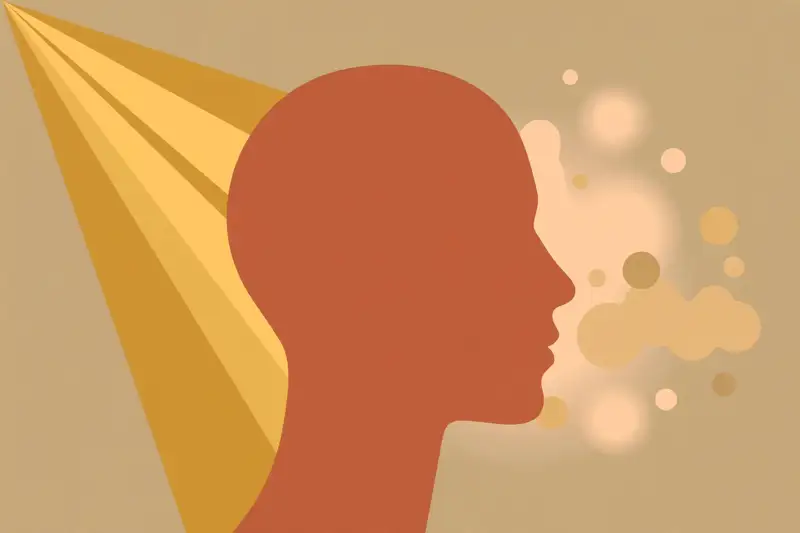
Your brain has two thinking modes. Focused mode is the spotlight: concentrated, analytical, step-by-step. You use it when you follow a recipe, debug code, or work a math problem. Diffuse mode is the floodlight: relaxed, wandering, connecting distant ideas. You use it in the shower, on a walk, falling asleep.
Here is the key: you cannot be in both at once, and learning needs both. Focused mode builds the pieces. Diffuse mode connects them into insight. That is why the answer pops into your head in the shower after you struggled all afternoon. The struggle loaded the pieces. The diffuse break connected them.
Use this on purpose. Study hard in focused bursts, then deliberately switch off: walk, nap, do dishes, stare out a window. Never grind on a stuck problem for hours. Load it, release it, return to it. The insight almost always arrives in the gap.
Lesson 3
The single most powerful learning technique is also the simplest: close the book and try to recall what you just learned. This is called retrieval practice, and it beats re-reading by a mile in study after study. The act of pulling information out of memory is what wires it in.
It feels worse, which is exactly why people avoid it. Re-reading feels fluent and smooth, like you know it. Testing yourself feels effortful and halting, like you do not. But fluency is an illusion, and effort is the mechanism. The struggle is not a sign it is not working. The struggle is the work.
Make it a habit. After every chapter, video, or lesson, pause and ask: what were the three main points? Use flashcards, practice problems, or blank-page recall. Test before you feel ready. Frequent low-stakes testing is the closest thing learning science has to a cheat code.
Lesson 4
Cramming works for tomorrow's test and fails for next month's life. Spacing, spreading practice over days and weeks, wins in every study ever conducted. The reason is beautifully simple: each time you recall something after partially forgetting it, the memory gets stronger. Forgetting a little is part of remembering a lot.
The practical version: review new material after one day, then three days, then a week, then two weeks. Each successful recall at the edge of forgetting deepens the groove. Apps like Anki automate the schedule, but the principle works with a shoebox of flashcards and a calendar.
Spacing also means planning ahead, which is the real lesson. Start early, in small doses, and let time do the heavy lifting. The student who studies 30 minutes a day for two weeks crushes the one who studies 7 hours the night before, and feels calmer doing it.
Lesson 5
Blocked practice is doing twenty of the same problem in a row. Interleaved practice is mixing problem types, topics, or skills in one session. Blocking feels smoother and scores higher in practice. Interleaving feels messier and scores far higher on the real test. Every time.
Why it works: real life never announces which skill to use. A test, a conversation, a job, they all mix everything together. Interleaving trains the hardest and most valuable sub-skill: choosing the right approach. Blocked practice trains execution. Interleaved practice trains judgment.
Apply it everywhere. Studying a language: mix vocabulary, grammar, and listening in one session. Learning guitar: mix chords, scales, and songs. Learning anything: shuffle the deck. It will feel harder. That feeling is the feeling of it working.
Lesson 6
Memory is a web, not a warehouse. New information sticks when it connects to things you already know. Elaboration is the deliberate act of building those connections: asking how, why, and what does this remind me of.
The techniques are simple. Ask why something is true, not just what is true. Connect new ideas to personal experiences. Make analogies: this concept is like that thing I already understand. Explain it in your own words instead of repeating the textbook's. Each connection is another path to the memory later.
The Feynman technique is elaboration weaponized: explain the concept as if teaching a smart 12-year-old, using plain language. Wherever you get stuck or reach for jargon, you found a gap. Go fill it, then explain again. Simple explanation is the ultimate test of real understanding.
Lesson 7
The most dangerous study techniques are the ones that feel effective. Highlighting feels productive. Re-reading feels fluent. Watching a great lecture feels like learning. Research says all three are among the weakest techniques available. Fluency is not knowledge.
The trap is metacognition: your judgment about your own learning is systematically wrong. Familiarity feels like mastery. When the text looks familiar on the second read, your brain reports I know this, but what it means is I have seen this. Seeing is not knowing.
The fix is calibration through testing. Never trust the feeling. Trust the recall. Can you write it from a blank page? Can you explain it without notes? Can you solve a new problem with it? If not, you do not know it yet, no matter how familiar it feels. Test, then trust.
Lesson 8
Watch a chess master glance at a board and instantly see the threat. They are not thinking faster. They are seeing chunks: meaningful patterns built from thousands of hours. A beginner sees 32 pieces. The master sees 5 familiar structures. Expertise is chunked perception.
Chunks form through focused practice with feedback. Learn a piece deeply, practice it until it is smooth, then link it to other pieces. A musician chunks scales into phrases, phrases into passages. A programmer chunks syntax into patterns, patterns into architectures. Each chunk frees mental space for the next level.
Build chunks deliberately. Break the skill into its smallest meaningful pieces. Master each piece with retrieval and feedback. Then practice combining them under realistic conditions. Rushing to the big picture before the pieces are solid is why most people plateau. Pieces first, patterns second, mastery third.
Lesson 9
Not all practice is equal. Mindless repetition, playing the song you already know, doing problems you can already solve, feels like practice and builds almost nothing. Deliberate practice is different: targeted, effortful, and feedback-driven.
The recipe: pick one specific weakness. Design an exercise just above your current ability. Get immediate feedback on what went wrong. Repeat with adjustments. This is uncomfortable by design. If practice feels easy, you are maintaining, not improving.
You do not need hours. Thirty focused minutes of deliberate practice beats three hours of noodling. Get a coach, a teacher, or a feedback system when you can, because self-assessment is unreliable. But even alone, recording yourself, checking answers, and comparing to models works. Target the weakness, get the feedback, repeat.
Lesson 10
Your brain does some of its most important learning while you are unconscious. During sleep, it replays the day's experiences, strengthens important connections, and prunes the noise. Students who sleep after learning remember more than students who stay up. The all-nighter is not a sacrifice for learning. It is a robbery of it.
The rules are simple: learn, then sleep. Review tricky material before bed. Get 7 to 9 hours, especially during intense learning periods. Naps count too: even 20 minutes helps consolidation. And protect sleep before tests. A rested brain outperforms a crammed one, reliably.
Exercise is the other hidden lever. Aerobic exercise grows new neurons, improves focus, and boosts the brain chemicals involved in memory. A 20-minute walk before studying is not procrastination. It is preparation. Move your body, sleep your hours, and your study time works twice as hard.
Lesson 11
Mistakes are data, but only if you examine them. Most people either avoid errors or ruminate on them. The learning move is different: analyze the error, extract the lesson, adjust the approach. Every wrong answer on a practice test is a gift, showing you exactly where the gap is.
This requires reframing failure emotionally. If mistakes feel like verdicts on your worth, you will avoid the hard problems where mistakes happen, and you will learn slowly. If mistakes feel like information, you will seek the edge of your ability, where all growth lives. Same errors, completely different trajectory.
Build an error log for anything important: what went wrong, why, what to change. Review it weekly. Patterns emerge that no amount of successful practice would reveal. The people who improve fastest are not the ones who fail least. They are the ones who mine their failures best.
Lesson 12
You now own the science. Here is how to assemble it into a system for learning anything. Step one: preview the territory. Skim the whole subject to build a mental map before diving deep. Step two: learn in focused 25 to 50 minute blocks with real breaks. Step three: after each block, close everything and recall the key points. Step four: space your reviews over days and weeks. Step five: interleave topics and practice retrieving under realistic conditions.
Step six: elaborate constantly, connecting new ideas to old ones and explaining them simply. Step seven: find feedback fast, through teachers, peers, or answer keys. Step eight: sleep on it, literally. Step nine: keep an error log and review it. That is the whole system, and it works for languages, instruments, exams, and careers.
Pick one thing you want to learn and start today with a single 25-minute focused block ending in blank-page recall. The system compounds. In a year, you will not recognize your own learning speed. The meta-skill is now yours. Use it on everything.
Graduation
You know what most people never learn: how learning works. Focused and diffuse modes, retrieval over re-reading, spacing over cramming, interleaving over blocking, elaboration, chunking, deliberate practice, sleep, and mining your mistakes. Pick the thing you have been putting off. Run the system. A year from now you will be unrecognizable.
Keep learning
This course is part of Starvard University, striving for greatness.
A note on accuracy: Much of what you read at Starvard was created with help from AI agents, working alongside people. We check what we can, but we cannot guarantee that everything here is true, current, or complete. If something really matters, your health, your money, a grade, a job, please verify it with a trusted source before you rely on it.