Starvard University · Sleep
The cheapest performance enhancer there is. Twelve plain-English lessons on falling asleep faster, sleeping deeper, and waking up sharp. Free, legal, and wildly effective.

The whole course in brief
The twelve lessons
Lesson 1
Sleep is not downtime. It is when your brain files memories, your body repairs tissue, your immune system does its heavy lifting, and your emotional brain resets. Shortchange it and everything degrades: focus, patience, creativity, metabolism, even how food tastes and how people seem. One bad night makes you a worse version of yourself. Chronic short sleep makes that the default version.
The research is almost comically one-sided. Sleeping under seven hours regularly is linked to worse memory, weaker immunity, higher injury risk, more weight gain, and worse mood. Meanwhile, good sleep improves literally everything people buy supplements for: energy, focus, recovery, emotional stability. It is free and it outperforms nearly every biohack on the market.
Most adults need seven to nine hours. If you need an alarm to wake up, feel groggy past 10am, or fall asleep the moment you sit still, you are probably under-slept. The fix is not complicated, which is what this course is for. Treat sleep as the foundation and watch the rest of your life get easier.
Lesson 2
If you adopt one sleep habit, make it this: wake up at the same time every day, including weekends, within about thirty minutes. Your body clock anchors to wake time far more than bedtime. A consistent wake time trains your brain to get sleepy at the right hour automatically, which makes falling asleep effortless instead of a nightly battle.
Sleeping in on weekends feels like recovery, but it is really social jet lag: shifting your clock two hours later, then suffering Monday like you flew across time zones. Keep the wake time steady and the weekend lie-in becomes unnecessary, because you are actually rested. If you must catch up, a short afternoon nap beats a three-hour sleep-in.
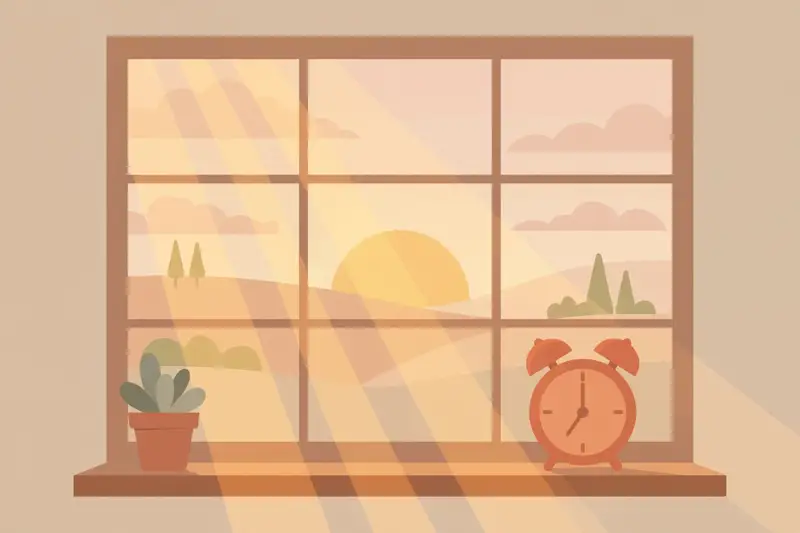
Get light immediately on waking. Open the curtains, step outside, turn on bright lights. Light in the first hour tells your brain "daytime started," which starts the countdown to sleepiness fourteen to sixteen hours later. Wake time plus morning light is the one-two punch that fixes most broken sleep.
Lesson 3
Your body clock runs on light. Bright light in the morning, especially sunlight, is the strongest signal that sets your circadian rhythm: it boosts daytime alertness, improves mood, and times the evening release of melatonin so you actually feel sleepy at bedtime. Ten minutes outside within an hour of waking does more than any supplement.
You do not need to stare at the sun. Just be outside: walk, drink coffee on the porch, stand on the balcony. Even on cloudy days, outdoor light is many times brighter than indoor lighting. If you wake before dawn or live somewhere dark in winter, a 10,000-lux light therapy lamp for twenty to thirty minutes is a solid substitute.
Flip it at night. Dim the lights in the last two hours before bed. Bright overhead light at 10pm tells your brain it is noon. Use lamps, candles, low warm light. Your ancestors had firelight; your biology still expects the day to get dimmer. Give it what it expects and sleep comes looking for you.
Lesson 4
Caffeine has a half-life of about six hours, which means the coffee you drink at 2pm is still quarter-strength at 2am. It does not just delay sleep onset. It fragments your sleep architecture, reducing the deep sleep that does the physical restoration. Many people who "sleep fine" on late caffeine are sleeping shallowly and have no idea.
Set a personal caffeine curfew: no caffeine after noon, or at the latest eight to ten hours before bed. If you sleep at 11pm, last call is 1 to 3pm. Switch the afternoon cup to decaf, tea, or water. The first week of an earlier cutoff often reveals that your "insomnia" was just chemistry.
Also respect the morning delay. Waiting sixty to ninety minutes after waking before your first coffee lets your natural cortisol peak do its job, which makes the caffeine hit harder later and avoids the afternoon crash cycle. Hydrate first, caffeinate second. Your adenosine system will thank you at midnight.
Lesson 5
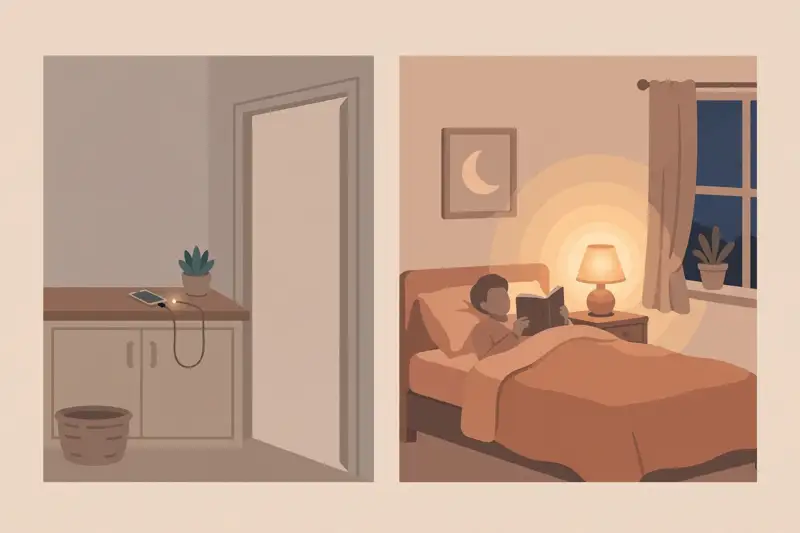
You cannot go from full sprint to sleep in five minutes. Your brain needs a runway. The last hour before bed should be deliberately boring: dim lights, no work, no intense shows, no doomscrolling. This is not about being virtuous. It is about giving your nervous system the signal that the day is over.
Build a simple routine and repeat it nightly: shower, stretch, read a physical book, write tomorrow's top three tasks to empty your mind, lights out. Routines work because they become cues. After a few weeks, step one of the routine starts making you sleepy. Athletes use pre-game routines for the same reason. You are an athlete of sleeping.
Handle the racing mind on paper. Keep a notepad by the bed. When tomorrow's worries arrive, write them down and let the paper hold them. Your brain loops on unfinished business; writing it down tells your brain it is captured and safe to release. Ten minutes of journaling beats an hour of ceiling-staring.
Lesson 6
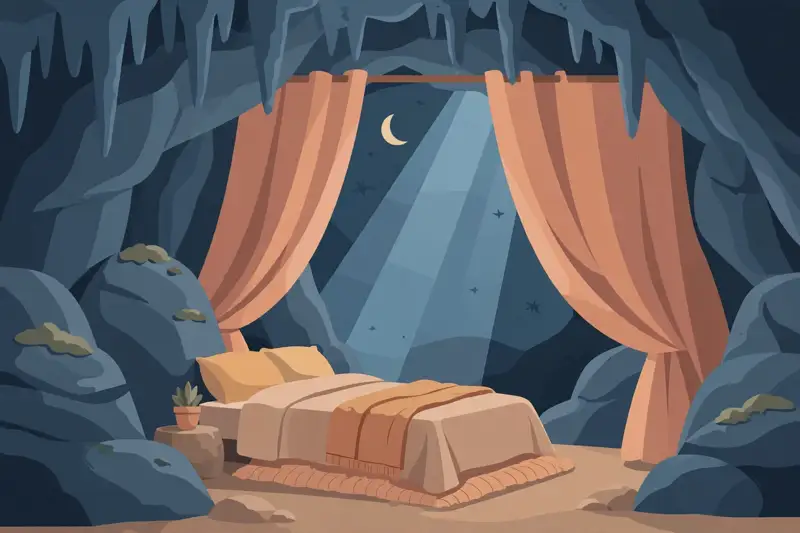
Your bedroom should be dark, cool, and quiet: cave conditions. Light, even small amounts, suppresses melatonin. Get blackout curtains or a sleep mask. Cover or remove glowing electronics. Your bedroom at night should be the darkest room in your life.
Cool beats warm. Your core body temperature needs to drop to initiate sleep, and a cool room helps it happen. Around 65 to 68 degrees Fahrenheit is the sweet spot for most people. A warm bath or shower an hour before bed actually helps too: the subsequent cooldown mimics the natural temperature drop and invites sleepiness.
Quiet matters more than you think. Earplugs or white noise handle partners, traffic, and neighbors. And reserve the bed for sleep and intimacy only. No laptops, no TV marathons, no scrolling in bed. When your brain associates the bed with sleep instead of entertainment, sleep arrives faster. Train the association.
Lesson 7
Naps are not laziness. They are a legitimate performance tool used by athletes, pilots, and high performers everywhere. Done right, a nap boosts alertness, mood, and learning. Done wrong, it wrecks your night. The difference is timing and length.
The sweet spot: twenty minutes, early afternoon, roughly six to eight hours after waking. Twenty minutes keeps you in light sleep, so you wake refreshed instead of groggy. Set an alarm. Longer naps dip into deep sleep, and waking from deep sleep feels like emerging from concrete. The only exception is the full ninety-minute cycle, which completes properly but eats your afternoon.
Never nap late. A 5pm nap borrows from tonight's sleep pressure and you will pay interest at midnight. If you are napping daily because nights are terrible, fix the nights first. Naps supplement good sleep. They cannot replace it.
Lesson 8
Alcohol is the most misunderstood sleep aid in history. It helps you fall asleep faster, then destroys the second half of your night: fragmented sleep, suppressed REM, more wake-ups, worse restoration. You were unconscious, not rested. That is why drinking makes mornings feel like mild poisoning. They were.
REM sleep, the dreaming stage critical for emotional processing and memory, is especially sensitive to alcohol. Even two drinks measurably reduce it. Regular evening drinking trains your brain to expect sedation, making natural sleep harder over time. The "nightcap" is borrowing from tomorrow at terrible interest.
Set a simple rule: no alcohol within three to four hours of bed, and keep it moderate when you do drink. Notice the difference on dry nights: deeper sleep, clearer mornings, better mood. Most people who try two alcohol-free weeks report the sleep improvement alone is worth continuing. The data from your own body is the most convincing study.
Lesson 9
Lying awake trying to force sleep is like trying to fall while holding onto a cliff. It does not work, and the effort makes it worse. Use the twenty-minute rule: if you have been awake for about twenty minutes, get up. Go to another dim room, read something boring, and return only when sleepy. This breaks the association between your bed and frustrated wakefulness.
Do not check the clock. Clock-watching turns a bad night into math anxiety: "if I fall asleep NOW I get four hours..." Cover it, turn it around, put the phone face down. The time does not matter. What matters is staying calm, because stress hormones are the enemy of sleep and nothing raises them like sleep anxiety.
For the racing mind, try the cognitive shuffle: pick a random letter and slowly name objects starting with it, visualizing each one. Boring, random imagery occupies the brain just enough to stop the worry loops. And remember: one bad night is not a crisis. Your body will be sleepier tomorrow, which often fixes itself. Do not catastrophize a single night.
Lesson 10
Sleep debt accumulates. Sleeping six hours when you need eight leaves a two-hour deficit, and after a week you are carrying a full night of missing sleep. The cruel part: you stop noticing. Studies show sleep-deprived people rate their performance as fine while their actual performance keeps dropping. You cannot feel how impaired you are.
You can pay it back, partially. A few nights of nine hours, plus strategic naps, will dig you out of a moderate deficit. Weekend catch-up helps but does not fully erase chronic debt, and the shifting schedule creates its own problems. The real fix is structural: a schedule that gives you enough sleep on ordinary days, not heroic recovery on weekends.
Think of it like money. A little debt occasionally is manageable. Chronic debt compounds into real damage: metabolic, immune, cognitive. The interest rate on sleep debt is your health. Pay it down with consistent nights, not with the fantasy that you will "catch up later." Later is now.
Lesson 11
Wearables made sleep tracking popular, but most people track the wrong things or obsess over noise. The numbers that matter: total sleep time, consistency of schedule, and how you feel during the day. A device can estimate the first two. Only you know the third, and it is the most important.
Do not chase perfect sleep scores. Consumer devices estimate sleep stages with real error margins, and stressing about a bad "score" can itself ruin sleep. This even has a name: orthosomnia, anxiety about perfect sleep metrics. Use the data as a rough trend, not a nightly grade. Direction matters more than digits.
The best tracking is a simple morning note: bedtime, wake time, and a 1-to-5 rating of how rested you feel. After two weeks, patterns emerge: the late caffeine, the scrolling nights, the alcohol evenings. Your own data will teach you exactly which habits help and which hurt. Then adjust one thing at a time.
Lesson 12
Here is the whole course as a one-week reset. Pick a wake time and hold it all seven days. Get outside within an hour of waking. Caffeine curfew at eight hours before bed. Screens off and lights low for the last hour. Bedroom dark, cool, quiet. No alcohol within four hours of bed. Nap only if needed: twenty minutes, early afternoon.
Do not try to fix everything on night one. Layer it in: wake time and morning light on days one and two, caffeine curfew on day three, wind-down routine on day four, bedroom upgrades on day five. By the weekend you will feel the difference, and feeling it is what makes the habits stick.
Then keep the skeleton forever: consistent wake time, morning light, caffeine curfew, dark cool bedroom. Those four carry eighty percent of the benefit. Everything else is optimization. Sleep is the cheapest performance enhancer there is, and you just bought a lifetime supply. Use it.
Graduation
Same wake time. Morning sunlight. Caffeine curfew. A real wind-down. A dark, cool, quiet cave. Smart naps, honest alcohol rules, the twenty-minute rule for bad nights, and respect for sleep debt. That is Sleep 101. It costs nothing, it is legal everywhere, and it makes everything else in your life work better. Go to bed.
Keep learning
This course is part of Starvard University, striving for greatness.
A note on accuracy: Much of what you read at Starvard was created with help from AI agents, working alongside people. We check what we can, but we cannot guarantee that everything here is true, current, or complete. If something really matters, your health, your money, a grade, a job, please verify it with a trusted source before you rely on it.