 Starvard
What Actually Works Before 8 AM (It Is Not What the Gurus Sell)
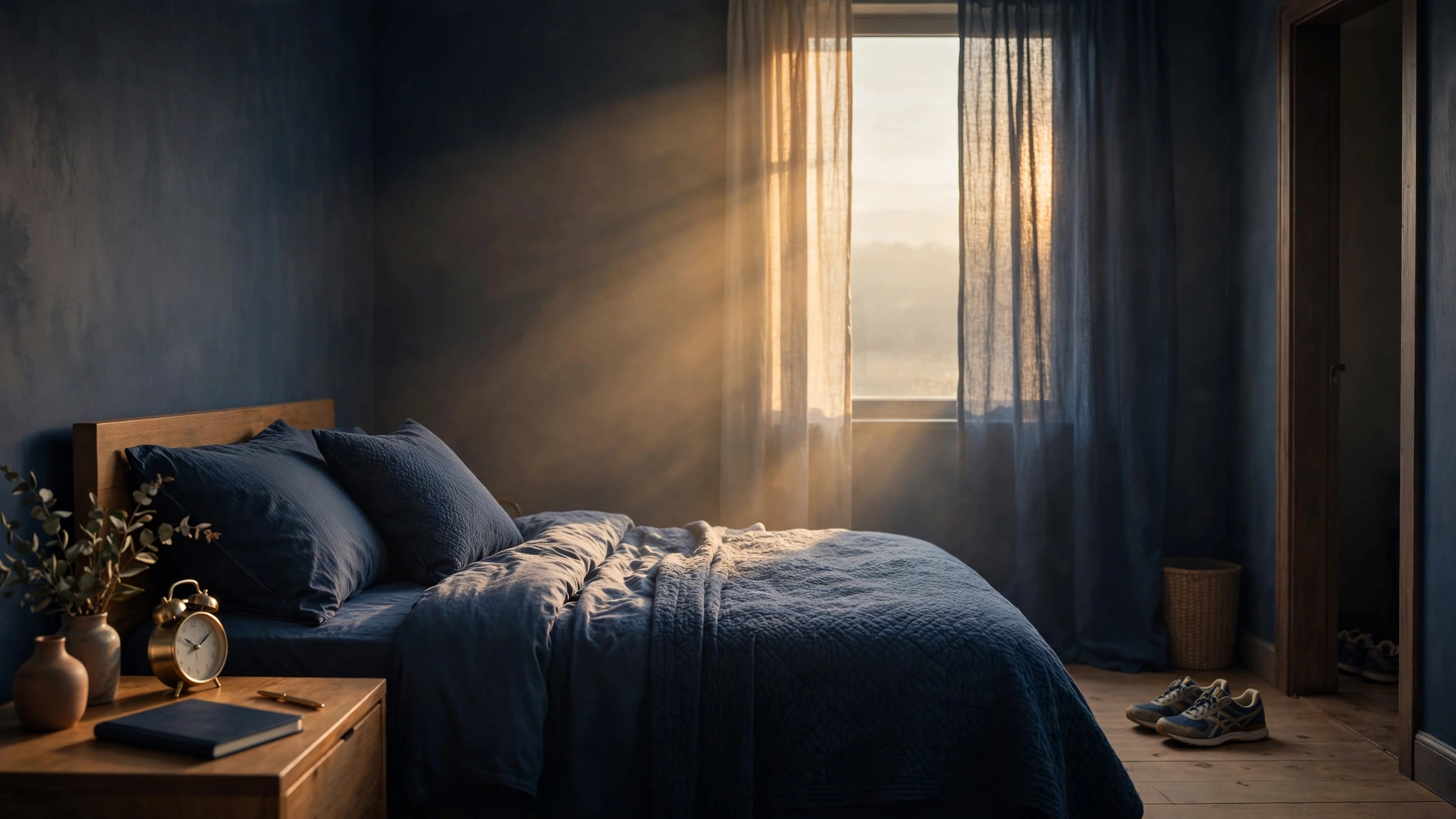
Somewhere on the internet right now, a man in a cold plunge is explaining that your life will change when you join the 5 AM club. The routine usually involves ice water, journaling, a workout, meditation, and a green drink, all before the sun is properly up, and all presented as the secret separating winners from everyone else. Here is a calmer claim, backed by better evidence: there is no magic hour. There is only sleep, light, movement, and a plan, arranged in a way your actual life can sustain.
What the gurus are really selling
The miracle morning industry sells an alarm time. Get up at five, or four, and success follows. What it quietly assumes is that you can simply move your whole life earlier: your job, your family dinner, your children's bedtime, your biology. It also assumes everyone is built the same. They are not. Chronotype, whether you are naturally a lark or an owl, is substantially a matter of genetics, and it shifts across a lifetime. Sleep scientists such as Matthew Walker have spent years making a less marketable point: sleep is not a lifestyle accessory you trim to buy more morning. It is a biological necessity, and the bill for cutting it arrives with interest.
The deeper problem is arithmetic. A 5 AM alarm paired with a midnight bedtime is not discipline. It is slow self harm with good branding.
Notice, too, how the routines keep growing. One guru journals, so the next adds journaling plus a gratitude list plus breathwork plus a cold plunge, until the morning routine itself becomes a second job that starts before the first one. A routine that takes two hours and a supplement shelf is not really a morning. It is a performance, and most of it has no evidence behind it at all. The parts that do have evidence are almost embarrassingly plain, which is exactly why they are hard to sell.
What the sleep science actually says
In 2024, Daniel Windred and colleagues published a study in the journal Sleep using the UK Biobank: more than 60,000 participants and over 10 million hours of wrist accelerometer data. Their question was simple. Does it matter more how long you sleep, or how regularly? Regularity won. People whose sleep and wake times stayed consistent from day to day had a 20 to 48 percent lower risk of dying from any cause than the least regular sleepers, across the top regularity groups, and regularity predicted mortality more strongly than sleep duration did. Read that again, because it overturns the guru logic. The body does not reward the hero who rises at five after four hours of sleep. It rewards the person whose sleep keeps a steady rhythm, at hours that fit their life.
The practical translation: pick a wake time you can keep seven days a week, weekends included, within about an hour. If that time is 7:30 because you work evenings and your brain runs late, then 7:30 kept faithfully beats 5 AM kept chaotically.
The morning that evidence supports
Four things earn their place. First, light. Daylight is the strongest signal that sets your body clock. Outdoor light, even on a cloudy day, is far brighter than indoor lighting, and research on morning light exposure shows it shifts melatonin timing earlier, which makes the following night work better. Ten minutes outside in the first hour of the day is a real intervention, not a wellness garnish.
Second, movement. It does not need to be a punishing workout. A walk or some stretches, anything that tells your body the day has started. Pairing the walk with the light kills two birds with one stroll. Third, one written first task, chosen the night before. A single clear next action, on paper, removes the foggy minutes of deciding and spares your freshest attention for doing. Fourth, no phone for the first stretch of the morning. The phone imports other people's priorities, news, and noise into the most suggestible hour of your day. Let your own plan get a head start.
One more honest addition: good mornings are built the night before. The regularity finding is about the whole rhythm, not just the alarm. A steady wind down, dimmer light in the last hour, and tomorrow's first task written and waiting on the nightstand are what make the wake time stick. And when life breaks the rhythm, as it regularly will, the fix is not guilt. It is returning to your anchor time the next day, the way you return to a road after a detour.
Permission to build a morning that fits your life
Parents of babies, nurses on night shifts, students, night owls: the evidence is not asking you to become someone else. It is asking for rhythm. Protect your sleep like it is the main event, because it is. Wake at a time you can repeat. Get light, move a little, and start with one thing you chose on purpose. A modest morning done daily will do more for you than a spectacular morning done twice. The gurus sell five o'clock. What actually works is yours, kept.
Why this belongs at Starvard
Starvard students are busy adults: workers, parents, and career changers learning in the margins of real days. Advice that only works for people with staff and no children is not education, it is marketing. A free university should trade in what is true and usable, so we checked the morning gospel against the sleep research and kept only what survives.
If you want to build the rhythm, our free Habits course is a good next step, and the Career course helps you spend those focused mornings on work that actually moves your life.
Sources and further reading
- Sleep regularity is a stronger predictor of mortality risk than sleep duration, Windred et al., Sleep, 2024, UK Biobank cohort.
- Abstract of the same study, PubMed.
- Why Morning Light Means Better Sleep at Night, Tall Tree Health.