 Starvard.Starvard.
Starvard University · Teachers We Admire
Teachers We AdmireSome people use AI. Andrej Karpathy understands it the way composers understand music, all the way down to the notes. His PhD work taught computers to describe photographs in sentences. His course notes taught a generation of engineers their trade. And his from scratch rebuilds of GPT are the clearest public thinking the field has ever produced. This page gathers his best work in one place for our students: the videos, the essays, the papers, the code.
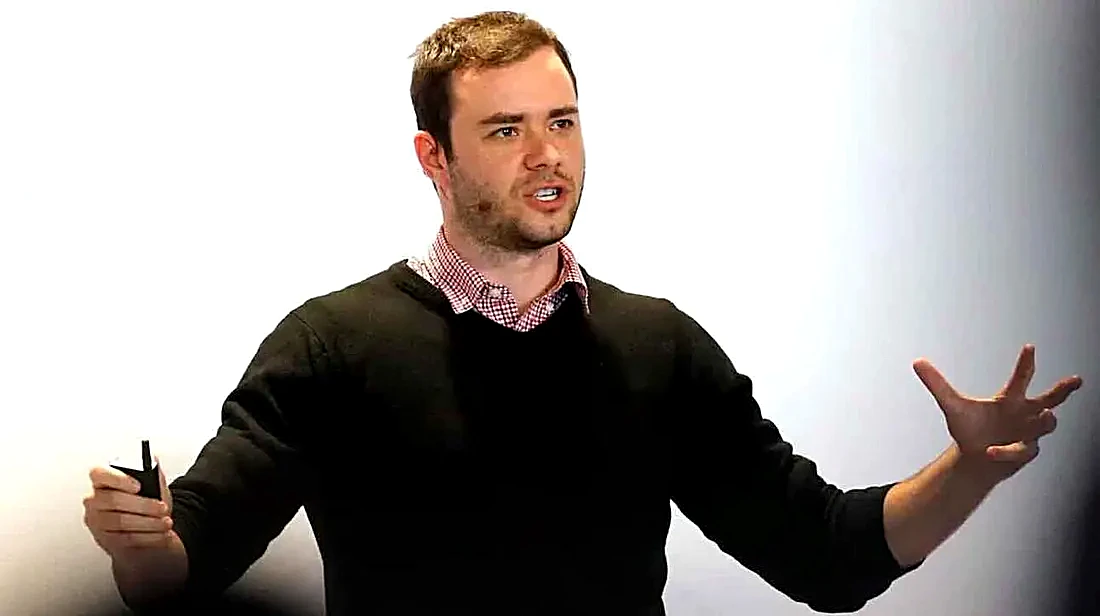
Start with the mind itself. Karpathy thinks about neural networks the way great engineers think about anything: from the bottom up, with nothing taken on faith. When he wants you to understand a transformer, he does not show you a diagram. He opens an empty file, types the whole thing from scratch, explains every line, trains it in front of you, and shows you where it breaks. By the end you do not just know what a GPT is. You have built one.
The research underneath is just as strong. His Stanford papers on teaching machines to describe images in words helped invent multimodal AI, the technology behind every vision model you use today. His lecture notes for CS231n, the course he created at Stanford, became the field's shared textbook. His essay A Recipe for Training Neural Networks is the document working engineers actually pass around. And when the whole industry was racing to ship bigger models, he was the one who slowed down, rebuilt GPT-2 from an empty file on camera, and beat the original, which tells you exactly how deep the understanding goes.
That combination is rare: a first rate researcher who is also the clearest teacher the subject has ever had, giving the whole thing away for free. That is why he tops this list. Everything below is his, linked to the original. We add the map, the order to watch things in, and notes on what each piece is for.
Andrej Karpathy was born in Bratislava, Slovakia, in 1986, and moved with his family to Toronto when he was 15. Long before the AI fame he was a teacher: his Rubik's Cube tutorial videos were so clear that world champion speedcuber Feliks Zemdegs has said he learned from them.
He studied computer science and physics at the University of Toronto, took a master's degree at the University of British Columbia, and finished his PhD at Stanford in 2015 under Fei-Fei Li, working where computer vision meets language: teaching machines to describe images in words. While still a student he created CS231n, Stanford's deep learning course, and its lecture notes became required reading for a generation of engineers.
The career followed the curiosity: a founding member of OpenAI, five years directing AI at Tesla (where his team made the then heretical bet that cars could drive on cameras alone, and were right), a return to OpenAI, and then his own education company, Eureka Labs. The timeline below has the dates. What matters more is the through line: wherever he went, he produced the clearest explanation of the thing he was building, and then he gave it away. "Vibe coding," nanochat, the GPT-2 rebuild, the Recipe: the famous artifacts are all teaching artifacts. In May 2026 he joined Anthropic to lead a pretraining research team, because even the best teacher in AI still wants to be in the lab.
| Year | What happened |
|---|---|
| 1986 | Born in Bratislava, Slovakia. |
| 2001 | Family moves to Toronto, Canada. The Rubik's Cube tutorials come a few years later. |
| 2015 | PhD from Stanford under Fei-Fei Li. Creates CS231n, the first deep learning course at Stanford. Co-founds OpenAI. |
| 2017 | Joins Tesla as Director of AI, reporting to Elon Musk. CS231n is now drawing 750 students. |
| 2020 | Named one of MIT Technology Review's Innovators Under 35. |
| 2022 | Leaves Tesla. Starts posting the Zero to Hero lectures on YouTube. |
| 2023 | Returns to OpenAI in February. Posts the one hour Intro to Large Language Models in November. |
| 2024 | Leaves OpenAI in February. Founds Eureka Labs in July. The four hour GPT-2 reproduction video lands in June. |
| 2025 | Deep Dive into LLMs and How I Use LLMs in February. Coins "vibe coding." Releases nanochat in October. |
| 2026 | Publishes microgpt in February: a complete GPT in 200 lines of pure Python. Joins Anthropic in May to lead pretraining research. |
You do not need to write code to get the modern world from these three. Together they are the best public education in AI that exists, full stop.
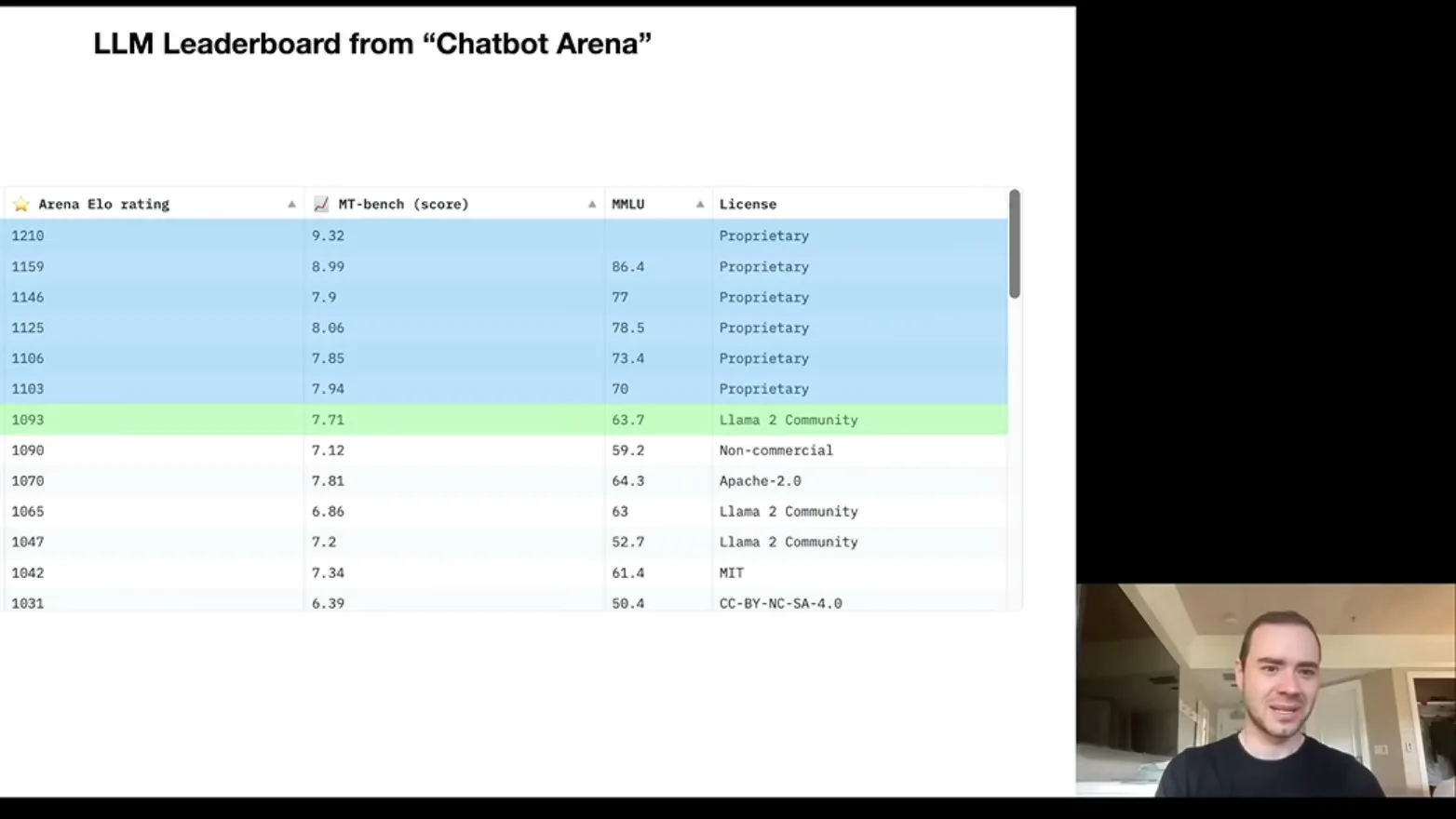
The one hour talk, from November 2023. What an LLM actually is (two files: a pile of parameters and the code that runs them), how it is trained, what RLHF does, and why these systems dream and hallucinate. If a relative asks you what ChatGPT is, send them this.
Watch on YouTube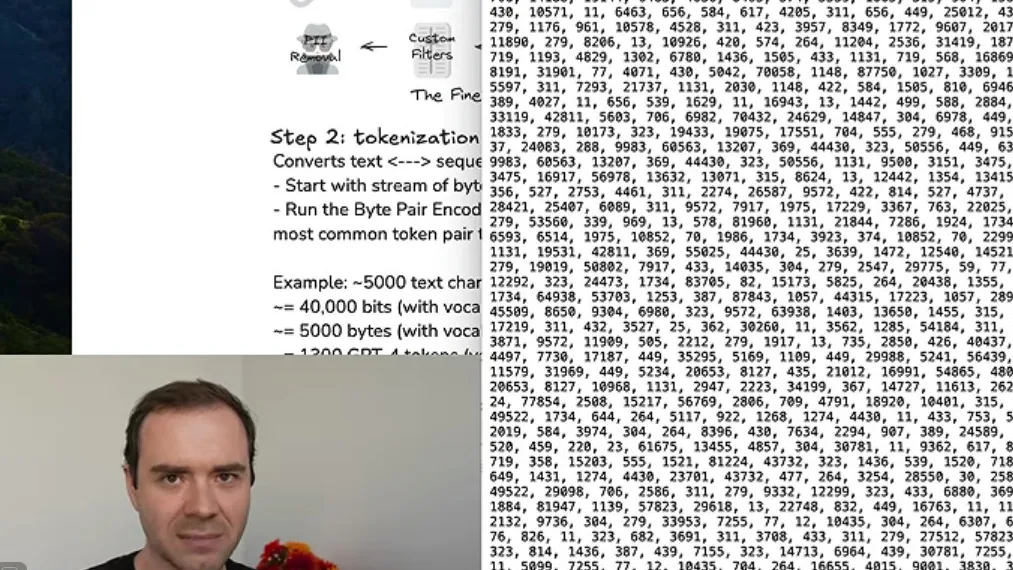
February 2025. The full stack, slowly: pretraining on the internet, tokenization, what the network is doing inside, inference, fine tuning, reinforcement learning, DeepSeek-R1 and reasoning models, hallucinations, and his idea of jagged intelligence, brilliant at some things and strangely dumb at others. The single most useful video on this page.
Watch on YouTube
February 2025. Karpathy at his desk, using ChatGPT, Claude, Gemini and Grok the way he actually uses them: when to reach for a thinking model, how he studies with them, how he checks their work. Less theory, more craft. Watch this one with a notebook.
Watch on YouTubeHis masterwork for builders. One playlist that starts at "what is a derivative" and ends with you training GPT-2. Every lecture is a build. The companion notebooks live in the nn-zero-to-hero repo, and the full playlist is here.
| # | Lecture | Length | You build |
|---|---|---|---|
| 1 | The spelled-out intro to neural networks and backpropagation: building micrograd | 2:25 | An autograd engine, the thing inside PyTorch, in about 100 lines. Repo: micrograd |
| 2 | The spelled-out intro to language modeling: building makemore | 1:57 | A character level language model from counts and probabilities. Repo: makemore |
| 3 | Building makemore Part 2: MLP | 1:15 | A multilayer perceptron language model, plus the real craft: splits, tuning, overfitting. |
| 4 | Building makemore Part 3: Activations and Gradients, BatchNorm | 1:55 | Why deep networks are hard to train, and the fixes that made them work. |
| 5 | Building makemore Part 4: Becoming a Backprop Ninja | 1:55 | Backpropagation by hand, no autograd allowed. The lecture that separates tourists from engineers. |
| 6 | Building makemore Part 5: Building a WaveNet | 56 min | A convolutional language model in the shape of DeepMind's WaveNet. |
| 7 | Let's build GPT: from scratch, in code, spelled out | 1:56 | The transformer itself. Eight million views for a reason. Repo: nanoGPT |
| 8 | Let's build the GPT Tokenizer | 2:13 | Byte Pair Encoding from scratch, and why so many LLM quirks are really tokenizer quirks. Repo: minBPE |
| 9 | Let's reproduce GPT-2 (124M) | 4:01 | The capstone. GPT-2 from an empty file, then made fast: mixed precision, torch.compile, FlashAttention, eight GPUs, and results by morning. Repo: build-nanogpt |
His blog is a decade of field notes from the front line of deep learning, and several posts became canonical. Start with the Recipe.
Neural net training fails silently, he argues, so you need a process: become one with the data, get dumb baselines, overfit, then regularize. If you train models, read this before your next run.
The post that taught a generation what sequence models feel like from the inside: RNNs dreaming up fake Shakespeare, fake algebra proofs, fake C code. Includes char-rnn, the little repo that started a thousand experiments.
His Medium essay arguing that neural networks are a new kind of software: written by optimization, run on data. The sequel idea, Software 3.0, arrived in his 2025 talk.
Choosing an advisor, picking problems, surviving the middle years. The PhD guide professors quietly send their students.
Policy gradients explained through one beautiful example: an agent that learns Atari Pong from raw pixels and nothing else.
He rebuilds LeCun's 1989 network with modern tools, then asks what today's deep learning will look like in 2055. History and prophecy in one post.
His GitHub is a teaching library disguised as a profile. The pattern is always the same: the smallest possible version of a big idea, readable in one sitting.
October 2025. "The best ChatGPT that $100 can buy." The full pipeline (tokenizer, pretraining, fine tuning, evaluation, chat interface) in one hackable codebase, with a speedrun leaderboard the community now races on.
The medium sized GPT implementation the Zero to Hero GPT lecture builds. Clean enough to read in an evening, strong enough to train real models.
A tiny autograd engine with a PyTorch like API. About 100 lines, and the first lecture of Zero to Hero. The best hour you can spend on what backpropagation really is.
The language modeling playground from lectures 2 through 6: bigrams to MLPs to a WaveNet, one idea at a time.
Minimal, clean Byte Pair Encoding, the tokenizer trainer from lecture 8, in basic and regex flavors.
Run inference on Llama 2 in one file of pure C, about 700 lines, no dependencies. Proof that the magic is smaller than you think.
Character level language models in Torch, the code behind the RNN Effectiveness post. Historically huge: this is where many people first saw a machine write.
The Eureka Labs course in progress: build a Storyteller LLM end to end, from basics to a working web app, in Python, C and CUDA. His next big teaching project.
Before the videos there was the research. These are the papers that made his name, all from the Stanford years unless noted.
In 2015 Karpathy created and taught CS231n: Convolutional Neural Networks for Visual Recognition, the first deep learning course at Stanford. It grew from 150 students to 750 in two years, and the course notes he wrote for it (assignments, readings, and the famous optimization walkthroughs) are still among the best free deep learning texts anywhere. The course lives on at cs231n.stanford.edu. Many of today's AI researchers trace their start to this class.
First we wrote code (1.0). Then we trained weights and the data wrote the behavior (2.0). Now we program models in English with prompts, context and examples (3.0). Each layer does not replace the last. It swallows it.
His 2023 line, and the most quoted sentence in modern AI. If prompts are programs, then careful, precise English is a technical skill, and teachers of writing just became computer science faculty.
From the Intro talk: the model is the kernel process of a new OS, the context window is its RAM, and tools and files are its peripherals. A mental model that makes the whole ecosystem suddenly legible.
Models are superhuman at some tasks and bafflingly bad at adjacent ones, because they are lossy compressions of the internet, not minds. Knowing where the edge is jagged is the core skill of using them well.
His February 2025 coinage for building software by describing what you want and letting the AI write the code. He meant it as a playful, half serious term for hobby projects. The industry adopted it as a roadmap within a month.
The method under everything on this page: micrograd, minBPE, llama2.c, microgpt. If you cannot rebuild the small version yourself, you do not understand the big one yet. That is a very Starvard idea, and it is why he leads our Teachers We Admire list.
How we suggest our own students work through him, alongside the Starvard catalog.
About this page. A fan made field guide by Starvard students, because our students kept asking where to start with him. All videos, essays and code are his, and everything above links to the originals. Page last updated October 2026. If he posts something great tomorrow, we will add it.