 Starvard.Starvard.
Starvard University · AI Agents on a Budget
You do not need $100 a month, and you do not need a Silicon Valley address. These are the agent tools that do real work for free, or for the price of lunch, and how to turn them into income.

The whole course in brief
The twelve lessons
Lesson 1
Let us make this simple. A chatbot talks; an agent works. Ask a chatbot about your problem and it hands you paragraphs. Give an agent a job and it hands you the finished thing: the researched list, the built page, the booked appointment, the report with its sources attached. That difference is the whole course, because clients pay for finished things.
Here is the only definition that matters for your wallet. A chatbot answers questions. An agent finishes jobs: it browses the web, opens files, builds the spreadsheet, books the thing, writes the report and hands you the result. When money is tight, spend it on tools that finish jobs, because finished jobs are what clients pay for.
Agent tools come in three money levels. The free level is bigger than most people think: full free tiers from Google, OpenAI, Anthropic and Perplexity will carry a beginner for weeks. The $20 level is where serious agent power lives, and nearly every tool in this course has a plan there. The $100 and up level exists, and this course exists so you can skip it until clients are paying you enough that it stops mattering.
One more idea before the tools. Your country is not a disqualification. Fast, careful freelancers in Manila, Lagos, Dhaka and Jakarta are winning agent work from clients in rich countries every week, because the work arrives finished or it does not. This course is the kit they start with.
The Chart
Thirteen tools is a lot of tabs. Here is the whole field on one screen: what each one costs, what it is best at, how hard it is to learn, and where in the world it works. Star a row, then go read its lesson.
Prices checked October 2026 and they move often; the shape of the field, free first and $20 for power, has been stable all year.
Lesson 2
Start with Gemini. Google's free tier is generous, it comes with Deep Research for long sourced reports, and it lives inside the Google apps much of the world already uses: Gmail, Docs, Drive and Android. For research, drafting and everyday help, a free Google account is the strongest zero dollar start there is.
Next, the free tiers of ChatGPT and Claude. ChatGPT free is a capable general assistant for writing, summaries and planning. Claude free is the careful one: bring it long documents, proposals and anything that has to read like a professional wrote it. Perplexity adds the research habit, answers with sources attached, and its Comet browser is free, which makes it the best fact-checking seat in the house.
Round out the free bench with Canva, whose free tier designs social graphics, simple decks and documents that look hired out. Your first month plan: one research tool, one writing tool, one design tool, all free. Learn them deeply instead of collecting twenty logins. Depth on three tools beats a shallow tour of twenty.
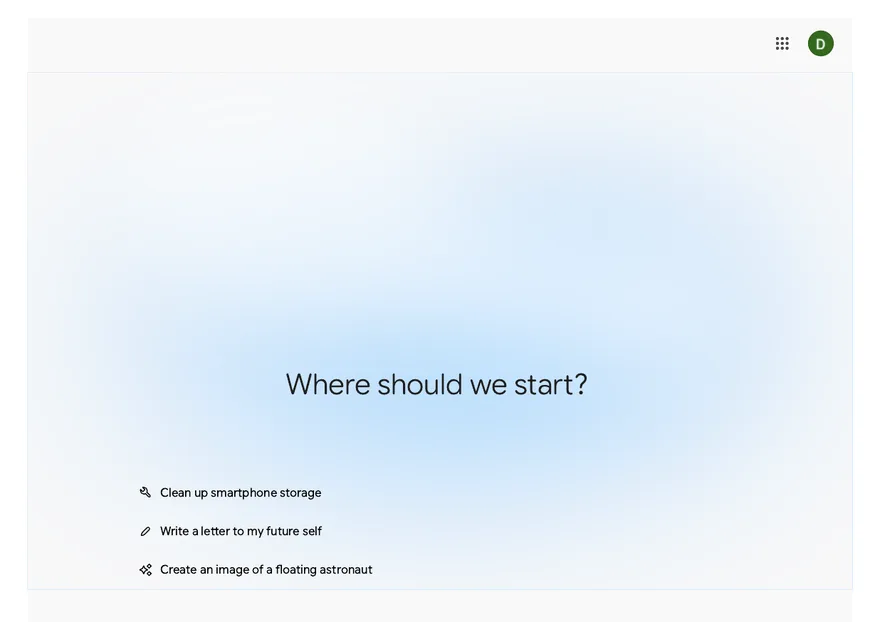
Google Gemini, the strongest free start in the field.
Lesson 3
When you are ready to pay, pay once and pay on purpose. $20 a month is the tier where agent features unlock, and three plans compete for that single slot. ChatGPT Plus brings Agent Mode, which browses and completes multi-step tasks for you, plus Deep Research, scheduled Tasks and the Codex coding agent in the same bill. It is the best all-rounder.
Claude Pro is the writer's pick: the strongest long documents, proposals and client-ready prose, Projects for organizing client work, and Claude Code, the terminal agent that builds whole projects, folded into the same subscription. Gemini's AI Pro plan is the Google shops pick, with agent features woven through Gmail, Docs and Drive. There is also a cheaper on-ramp: ChatGPT's Go plan at $8 a month covers heavy chat use, though the full agent kit waits at Plus.
Choose by the work you will sell. General virtual assistance: ChatGPT Plus. Documents and proposals: Claude Pro. A business that lives in Google: Gemini AI Pro. A local note that saves real money: app store prices vary by country and often include tax, and Claude Pro runs about ₱1,290 a month in the Philippines, so compare the app store price against the web price before you pay either.
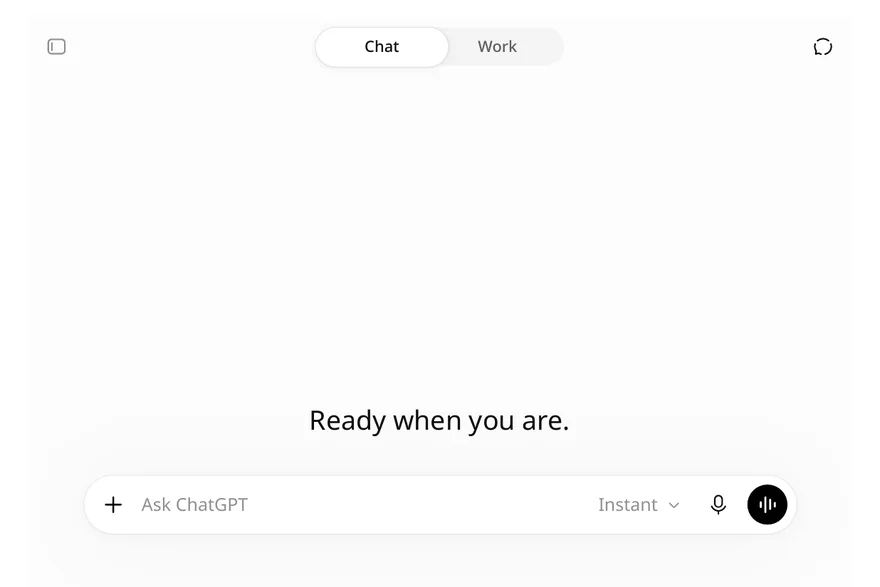
ChatGPT, home of the $20 Plus plan and the $100 top tier.
Lesson 4
Manus is the clearest taste of the agent future on a budget. You describe a whole job, research this market, gather these leads, build this report, make this small site, and it works in its own cloud computer and returns the finished thing. It is the tool to reach for when a client wants an outcome, not a conversation.
The plan is $20 a month for roughly 4,000 credits, with small daily free credits that are perfect for practice. The catch is that credit costs vary by task: a tight, well-scoped job sips credits, and a vague one gulps them. The skill that makes Manus cheap is the same skill that makes freelancers expensive: break the job into clear steps, name the output format, and say what done looks like before you press go.
Practice plan: spend a week of free daily credits on fake client jobs. A competitor price table. A list of fifty leads with emails checked. A three page market brief. When the outputs start looking sellable, they are, and lesson eleven shows you how to sell them.
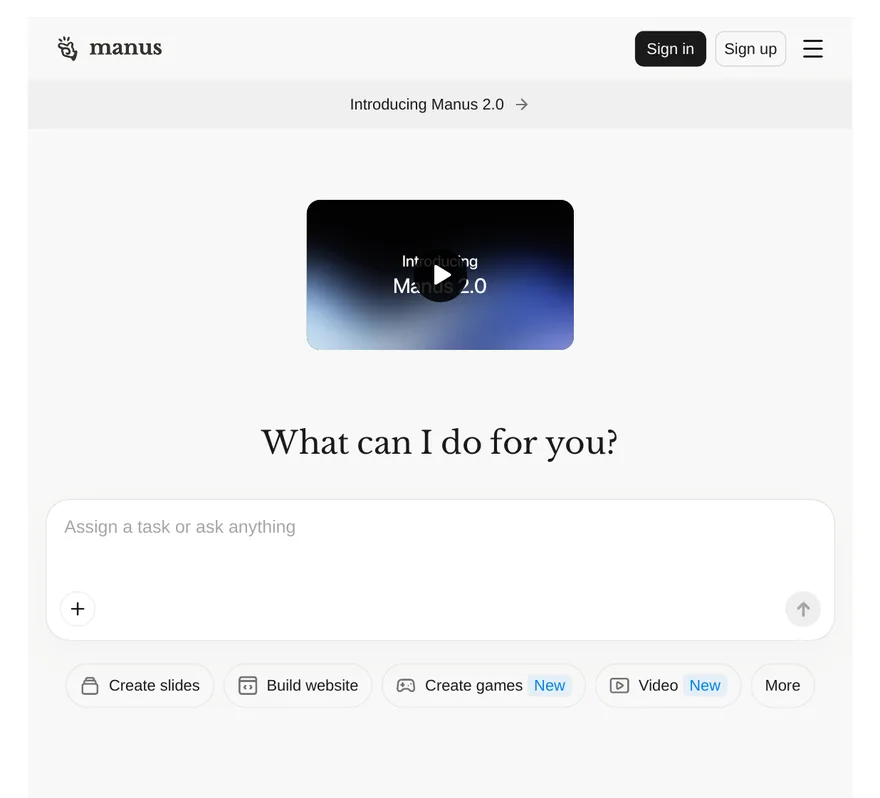
Manus: describe the job, get it back finished.
Lesson 5
Most freelance deliverables are not code. They are decks, sheets, one pagers and reports, and they live or die on looking finished. Genspark's Super Agent returns exactly those formats from one prompt: slides that hold together, spreadsheets with real structure, documents a client can forward without apology. Its free tier gives about 100 credits a day, and Plus is $24.99 a month when the work justifies it.
The workflow that wins: research in Perplexity or Deep Research, think and draft in Claude or ChatGPT, then finish in Genspark or Canva so the client sees polish. Clients rarely ask what made the deck. They ask whether it is ready for their meeting, and ready is a look as much as a fact.
Charge for the outcome, not the hour. A priced right deck package, a weekly report, a lead sheet with sources: these are products with a price tag, and agent tools let a careful beginner produce them at a standard that used to need a small team.
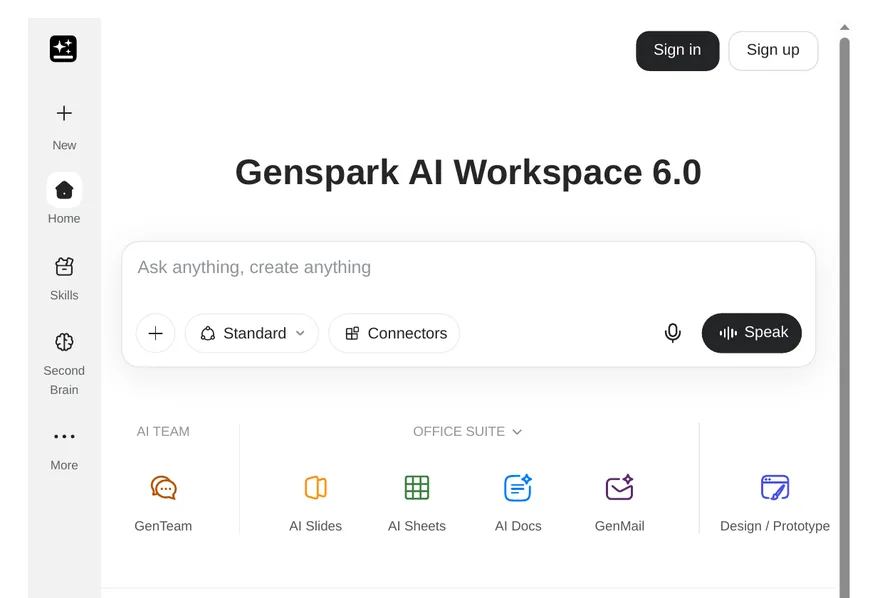
Genspark, where prompts come back as decks and sheets.
Lesson 6
Research is the easiest agent work to sell, because every business runs on questions it has no time to answer. Perplexity is your daily driver: fast answers with citations, so a client can check your work, and checking builds trust. Its Comet browser is free, and the Computer agent on the $20 Pro plan will grind through longer multi-step research jobs.
For the long assignments, Deep Research is the heavy machinery, and it is bundled into plans you may already have: ChatGPT Plus and Gemini both include it. Give it a sharp question and it returns a structured, sourced report that would take a human researcher days. Your job becomes the sharp question, the follow-up questions, and the one page summary on top.
Sell research as packages: a competitor watch, a supplier hunt, a lead list with sources, a market entry brief. Every package ends with sources attached and a short answer first. That format, answer first and proof below, is what makes a stranger trust your research enough to pay for the next one.
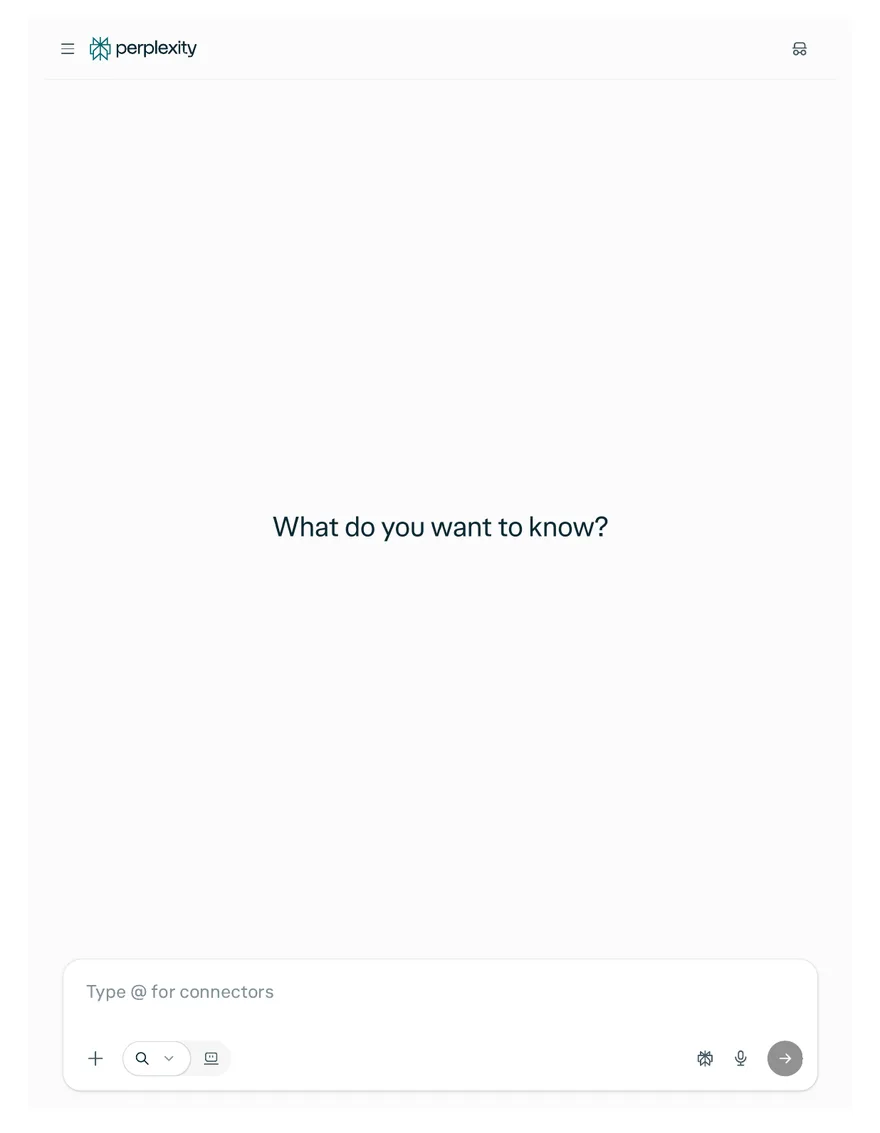
Perplexity, research with the sources attached.
Lesson 7
The loudest money in agent work right now is building. Lovable turns a plain description into a working web app with hosting attached: landing pages, booking pages, small business sites a client can click the same day. It runs $20 a month with a limited free tier to learn on. Bolt does the same job faster and more code-forward, also $20, and suits prototypes and front end builds.
When you outgrow the prompt builders, Windsurf is the on-ramp to real development: an AI code editor whose Cascade agent works beside you, with a genuinely useful free tier. Cursor at $20 is the pro seat most working developers pay for, and the two coding agents inside subscriptions you may already own, Claude Code in Claude Pro and Codex in ChatGPT Plus, are the endgame: whole projects built from instructions in a terminal.
Start where you are. This month, a Lovable site for a local business. Next month, Windsurf open beside you while you fix what the builder got wrong. Every fix teaches you the thing the agent did, and that is how a $20 tool quietly turns into a developer's rate card.
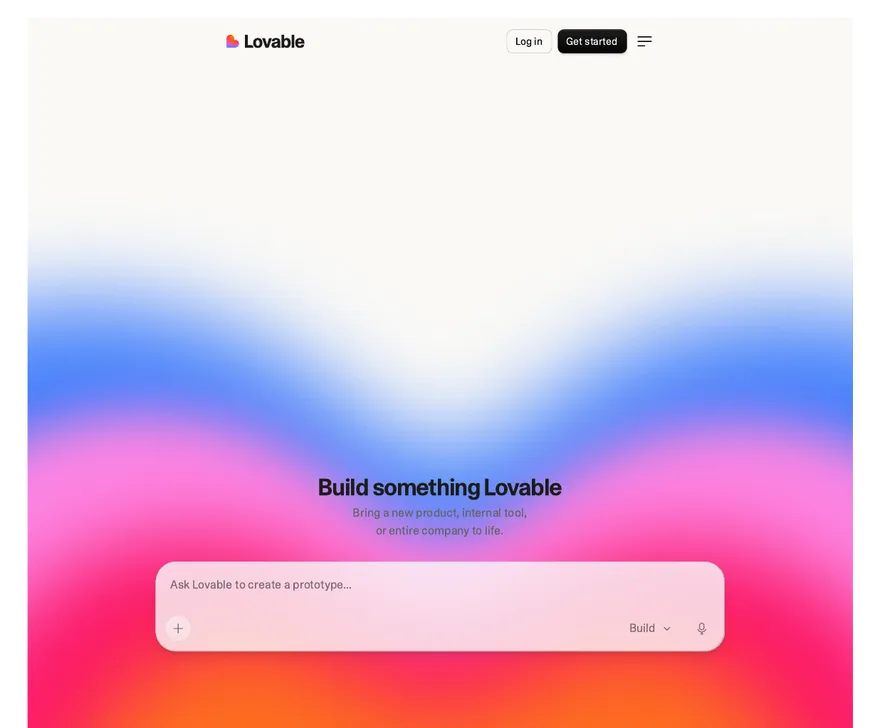
Lovable: one sentence in, a working app out.
Lesson 8
Automation is the quietest, stickiest income in this course. A chatbot answer is used once; an automation runs every day, and clients keep paying for things that run every day. Make is the friendly start: a visual builder with AI agents, a generous free tier, and connectors for the apps small businesses actually use, like Google Sheets, Gmail and Shopify.
n8n is the power tool: open source, free if you host it yourself, around $20 a month in the cloud, and able to wire together almost anything. Zapier Agents, from about $33 a month with a small free tier, is the easy option for clients already living in Zapier's 7,000 app world, and Lindy, from about $30, sells ready-made agent employees for inbox triage and scheduling once a client's budget grows into it.
First automations to sell: a form that becomes a spreadsheet row and a thank you email. A lead alert that lands in a chat within a minute. A weekly report that assembles itself. Small, boring, priceless. Every business you know is doing one of these by hand tonight.
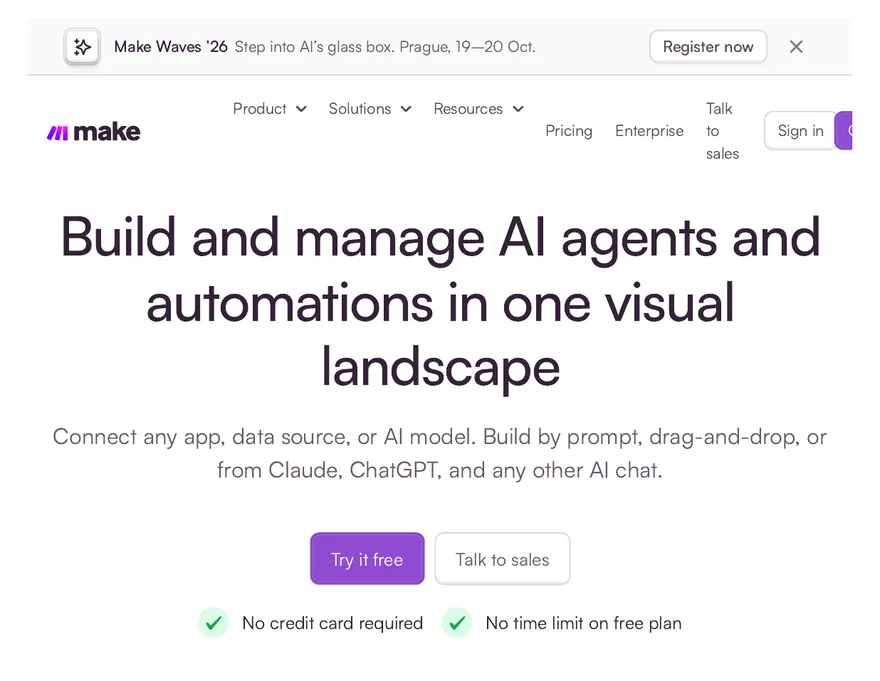
Make, the friendly face of automation.
Lesson 9
Creative agents turn one person into a small studio. Suno writes full songs from a prompt, free every day in small amounts and from $10 a month paid, which covers jingles, podcast themes and the endless background music small brands need. ElevenLabs handles voice: narration, ads and voice agents, with a free tier and paid plans from $5 a month, the cheapest serious seat in this whole course.
Canva's AI tools design the social graphics, menus, flyers and simple brand kits that local businesses buy monthly; the free tier is strong and Pro runs about $15 a month. For video, Dreamina and its Seedance model, inside the CapCut family, generate clips that used to need a camera crew, and CapCut itself is already on half the phones in the developing world.
Package creative work like the research packages: a month of social posts, a podcast intro and outro, a menu redesign with new photos. Agents make the drafts fast; your taste, picking the good one, fixing the words, delivering on time, is the part clients are actually buying.
Lesson 10
Now the honest lesson. The newest star tools often launch in one or two rich countries first. Meta's personal agent Muse, which runs errands and bookings inside WhatsApp and its own app, launched in the United States and Canada only, and as this course is written it has not arrived in most of the world. The simpler Meta AI chatbot in WhatsApp is a different, smaller thing. This pattern will repeat: a launch headline, a map that skips your country, a wait.
Three rules for the wait. First, build on what is available: everything in lessons two through nine works in most countries today, and clients pay for finished work, not for which logo made it. Second, be careful with workarounds: a VPN that breaks a tool's terms can get an account, and the client work inside it, deleted without appeal, and no gig is worth that. Third, keep a watch list, not a grudge: availability pages change monthly, and being ready on launch day is its own advantage.
There is also a door that no launch map controls: open source. Self-hosted agents like Hermes Agent from Nous Research run on your own machine or a cheap server, anywhere on Earth, with no country's permission required. They ask more of you, setup, patience, some terminal work, and in exchange nobody can uninvite you. For the technically brave, that trade is the whole future.

Lesson 11
Everything before this lesson was shopping. This one is selling. Pick one small, finishable promise that a business near you already wants: a competitor price check with sources, a week of social posts, a landing page, a lead list, an inbox sorted every morning. Small enough to finish in days, real enough to show the next client.
Run it on the stack you have. Free tiers if that is your level, your one $20 subscription if you have made the jump. Deliver early, deliver tidy, and put the answer first with the proof below, the way lesson six taught. Then ask for the two things that build a career: a testimonial in writing, and the name of one other business with the same problem.
Price the second gig higher than the first, and let the tools grow with the income: the second subscription when a client pays for it, the builder tool when a build is sold, the automation platform when a client wants something that runs forever. That is the whole strategy of this course. Start free, buy once on purpose, and let clients, not credit cards, fund every step after that.
Lesson 12
Enough comparison. If you want someone to just tell you, here it is, the way we would set up a friend who asked. Start from the job you want done, not from the logo you like, and take the tool that does that job best today.
And if you remember nothing else: Muse is the strongest agent on this page if your country has it, Claude builds, ChatGPT writes, and the free tiers are good enough to earn your first $20 before you spend your first $20. The rest of this course is the details; this lesson was the shortcut.
Claude, our pick for building games and apps.
Keep learning
This course is part of Starvard University, striving for greatness.