 Starvard
AI in Ordinary Life: The Quiet Takeover of 2026

Half of American adults now use AI chatbots, search results answer themselves, and one in five people has asked AI about their health. This is what daily life with AI actually looks like in 2026, told in scenes and in numbers.
No keynote announced it. There was never a launch day for the moment AI became ordinary. It just seeped in: into the search box, the camera roll, the family group chat, the kitchen counter speaker, the doctor's waiting room.
By 2026 the surveys read like a census of a new habit. Pew Research Center surveyed 5,119 US adults in February 2026 and published the results in June. OpenAI and Harvard researchers studied 1.5 million real ChatGPT conversations for a National Bureau of Economic Research paper. Together they let us describe a normal day with AI, and check every scene against a number.
A short history of the seep
It is worth asking when your life first contained AI, because the honest answer is not 2022. The spam filter that learned which junk you never open dates to the late 1990s. Autocomplete, guessing your search before you finish typing it, arrived in the mid 2000s. Siri put a voice assistant in the iPhone in 2011, and Alexa moved into kitchens in 2014, answering timers and weather questions in a friendly voice. Through the 2010s, ranking models quietly took over the ordering of every feed, inbox, and storefront you used. If you have read an email, scrolled a timeline, or followed a map's rerouting in the last fifteen years, you were already living with AI. It was just AI with no face and no voice, easy to mistake for the furniture.
What changed in the 2020s was not the existence of the layer but its fluency. In November 2022, ChatGPT gave the prediction engine a chat window and the public met it as a personality: something you could talk to, argue with, and ask follow-ups. In 2023, Be My Eyes put image description into the hands of blind users. In May 2024, Google began placing AI summaries at the top of ordinary searches, which is the moment the technology stopped being a site you could choose to visit and became the default texture of the most-used page on earth. Each step took AI one notch further from a product and one notch closer to weather: ambient, assumed, and only really discussed when it misbehaves.
That history explains the odd double feeling in the surveys. People say AI arrived suddenly, and people say it has always been there, and both are describing their real experience. The machinery seeped for twenty years. The conversation arrived in one winter.
How it got in: the three doors
AI did not enter daily life through one famous product. It came through three doors at once, and it helps to see each door clearly, because each works differently and fails differently.
Door one is the answer. The old search engine was a librarian: you asked, and it handed you a stack of pages to read yourself. The new one reads the stack for you and writes the summary. Under the hood, it still searches an index of the web and picks relevant pages, but then a language model (a system trained to predict and produce text, the same technology behind the chatbots) reads those pages and composes a paragraph in plain words, with links attached. This is why the answer can be excellent and occasionally, memorably wrong. The model is not looking up a fact in a database. It is writing the most plausible answer given what it found and what it already knows, and plausible and true are cousins, not twins. Knowing this one mechanism will protect you more than any list of tips: treat the summary as a smart friend's summary of pages you could open, because that is literally what it is.
Door two is the conversation. A chatbot is the same predicting engine, tuned by extra training to follow instructions, answer in turn, remember the thread of a chat, and adopt a helpful tone. That tuning is the whole difference between a tool that completes your sentences and a tool you can ask to plan a birthday party, rehearse a hard conversation, or explain your lab results. It is also where the warmth comes from, and warmth in a machine is a design choice, not an accident. The system was trained, in part, on what humans rate as good responses, and humans rate agreement, fluency, and confidence highly. Keep that in the back of your mind for the health and friendship scenes below.
Door three is the one nobody notices: the invisible layer. Long before chatbots, machine learning was already ranking your feed, finishing your sentences in email, transcribing your voicemail, filtering your spam, and unlocking your phone with your face. Your camera is the clearest example. A modern phone photo is not one exposure. The phone takes a rapid burst of images, merges the best parts, brightens shadows, sharpens faces, and increasingly lets you erase a stranger from the background or pick the frame where nobody blinked. You never opened an AI app. The AI was in the button you already pressed. Most of daily AI use in 2026 is like this: not a destination, but a property of the tools that were already there.
Breakfast: the search box answers itself
The day starts with a question. What is the weather doing Saturday? How long do you boil eggs again? In 2026, the answer is often already written at the top of the results before you click anything. Pew finds that 60% of US adults read the AI summaries at the top of search results. The ten blue links are still there, below the paragraph that did the reading for you.
The scale of that change is hard to overstate. At its I/O 2026 event, Google said AI Overviews now reach more than 2.5 billion monthly users, and AI Mode, its full conversational search, passed 1 billion monthly users. Search was the front door of the internet for twenty-five years. The door now talks back.
And when the summary is not enough, people open a chatbot. Pew found that searching for information is the single most common reason people use AI chatbots, named by 42% of users. The habit of asking a machine, in plain words, and getting a plain answer has quietly replaced the habit of picking through links.
Watch: The Google Exec Reinventing Search in the AI Era, from The Wall Street Journal. Liz Reid, the executive who runs Google Search, explains in her own words why the answer box replaced the link list, and what she thinks happens to the web underneath it.
The group chat has a new member
By mid-morning, AI is in the group chat, the inbox, and the notes app. Pew's headline number: 49% of US adults now use AI chatbots, up from 33% in 2024. Nearly one in four, 24%, use them daily. ChatGPT is the most used, tried by 44% of adults, followed by Google's Gemini at 24%, Microsoft Copilot at 17%, and Meta AI at 14%.
The OpenAI and Harvard study shows what all that use is actually for, and it is not what the headlines suggest. By July 2025, ChatGPT had about 700 million weekly users sending roughly 18 billion messages a week, about 10% of the world's adults. The share of messages that had nothing to do with work rose from 53% in June 2024 to about 73% a year later. The world's most famous productivity tool is mostly a personal tool.
About 8 in 10 conversations fall into just three buckets: practical guidance, writing, and seeking information. The writing is mostly editing: people paste their own words and ask for a cleaner version. Coding, the use case that dominates tech coverage, is only 4.2% of messages. Translation is about 4.5%, roughly the same share as coding: a parent rendering a school letter, a traveler decoding a menu, a nurse checking a phrase. Pew adds that 24% of adults have used chatbots to create or edit images or videos: the birthday card, the restored family photo, the listing picture for the thing you are selling.
The demographics tell the same story of a technology going normal. People under 26 send about half of all ChatGPT messages. The share of users with typically feminine names rose from 37% in January 2024 to 52% by July 2025. And adoption is growing more than four times faster in the lowest-income countries than in the richest ones. This is not a Silicon Valley toy anymore. It is a global utility with a chat window.
The camera roll edits itself
Somewhere in the day there is a photo: a kid mid-laugh, a document that needs sending, a sunset that the phone somehow makes better than the one your eyes saw. The editing now happens before you decide anything. The phone merges a burst of frames into one good image, lifts the shadows on faces, and smooths the noise out of the dark. When you do edit, the tools are conversational in spirit even when they are buttons: circle the photobomber and he is gone, the gap filled in with a plausible version of whatever was behind him. Pick the shot where everyone is smiling and the phone assembles it from frames where each person, in turn, was.
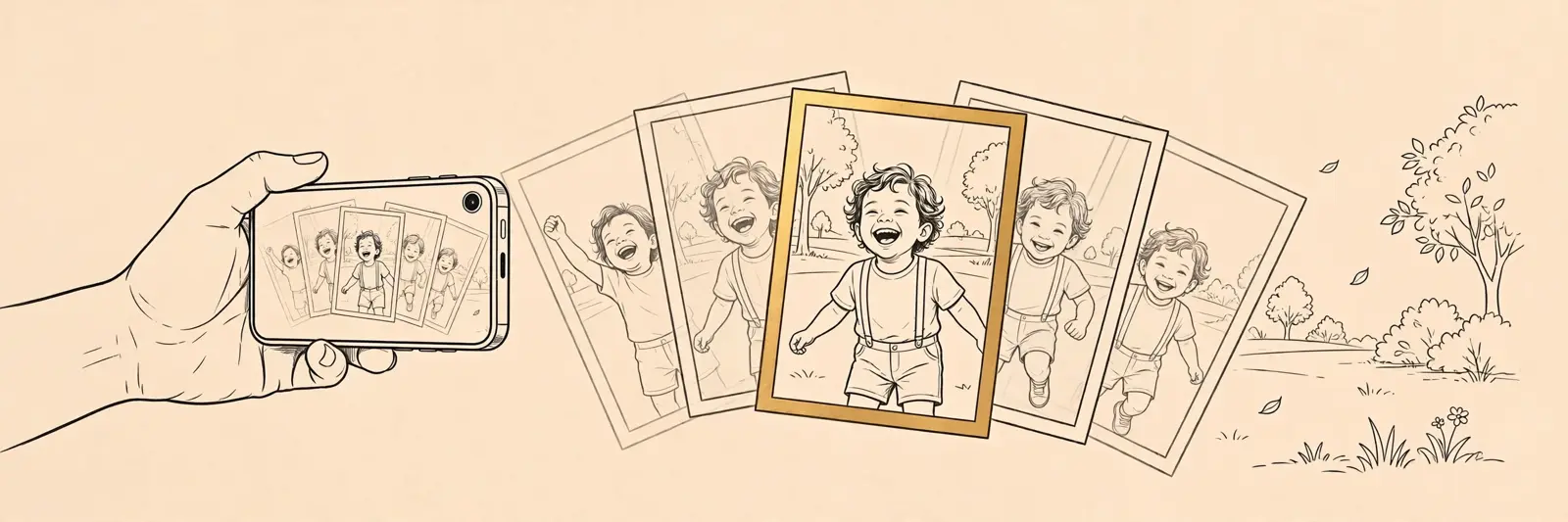
This is door three doing quiet, genuinely kind work, and it explains a number from earlier: the 24% of adults who tell Pew they have created or edited images or video with AI are mostly not making art. They are fixing Tuesday. The old family photo gets its creases smoothed. The product photo for the marketplace listing gets a clean background. The scanned contract gets straightened and sharpened. None of it feels like "using AI," which is exactly the point. The technology graduated from a place you visit to a quality your tools have.
It also quietly changes the evidence value of a photo. A picture used to be, with all its flaws, a record of light that actually hit a sensor. A 2026 picture is partly that and partly a reconstruction, and the share that is reconstruction rises every year. Ordinary life has mostly decided this trade is worth it. It is still worth knowing the trade exists, especially the day a photo actually matters.
Health, dinner, and the 2 a.m. questions
Some of the most honest uses are the private ones. Pew finds that 20% of US adults have asked an AI chatbot for medical advice, and another 20% for diet and fitness help. That is the rash photographed at midnight, the lab result pasted in before the follow-up appointment, the question you were embarrassed to ask a person. Ten percent have used a chatbot for emotional support, and 4% for companionship. Small shares, enormous absolute numbers when half a country is using the tools.
Why AI, for the most sensitive questions of all? Work through it from the patient's chair and the reasons stack up fast. The clinic has a waiting list; the chatbot answers now. The doctor has eleven minutes; the chatbot has all night. The question is embarrassing, or feels too small to bother anyone with, or too big to say out loud first. The chatbot is free, unhurried, non-judgmental, and speaks at whatever reading level you ask for. Against an actual human health system that is rushed and expensive, a patient, fluent machine is not a weird choice. For millions of people it is the rational one.
The danger has a specific shape, and it comes straight from door two. The chatbot was tuned to be helpful and agreeable, and it answers in the same confident, organized tone whether it is right or not. It does not know what it does not know in a way you can see. It can agree with the diagnosis you suggested in your question. The safe pattern is the one good clinicians themselves recommend: use it to prepare, to understand the vocabulary, to write down better questions, to make sense of the paperwork, and let people who can examine you, and who are accountable for being wrong, make the calls. Used that way, the 2 a.m. question is a genuine good. Used as a verdict, it is a coin flip with nice formatting.
Work is in there too, of course. Pew finds 38% of employed adults use chatbots for work tasks, and people are clear-eyed about the effect: 30% say chatbots help their productivity, against only 5% who say they hurt it. On creativity the split is 21% helped to 11% hurt. Look at what the work actually is, in the OpenAI and Harvard conversation data, and a pattern of delegation emerges: people hand over the first draft, the summary of the long document, the translation, the spreadsheet formula, the awkward email. The tasks given away first are the ones that are tedious to start and easy to check. That is a sensible instinct, and possibly the healthiest way a workforce has ever adopted a tool: keep the judgment, delegate the blank page.
Around the house, the AI is older and quieter. Pew counts smartwatch ownership at 37% of adults, smart speakers at 35%, smart doorbells at 18%, and robot vacuums at 13%. These were the first AIs most people lived with, and they set the pattern: a machine that listens, learns a routine, and saves small amounts of effort every single day.
The friend in the phone
There is one use nobody puts on a keynote slide, and it might be the most human one in this whole post. In April and May 2025, Common Sense Media surveyed 1,060 US teens, in a nationally representative study run by NORC at the University of Chicago, about AI companions: apps and chatbots designed, or used, for ongoing personal conversation, like Character.AI and Replika, and general chatbots when teens use them that way. The headline: 72% of teens have tried an AI companion at least once, and 52% are regular users.
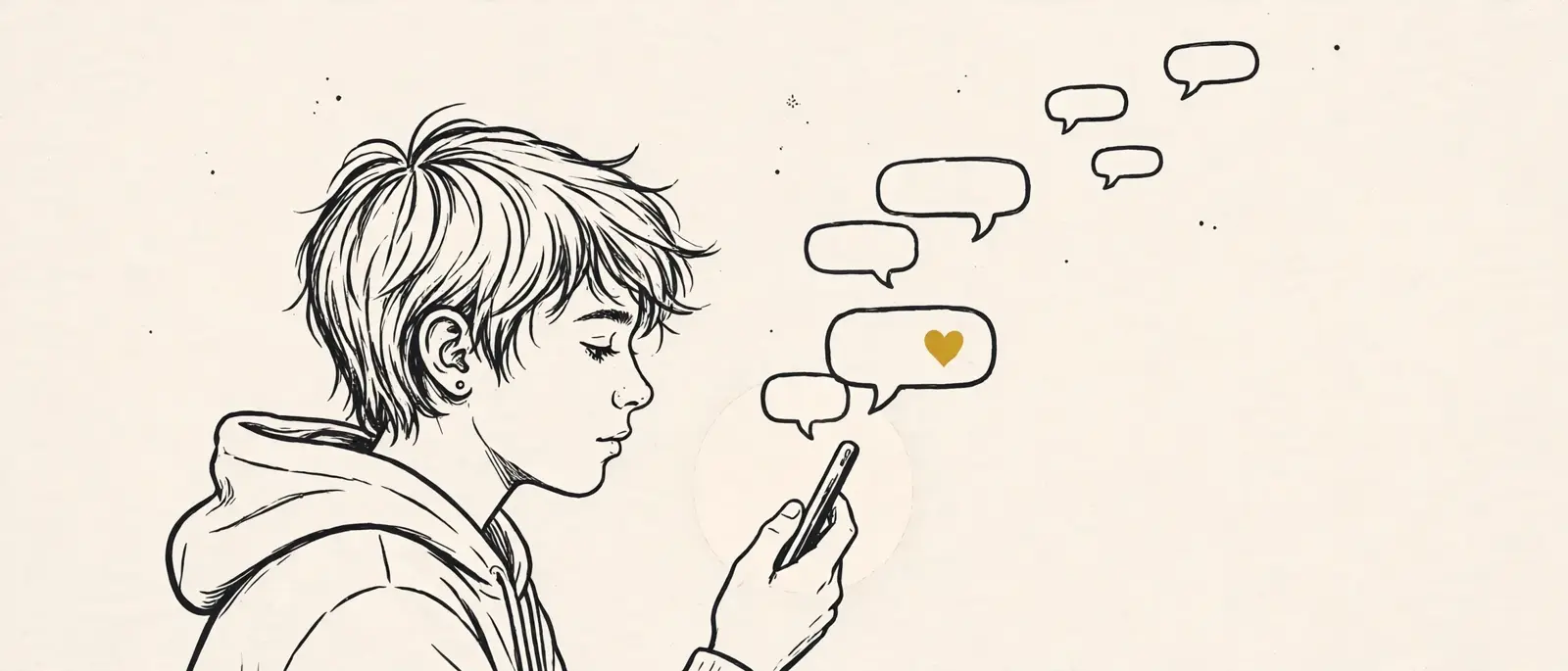
What are they doing there? A third of teens use companions for social interaction and relationships: conversation practice, role play, friendship, emotional support, romance. About one in three companion users has chosen to discuss something serious or important with the AI instead of with a real person. Around a third say the conversations are as satisfying as talking with real friends, or more so. At the same time, the picture is not simple addiction: 80% of teen companion users say they spend more time with real friends than with their chatbots, half of all teens say they do not trust the information companions give them, and 39% say they have used the conversations as practice, rehearsing social skills and hard talks they later had with actual people.
Hold both halves, because both are true. A companion is a rehearsal space with no audience and no consequences, and for a shy fourteen year old practicing how to apologize, or a kid with no one safe to ask, that is a real service. A companion is also a product engineered to be agreeable and available, tuned on the same human ratings that reward warmth and agreement, and it never gets tired, never disagrees for long, and never needs anything back. Real friendship is partly made of exactly the friction the companion removes. The most honest summary of the data is that teens, mostly, know this: they rate the tool as a tool, use it heavily anyway, and keep their real friends. The adults designing the systems should be at least as clear-eyed as the teenagers using them.
Watch: Character AI pushes dangerous content to kids, parents and researchers say, from 60 Minutes. The investigation behind the lawsuits, with parents and researchers on camera, is the clearest record of where this agreeable design can lead a vulnerable kid.
And notice: this is the adult data too, at lower volume. Pew's 10% emotional support and 4% companionship figures for grown-ups are the same door, opened wider by the young. The question of what it does to people to have a friend who is a product is no longer hypothetical or niche. It is a Tuesday evening question in millions of homes.
The helper some people cannot see without
The clearest good in this whole story belongs to accessibility. In March 2026, at the CSUN Assistive Technology Conference, Be My Eyes announced that its app had passed 1 million blind and low-vision users, connected to more than 10 million sighted volunteers in over 150 countries and more than 180 languages.
Watch: Be My Eyes - Bringing Sight to Blind and Low Vision People, from Be My Eyes. The service's own short film shows the volunteer model in action, one call at a time, which is the human layer the AI now sits beside.
Alongside the volunteers sits Be My AI, the app's AI assistant, launched in 2023. A user photographs a label, a letter, a room, a plate of food, and gets a detailed spoken description, then asks follow-up questions: which can is the tomatoes, what does the sign say, is this shirt the blue one. The company notes that an estimated 340 million people worldwide live with blindness or low vision. For a growing share of them, the phone in the pocket has become a pair of eyes on call, human or machine, at any hour.
Notice how neatly this case answers the usual argument. The service works because it layers the two kinds of help instead of choosing between them: the AI handles the instant, private, hundred times a day questions (reading the thermostat, sorting the mail, checking the outfit) that nobody would phone a volunteer for, and the humans remain there for the moments that need judgment, context, or company. It is the delegation pattern from the office, applied to independence itself. And it rests on the mechanism from door three: a camera, a model that can describe what it sees in words, and a voice. Three ordinary ingredients, arranged into something that changes what a day feels like.
This is the scene to remember when the AI debate gets abstract. The same technology that floods feeds with junk also reads the medicine bottle aloud. Both things are happening in the same ordinary day, often on the same phone.
Loved, used daily, and not fully trusted
Here is the honest tension, in Pew's numbers. People use AI every day and feel it helps them: productivity helped far more than hurt, creativity helped more than hurt. But asked about the long run, the mood flips. Looking twenty years out, 40% of US adults think AI's impact on society will be negative, and only 16% think it will be positive. Asked about themselves personally, 31% expect a negative impact against 23% positive.
The speed worries people most. 63% say AI is advancing too quickly; only 2% say too slowly. 71% think AI will make their personal information less secure. 67% have little or no confidence in the US government to regulate AI effectively, and about 6 in 10 are not confident that US companies develop and use AI responsibly. The tools are welcome in the kitchen. The institutions behind them are not trusted in the same way.
And the youngest adults, the heaviest users, are the most wary of all: 48% of adults under 30 expect AI's impact on society to be negative. Familiarity has not bred comfort. It has bred a clear-eyed sense that something big is being decided quickly, by someone else.
Meanwhile the everyday feed is changing under everyone's feet. AI-generated text, images, and video now pour into social apps faster than anyone can label them, which is why the most-watched explainers on the subject are not celebrations. Ordinary life in 2026 means using AI constantly, benefiting from it visibly, and wondering, also constantly, what it is doing to the place where everyone hangs out.
Step back from the numbers and a shape emerges. AI in 2026 is not a robot in the living room. It is a layer: answers that write themselves, conversations on demand, cameras and feeds quietly rearranged by models nobody opens. The layer is genuinely useful, measurably so, in time saved and questions answered and independence gained. It is also built by institutions the public does not trust, at a speed the public did not choose, with failure modes, confident errors, engineered agreeableness, reconstructed photos, that most people have never had explained to them plainly. Living well with it does not require loving it or fearing it. It requires understanding the three doors, and walking through them with your eyes open.
Why this belongs at Starvard
Starvard teaches the skills of ordinary life, free, and AI is now an ordinary-life skill: asking good questions, checking the answer, keeping your private information private, and knowing which tasks to hand over and which to keep. Start with Learn AI for a plain-language tour of the tools already in your pocket. Pair it with Learn How to Learn, because a chatbot that answers everything can either grow your mind or quietly replace it, and the difference is technique. And Learn Focus helps with the other side of the bargain: keeping your attention your own in a feed that now generates itself.
Watch
- Kurzgesagt - In a Nutshell, "AI Slop Is Destroying The Internet": the beloved explainer channel on what happens to everyday feeds when AI-generated content floods them, and what is worth saving. Watch on YouTube
- Google, "Google I/O '26 Keynote": jump to the Search section at 43:32 to watch the company behind the world's search box rebuild it around AI answers, the change this post starts with. Watch on YouTube
Sources
- Pew Research Center, "Americans and AI 2026: Chatbots, Smart Devices and Views on Impact" (June 17, 2026; survey of 5,119 US adults, February 17 to 23, 2026): 49% chatbot use and 24% daily use, chatbot brand use, uses from search to medical advice, AI summaries read by 60%, smart device ownership, productivity and creativity splits, and the trust, speed, and privacy findings.
- Chatterji, Cunningham, Deming, and co-authors, "How People Use ChatGPT" (OpenAI and Harvard University, National Bureau of Economic Research working paper, September 15, 2025): about 700 million weekly users and 18 billion messages a week by July 2025, the rise of non-work use to about 73%, the three dominant conversation topics, coding and translation shares, and the age, gender, and country-income patterns.
- Google, Google I/O 2026 Keynote: AI Overviews passing 2.5 billion monthly users and AI Mode passing 1 billion monthly users, announced on stage.
- Be My Eyes, company announcement (March 12, 2026): more than 1 million blind and low-vision users, over 10 million volunteers, 150 countries, 180 languages, and the estimate of 340 million people worldwide living with blindness or low vision.
- TechCrunch, "72% of US teens have used AI companions, study finds" (July 21, 2025), reporting Common Sense Media's "Talk, Trust, and Trade-Offs" study (nationally representative survey of 1,060 US teens ages 13 to 17, conducted by NORC at the University of Chicago, April and May 2025): 72% have tried an AI companion and 52% are regular users, a third use them for social interaction and relationships, about a third find the conversations as satisfying as or more satisfying than with real friends, 80% of users spend more time with real friends than with chatbots, half of teens do not trust companion information, and 39% have used conversations as practice for real-life interaction.
- The Wall Street Journal, "The Google Exec Reinventing Search in the AI Era" (WSJ's Bold Names podcast): Liz Reid, VP and head of Google Search, on transforming search for the age of AI answers.
- 60 Minutes, "Character AI pushes dangerous content to kids, parents and researchers say": the investigation into companion chatbots, the families suing Character.AI, and the researchers who tested the platforms posing as children.
- Be My Eyes, "Bringing Sight to Blind and Low Vision People": the service's own film on the volunteer model described in this post.