 Starvard
The Biggest Year in Games History Broke the Blockbuster
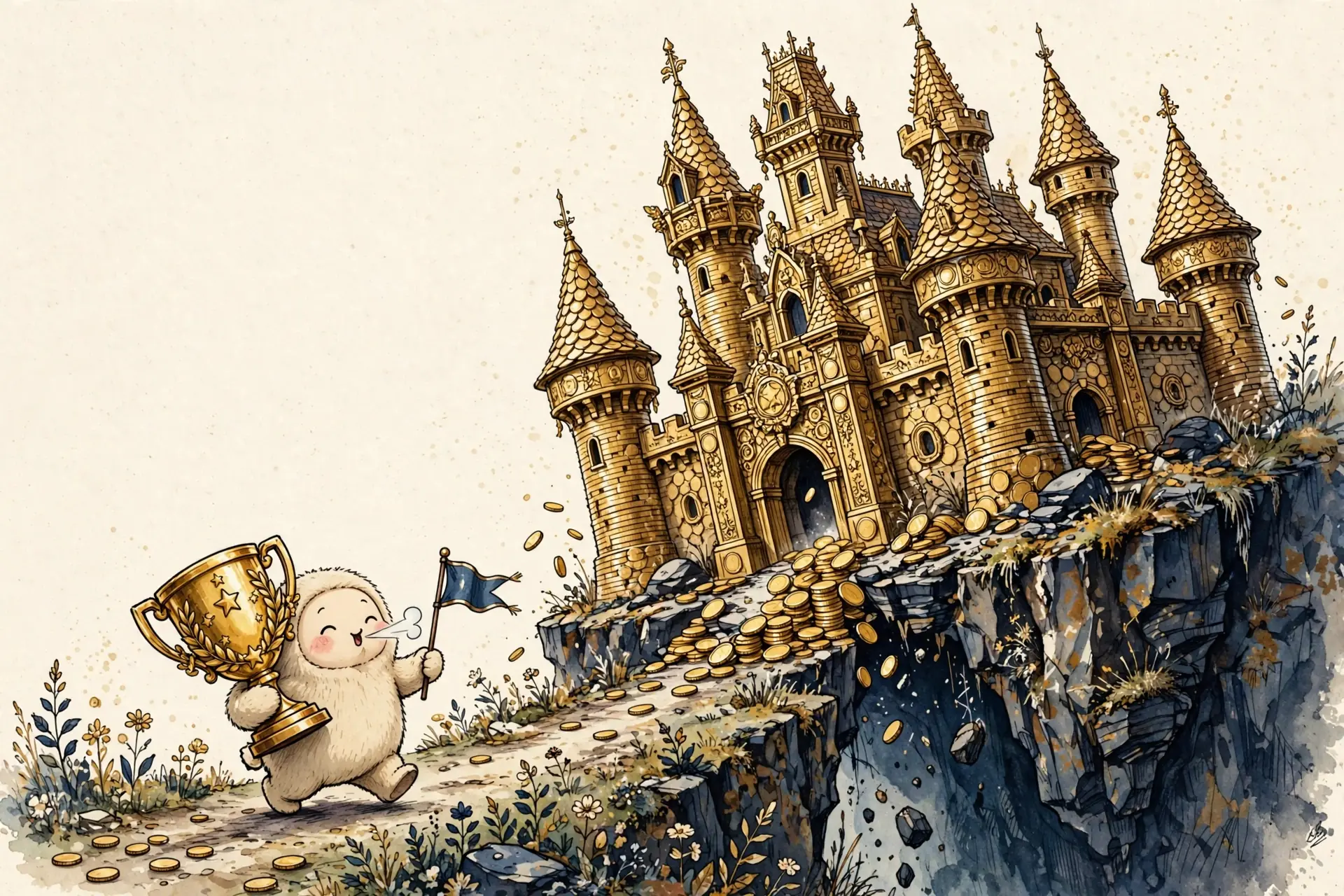
Games took in a record 196.7 billion dollars in 2025, and in the same year the most expensive games ever made became the riskiest bets in the business. The money did not vanish. It moved.
Here is a strange pair of facts about the same year.
In 2025, people spent about 196.7 billion dollars on video games worldwide, the most ever recorded, according to Newzoo, the industry's standard tracker. In the United States alone, spending reached 60.7 billion dollars, the second highest total in American history, behind only the locked-down pandemic year of 2021, according to research firms Circana and Sensor Tower and the Entertainment Software Association.
In that same year, Microsoft shut down a studio it had set up specifically to build one game, cancelled projects that had been in development for years, and cut thousands of jobs. Marvel's Spider-Man 2, one of the biggest hits on PlayStation, carried a reported budget of 315 million dollars. And the game that swept the industry's top awards was made by about thirty people in France for less than 10 million dollars.
Both stories are the story. The games business is not shrinking. It is splitting in two.
First principles: how a game actually makes money
Before the split makes sense, it helps to look at the machine underneath, because a game is a strange product. It costs a fortune to build exactly once, and then each extra copy costs almost nothing to deliver. That one fact bends the whole business out of shape.
Money flows in a few ways. Players buy a game outright, which the industry calls premium. They subscribe to a library that includes it, the way Netflix includes films. Or they get the game free, or cheap, and then keep spending inside it for years, on outfits, seasons and virtual currency. That third stream is where the giant live games make their real money, and it is why a free game can out-earn a 70 dollar one. Sitting above all of it, the platform owners, Sony, Microsoft, Nintendo and Steam's Valve, take a cut of nearly every dollar that passes through their stores.
Costs have a simple shape too. A game's budget is mostly people. A modern blockbuster can employ several hundred developers for four to six years: artists, engineers, designers, writers, producers, testers. Do rough math on that. Three hundred people, five years, at a fully loaded cost around 150,000 dollars per person per year once you count salary, benefits, equipment and office space. That comes to about 225 million dollars, before marketing, which the court documents in this story count separately. Nobody has to waste a cent for a budget to reach blockbuster size. The team is the budget.
Now the trap snaps shut. A 300 million dollar game sold at 70 dollars a copy has to move more than four million copies just to repay its development cost, and that is before the stores take their cut and before a single advertisement runs. In practice it must sell far more, closer to a phenomenon than a hit, merely to be called a success. Run the same math at the other end of the market. A game that cost 10 million dollars, sold at 50 dollars, covers its development cost after roughly 200,000 copies on the same crude calculation. Everything after that is a good life for its makers.
So the industry really contains two different businesses wearing the same clothes. One must win the lottery every time it plays. The other needs one modest success to thrive for years. In 2025, those two businesses became impossible to confuse.
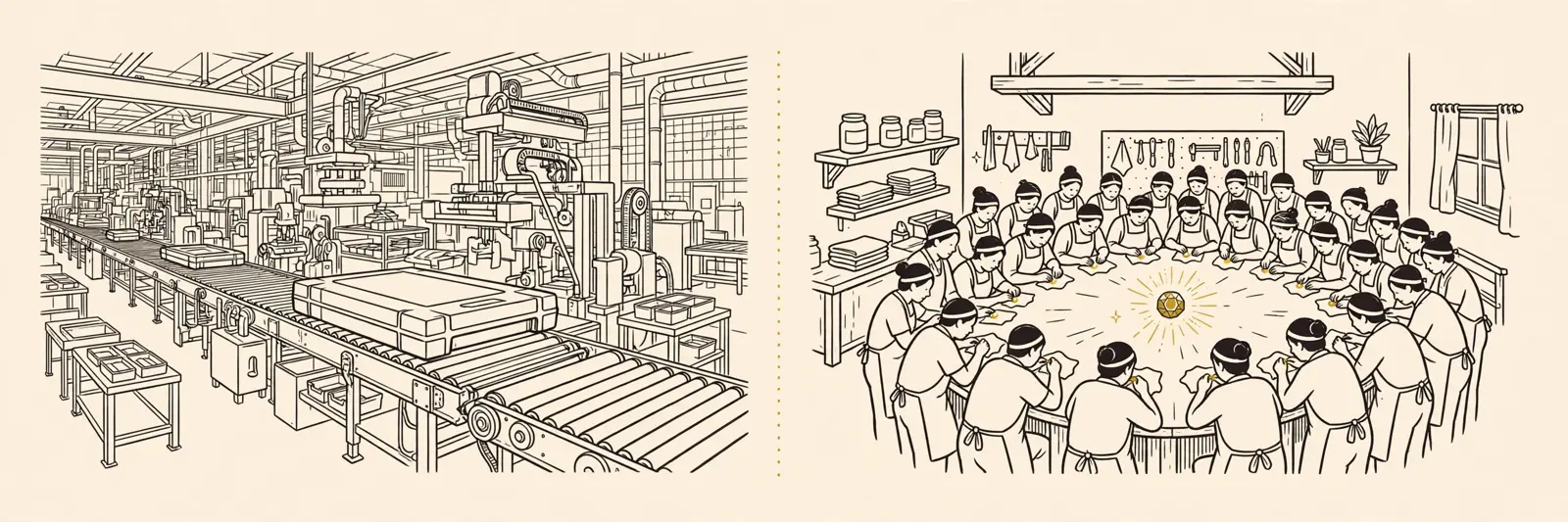
There is one more piece of the machine, the piece that decides who gets seen. A game no longer launches onto a store shelf. It launches into a feed. Storefronts like Steam surface games based on wishlists, sales momentum and review scores, and most players buy what the feed shows them, what their friends are playing, or what a streamer just played. Old hits hold a crushing advantage in that system: years of reviews, years of wishlists, years of clips and guides. A new game starts at zero on every one of those counters, on the same morning as dozens of other new games. That is how the industry's scarcest resource quietly stopped being money, or talent, and became attention itself.
A record year, by the numbers
Start with the top line, because it is genuinely astonishing. Newzoo's final tally for 2025 puts global games revenue at 196.7 billion dollars, up 7.4 percent from 183 billion dollars in 2024. Mobile games took 108 billion of it. Console games took 45 billion. PC games took 43 billion, and PC was the fastest grower of the three, up 10.4 percent.
The year even beat the forecasts. Newzoo's own mid-year report had projected 188.8 billion dollars worldwide and about 3.6 billion players, roughly 61.5 percent of everyone on the internet. Players then spent past the projection. As Newzoo analyst Michiel Buijsman put it, the growth reflected players "spending more deeply within games and ecosystems they already value," rather than a wave of brand new players arriving.
The American numbers tell the same story at a smaller scale. The joint Circana, ESA and Sensor Tower report put US consumer spending at 60.7 billion dollars, up 1.4 percent. Spending on game subscriptions jumped 20 percent. Hardware spending rose 9 percent, helped by the launch of Nintendo's Switch 2. "Total spending on video game products in 2025 reached the second highest total in U.S. history," said Circana analyst Mat Piscatella, "trailing only 2021's 61.7 billion dollars."
Nobody stopped playing, and nobody stopped paying. The interesting question is where the money and the hours actually went.
The catch: everyone is playing old games
Newzoo's playtime research, presented at the Game Developers Conference in 2025, contains the most important numbers in the industry. In 2024, 67 percent of all PC playtime went to games that were six or more years old, giants like Roblox, League of Legends and Fortnite. Another 25 percent went to games two to five years old. Just 8 percent went to games less than two years old.
Consoles were a little kinder to new releases, but only a little. On PlayStation, 44 percent of playtime went to games six or more years old. On Xbox, the figure was 49 percent. Console players gave new games about 15 percent of their time.
Newzoo analyst Ben Porter summed it up: "The battle for audience hours is fierce and near zero-sum." Total hours are still growing, Porter noted, but they are concentrated in a small set of huge, long-running games.
Now set that against the supply side. SteamDB counts 21,268 games released on Steam in 2025 alone, up from 18,452 in 2024. That works out to about 58 new games every single day, all of them competing for the same thin slice of new-game attention.
An industry can be record-sized and brutally hard at the same time. In 2025, it was both.
How we got here: the boom, the bet, the hangover
The split has a history, and it starts with a success so large it warped everyone's plans. For decades, each new generation of consoles made games prettier and more expensive, and budgets climbed in step. Then, in 2017, Fortnite arrived as a free game and demonstrated the live service model at full power: give the game away, sell the outfits and the seasons, update it forever, never ship a sequel. Every major publisher studied those numbers and placed the same bet. Fewer games. Bigger games. Games that never end.
Then the pandemic turned the bet into a frenzy. Locked indoors, the world played and spent at record levels, and the American market set its all-time high in 2021, the 61.7 billion dollars mentioned above. Companies hired as if the surge were permanent. The ASGC Games Industry Layoffs Tracker, maintained by games investor Amir Satvat, estimates that the industry added roughly 150,000 jobs between 2017 and 2021, while cheap borrowing funded a wave of studio acquisitions and ambitious new projects.
The hangover arrived on schedule. Interest rates rose, players went back outside, and growth flattened, but the giant games approved during the frenzy were still years from finished. The layoffs came in waves that Satvat's tracker has counted ever since: about 8,500 jobs lost in 2022, about 10,500 in 2023, a peak of 15,631 in 2024, and 9,197 more in 2025. The counting has not stopped. By the end of September 2026, the tracker had already recorded more than 10,500 additional layoffs in 2026 alone, pushing the five-year total past 57,000 people.
The human tail of those numbers is long. The Game Developers Conference's 2026 State of the Game Industry report found that 48 percent of developers laid off during the previous two years had yet to find a new job. These were not marginal workers. They were the artists, engineers and producers the industry had competed to hire five years earlier, released into a market where everyone was cutting at the same time.
Satvat himself named the structural cause in a September 2026 keynote at gamescom dev. "With 50 to 60 percent of total games industry revenues concentrated in the top 20 live-service games," he said, "the vast majority of studios are simultaneously facing the pressure of rising development costs and extreme revenue concentration." The pandemic bet assumed every big publisher could own one of those twenty chairs. There are only twenty chairs. The music stopped, and the industry has been walking around the chairs ever since.
Watch: What's Happening at Xbox and EA (with Jason Schreier), from 404 Media. Schreier, the reporter behind several of this post's sources, walks through the layoff waves, the Xbox margin squeeze and the EA buyout in one conversation.
The blockbuster math stopped working
At the top of the industry, costs climbed to a level where even genuine hits struggle to clear them. Internal documents from Insomniac Games, which leaked after a 2023 hack and have been widely reported since, put the total budget of Marvel's Spider-Man 2 at 315 million dollars. The same documents projected lifetime sales of 10.5 million copies, a number most games never reach, and even that outcome produced a return on investment of about 35 percent. The earlier Miles Morales cost 156 million dollars and returned 122 percent, on similar sales. Bigger budget, thinner reward.
Spider-Man 2 is not an outlier. Court documents from the FTC's case over Microsoft's Activision deal put the development cost of Horizon Forbidden West at 212 million dollars and The Last of Us Part II at 220 million dollars, and those figures exclude marketing.
When one game has to sell like a phenomenon just to pay for itself, publishers stop taking chances, and the correction lands on people. In July 2025, Microsoft cut about four percent of its companywide workforce. The Initiative, the studio founded to build a new Perfect Dark, was closed and the game cancelled. Rare's Everwild, in development for years, was cancelled too, along with an unannounced online game at ZeniMax Online. Xbox executive Matt Booty told staff the company had decided "to stop development of Perfect Dark and Everwild" and to close The Initiative, in order to "focus resources to set up our teams for greater success."
The sales charts show the same caution. In the US, Battlefield 6 was the top grossing full game of 2025, and the rest of Circana's top ten leaned on annual sports series and long-running franchises. Newzoo found the pattern globally too: the console top ten by revenue was dominated by giant franchises, with annual sports games taking almost half the slots.
The extreme case: fourteen days of Concord
If you want to see the new math at its purest, consider Concord. Firewalk Studios was founded in Bellevue, Washington in 2018, and Sony bought the studio in April 2023 to build a multiplayer shooter for PlayStation and PC. Concord launched on August 23, 2024, priced at 39.99 dollars, in a genre where the leaders, games like Valorant and Overwatch 2, are free to play.
Two weeks later, Sony shut the servers down and refunded every buyer. On October 29, 2024, Sony closed Firewalk altogether. A filing with Washington state's employment department put the number of jobs lost at 174. Sony executive Hermen Hulst said the company would "permanently sunset" the game and take its lessons into future live service projects.

Tally it up: about six years of work, eighteen months inside Sony, fourteen days on sale. Concord did not fail because its makers lacked talent or funding. It failed because a new live game does not compete with other new games. It competes with the free, beloved, endlessly updated games its target players already live in. That is the zero-sum battle Newzoo described, and Concord is what losing it looks like.
Watch: Why Sony Killed Concord: The Anatomy of an $400M Failure, from Player One Archive. This short documentary reconstructs the collapse week by week, from the hero shooter gold rush to the plug being pulled.
The other economy
While the giants retrenched, a different economy had the year of its life.
Clair Obscur: Expedition 33 came from Sandfall Interactive, a small studio in Montpellier, France. The New York Times reported that the game cost less than 10 million dollars to develop, roughly one thirtieth of the reported Spider-Man 2 budget. Sandfall kept its core team at about thirty people and skipped the giant open world, building instead a focused, turn-based role-playing game in the style of the classics its makers loved.
Expedition 33 sold five million copies at 50 dollars each. It became the most nominated game in the history of The Game Awards, with a record 12 nominations, and in December 2025 it won nine awards, including Game of the Year.
Sony's own catalog had already proved the middle path a year earlier. Helldivers 2, made by Arrowhead Game Studios in Sweden, launched in February 2024 at 40 dollars, on PlayStation and PC on the same day. It sold 12 million copies in its first 12 weeks, and Sony confirmed it had become the fastest-selling PlayStation game ever released, passing the previous record holder, God of War Ragnarök, which sold 11 million copies in 10 weeks. Sony told its investors the sales were "far exceeding expectations." A tighter scope, a lower price, and a game designed to be played with friends did what a 315 million dollar budget could not: it beat every target set for it.
Even that win nearly died of a corporate decision. Months after launch, Sony moved to require PC players to hold a PlayStation account, a change that would have made the game unplayable in the many countries where such accounts are not offered. The backlash was immediate and enormous, and Sony reversed course. The episode is a tidy summary of the whole era. A mid-sized game, priced fairly and built for friends, could survive this market. What it almost could not survive was its own publisher.
It was the headline, not the exception. Newzoo noted that the top ten PC games by revenue in 2025 were all premium games, the kind you buy once and own, and the list was full of new names: ARC Raiders, Schedule I, R.E.P.O. Only one 2025 release broke into the top ten games by monthly players across platforms, yet small and mid-sized premium games kept taking real money. And in the year's other great phenomenon, Hollow Knight: Silksong put more than five million players into a 19.99 dollar game within three days, according to analytics firm Alinea Analytics. We tell that story in full in our companion post.
Look at what the winners share. Focused scope. A fair price. No sprawling open world built to justify a premium sticker. And usually, a small team that knew exactly what it was making.
One game still bends the whole calendar
There is one exception at the very top, a game so large it operates like weather. Grand Theft Auto VI was announced for 2025. In May 2025, Rockstar delayed it to May 2026. In November 2025, the studio delayed it again, to November 19, 2026.
Bloomberg later reported how that second delay sounded from the inside. Rockstar's head of publishing, Jennifer Kolbe, had to telephone Take-Two chief executive Strauss Zelnick with the news. "You're kidding," he answered. "Please tell me you're kidding." Then, once the reasoning had been explained, he backed the delay anyway, calling the extra time "a wise investment in time and financial resources" when it buys a higher level of perfection.
Notice what the delay really shows. Only a company in Rockstar's position can treat two delays as an investment rather than a crisis. For every other studio, the calendar is a squeeze from both directions: launch too near GTA and be ignored, or launch on an ordinary week and compete with 58 new Steam games a day plus a decade of discounted classics. The successes of 2025 were the games that threaded that needle: too distinctive to ignore, too fairly priced to postpone, and small enough that threading it was enough.
What the split means
Three lessons fall out of the numbers.
First, attention is now the scarce resource, not money and not talent. Players have more great games than they can ever finish, most of them old, cheap and constantly updated. A new game does not compete with this year's releases. It competes with a decade of beloved ones.
Second, scope is a strategy. A 10 million dollar game that sells two million copies changes a studio's life. A 300 million dollar game that sells ten million copies can still leave its publisher underwhelmed. The middle path, big enough to be excellent and small enough to survive a miss, is where the year's creative energy went.
Third, the top of the industry is concentrating even as the bottom explodes. Electronic Arts, one of the largest publishers in the world, agreed to be taken private in 2025. Newzoo's Manu Rosier described the deal as part of "a broader structural shift toward ownership concentration and tighter portfolio management." Fewer companies now control more of the biggest series, which makes the independent path more important, not less.
For players, the split is mostly wonderful news: more good games, at lower prices, from more kinds of teams than at any point in the medium's history. For the giants, the message of 2025 was blunt. Bigger is no longer safer. Better is.
Why this belongs at Starvard
Games are the largest entertainment business on Earth, and 2025 is a clean lesson in how money, attention and craft really work. If the budget story hooked you, start with our free course on money, which covers how businesses earn, spend and occasionally torch hundreds of millions. The production story is a design story: our design course is about making focused things that people love. And the tools reshaping all of it are arriving fast, so our introduction to AI explains the technology now changing how games, and everything else, get made.
Watch
Why AAA's $200M Games Keep Failing, from Building Better Games, the channel of game production consultant Benjamin Carcich. A working producer walks through the portfolio math behind the blockbuster slump, in plain language. It is the clearest video version of this post's argument.
Why Do Games Cost So Much To Make? AAA Game Budgets, from Extra Credits. The classic short explainer on where a giant game budget actually goes, and why headcount is the whole story. Watch it before the next time a studio announces a delay.
Sources
- Newzoo 2025 market data, reported by GamesBeat, for the 196.7 billion dollar global total, the platform splits and growth rates, the premium PC top ten, and the Michiel Buijsman and Manu Rosier quotes: gamesbeat.com
- Newzoo, Global Games Market Report 2025 (free edition), for the 188.8 billion dollar forecast and the 3.6 billion player count: resources.newzoo.com (PDF)
- Circana, the ESA and Sensor Tower's joint annual report, via Digital Producer Magazine, for US spending of 60.7 billion dollars, subscription growth of 20 percent, and the Mat Piscatella quote: digitalproducer.com
- Newzoo, The State of PC and Console Games in 2025 (presented at GDC 2025), via Kotaku, for the playtime shares by game age and the Ben Porter quote: kotaku.com
- WN Hub, reporting the leaked Insomniac budget documents and the FTC hearing figures, for the Spider-Man 2, Miles Morales, Horizon Forbidden West and The Last of Us Part II budgets: wnhub.io
- CGMagazine, reporting Windows Central's coverage of Microsoft's July 2025 cuts, for the closure of The Initiative, the Perfect Dark and Everwild cancellations, and the Matt Booty memo: cgmagonline.com
- The New York Times reporting on Sandfall Interactive, via GamingBolt, for Expedition 33's budget of under 10 million dollars, its five million copies, and its Game Awards record: gamingbolt.com
- SteamDB release counts, via TheGamer, for the 21,268 games released on Steam in 2025: thegamer.com
- Alinea Analytics launch estimates, via GamesBeat, for Silksong's five million players in three days: gamesbeat.com
- InvenGlobal, reporting the ASGC Games Industry Layoffs Tracker compiled by Amir Satvat, for the roughly 150,000 jobs added between 2017 and 2021, the annual layoff totals from 2022 through 2026, the five-year total of more than 57,000, the GDC 2026 finding that 48 percent of recently laid-off developers had yet to find new work, and the Satvat quote on revenue concentration: invenglobal.com
- GeekWire, for Sony's closure of Firewalk Studios, Concord's two weeks on sale before its shutdown and refunds, and the Washington state filing showing 174 jobs lost: geekwire.com
- Destructoid, reporting Sony's financial results announcement, for Helldivers 2 selling 12 million copies in 12 weeks, becoming the fastest-selling PlayStation game ever released, and the reversed PlayStation account requirement for PC players: destructoid.com
- GameSpot, reporting Bloomberg's account of the Grand Theft Auto VI delays, for the two delays, the November 19, 2026 release date, and the Strauss Zelnick quotes: gamespot.com
- 404 Media, "What's Happening at Xbox and EA (with Jason Schreier)," interview on the layoffs, Xbox profit margins and the EA buyout: youtu.be
- Player One Archive, "Why Sony Killed Concord: The Anatomy of an $400M Failure," documentary reconstruction of the Concord collapse: youtube.com