 Starvard
Seven Years of Silence, Seven Million Copies
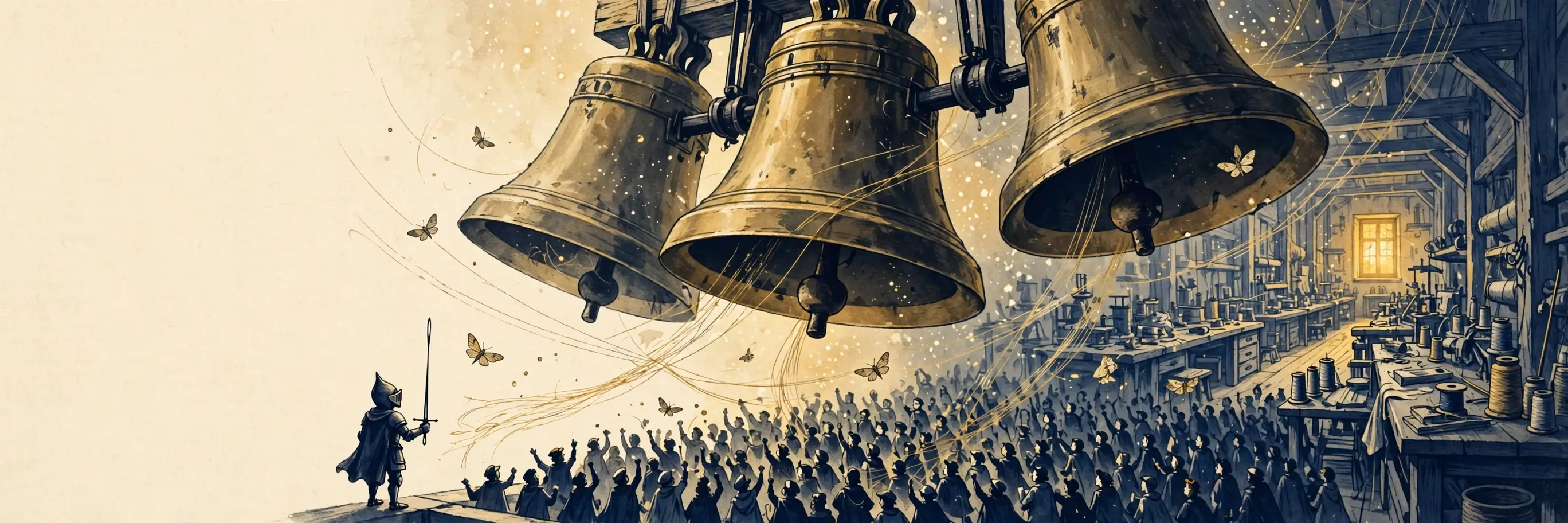
A handful of developers in Adelaide said almost nothing for six years, charged 19.99 dollars, and then broke Steam, the Nintendo eShop and the PlayStation Store in a single morning. This is how Silksong happened.
On the morning of September 4, 2025, the biggest game stores on the internet fell over.
Steam buckled. The Nintendo eShop buckled. The PlayStation Store buckled. The cause was not a new console launch, and it was not Grand Theft Auto. It was a hand-drawn game about a small knight with a needle, priced at 19.99 dollars, made by a core team of three people in Adelaide, Australia.
Hollow Knight: Silksong may be the strangest success story in the history of the medium. It was announced in February 2019. Its makers then went nearly silent for six years, while their fans turned waiting itself into a culture. When the game finally arrived, with two weeks of warning, it went on to sell more than seven million copies in about three months.
This is the story of how patience became the most powerful marketing force in games.
First, the machine underneath: what a Metroidvania does to you
To understand the devotion, you first have to understand the design. Hollow Knight and Silksong belong to a genre fans call the Metroidvania, a name welded together from its two ancestors: Nintendo's Metroid, from 1986, and Castlevania: Symphony of the Night, from 1997. The genre makes one core promise. Here is a vast, beautiful, interconnected world. You are too weak to survive most of it. Go anyway.
The engine of the design is the ability gate. You explore until something stops you: a gap slightly too wide, a cliff slightly too high, a door that opens only from the other side. Somewhere else in the world, usually on the far side of a brutal boss fight, you earn the tool that beats that wall: a dash, a wall climb, a double jump. The moment you get it, the entire map reopens at once, including corridors you walked past hours ago and never questioned. Progress is not a line. It is a key ring filling up, and a map assembling itself inside your head. Team Cherry built Hollow Knight's world, the fallen kingdom of Hallownest, to be genuinely easy to get lost in, with only basic signs for guidance. The makers were chasing the sense of wonder they remembered from the exploration games of their own childhood: Metroid, Faxanadu, Zelda II and Mega Man X.
Layered on top is a death system with real teeth. When your knight dies, you drop everything you were carrying, and a Shade, your own ghost, waits where you fell, holding all of it. Fight your way back and defeat it, and your money is yours again. Die on the way back, and it is gone for good. Save points are benches, and benches are scarce, so every trip away from one is a small wager against your own skill. And for those who finish and still want more, the game offers Steel Soul mode, where death is permanent and the save file dies with you, and a set of boss arenas called Pantheons, the last of which asks you to defeat every boss in the game, back to back, without falling once.
Here is why this design breeds a particular kind of loyalty. The game barely levels you up. Your character grows a little stronger, but mostly you grow: patterns memorized, hands faster, the map internalized until you can cross the kingdom half blind. Finishing Hollow Knight is a credential, earned the slow way. Communities that form around a shared ordeal like that develop their own language, their own heroes and their own folklore. So when a sequel was announced, its audience did not wait the way audiences wait. They waited the way alumni wait: loyally, publicly, and with running jokes only they understood.
Watch: The World Design of Hollow Knight | Boss Keys, from Game Maker's Toolkit. Mark Brown maps Hallownest gate by gate and shortcut by shortcut, the clearest guided tour of how this key ring design is actually built.
A sequel that started as a footnote
Team Cherry's first game, Hollow Knight, appeared in 2017 and grew slowly into one of the most loved games ever made. By August 2025 it had sold more than 15 million copies, the studio told Bloomberg's Jason Schreier in a rare interview. For context, that puts a somber little game about bugs in the same sales neighborhood as famous blockbuster franchises.
The first game had humble math behind it. The idea began at a game jam in 2013, as a small prototype called Hungry Knight. In late 2014, Gibson and Pellen took Hollow Knight to Kickstarter, asking for 35,000 Australian dollars. They raised a little over 57,000 Australian dollars, from 2,158 backers. It was enough to hire help and finish the game, barely, and it remains nearly the last time the studio ever asked the public for anything.
Watch: How Hollow Knight Was Made and First Appeared on Newgrounds, from ThatGuyGlen. His documentary tells the whole origin story, from game jam prototype to Newgrounds obscurity to the Kickstarter that barely funded the game.
Then came the slow burn, and it is the real origin of everything that followed. Hollow Knight launched in February 2017 to strong reviews and modest sales, about 500,000 copies by that November. Team Cherry kept giving things away: four substantial expansions, all free, spread across 2017 and 2018. The Nintendo Switch version was announced and released on the very same day at E3 2018, a surprise drop that carried the game to millions of new players. Sales crossed one million by the middle of 2018 and reached 2.8 million by February 2019.
Hold that last number, because it reframes the whole phenomenon. When Silksong was announced in February 2019, Hollow Knight had sold 2.8 million copies. It has since sold about 12 million more. Read that again: the sequel that did not exist sold the original. Every year of waiting doubled as a year of discovery, as new players finished the first game, joined the queue for the second, and made the art, videos and jokes that recruited the next wave. Bloomberg reported that the money from that endless tail is what let the studio keep working on the sequel indefinitely, without worrying about running out of funds.
Silksong began as downloadable content for Hollow Knight, a chance to play as Hornet, one of the original game's most popular characters. The project kept growing until, in February 2019, Team Cherry announced it had become a full sequel. Fans got a reveal trailer, a playable demo at E3 that summer, a magazine cover story in early 2021, and then, gradually, something close to silence.
The studio is tiny. Ari Gibson and William Pellen lead it, programmer Jack Vine builds alongside them, and composer Christopher Larkin writes the music, with a few contractors helping. There was no publisher setting deadlines. And after Hollow Knight's success, there was no financial need to hurry. That combination, total freedom plus total perfectionism, is the engine of everything that followed.
The wait became the culture
Most game communities fade when the news dries up. Silksong's did the opposite.
Before every Nintendo Direct and every summer showcase, fans put on virtual clown makeup, a running joke for people who knew they were probably fooling themselves, and flooded the live chats with one question: Silksong when? Nintendo Life's history of the era is literally titled "Seven Years of Hope, Hype, and Clown Makeup." In June 2022, Xbox promised the game would arrive within twelve months. It did not. By January 2025, the studio's marketing representative was reduced to assuring everyone that the game "is real, progressing, and will release."
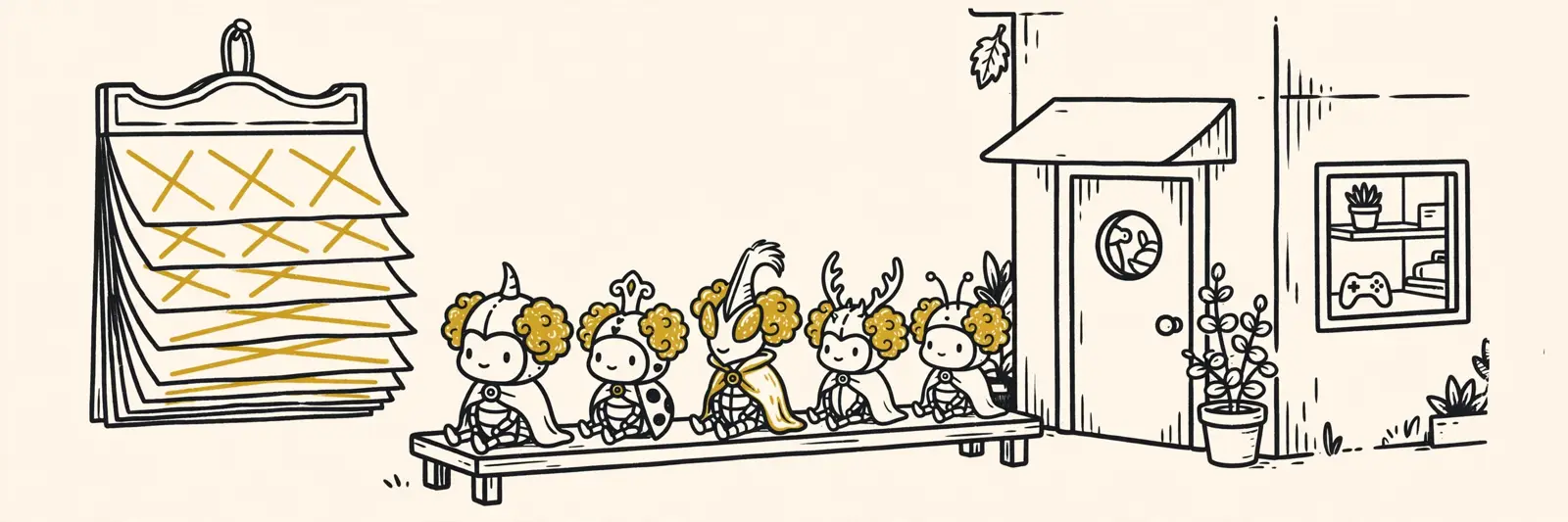
One fan turned the ritual into a daily discipline. Araraura, host of the YouTube channel Daily Silksong News, posted a video every single day starting in 2021. Most days, the entire video was a cheerful report that there was no news. He did not miss a day for 1,693 days, building an audience of about 234,000 subscribers along the way, until the final episode, titled "The End," aired on launch day itself.
On Reddit, the emptiness got its own art form. Fans fabricated screenshots of announcements that had never happened and posted them as if they were real, a genre Bloomberg reports the community called "silkposts": equal parts joke, hoax and pressure valve. Some fans went further, all the way to Adelaide. Gibson told Bloomberg that people would show up at the studio's office, sometimes with their children, hoping for something like a tour of a chocolate factory. What they found, he said, was "a grubby room with cardboard boxes." The walls were still the same dull avocado color they had been when the studio moved in more than a decade earlier, and the team had never put up art. The most anticipated game in the world was being made in a room its own creator calls grubby, by people too busy making it to decorate.
And the wait was not empty time. The original game kept compounding quietly, year after year, on its way to that 15 million total. Every month of silence added players, and every new player became another person waiting. Team Cherry's silence was not the absence of marketing. It was a six-year drumbeat that cost the studio nothing and reached everyone.
Pellen, looking back at the whole strange era, admitted the community's fun had taken on a life of its own, almost independent of the game. "Feels like we're going to ruin their fun by releasing the game," he joked to Bloomberg. It may be the only time a developer has worried that shipping the product would let the fans down.
Two weeks of warning
On August 21, 2025, Team Cherry posted a short "special announcement" video. According to Streams Charts, 323,297 people watched it live at its peak, making it the second most-watched gaming video on YouTube that week, behind only a Nintendo broadcast. All the video really said was: September 4.
Two weeks of notice, for the most anticipated independent game in the world, landed like a thunderclap on every other small studio with a September launch. Within days, game after game moved out of the blast radius. Demonschool jumped from September 3 to November 19. CloverPit moved from September 3 to September 26. Baby Steps, from the team behind Getting Over It, slid from September 8 to September 23 and announced the delay with a self-deprecating joke at its own expense. Little Witch in the Woods gave up the September 4 date entirely, moving to September 15. Around the industry, Silksong had picked up a nickname: the GTA VI of indie games.
The tone of the fleeing developers, notably, was admiration rather than anger. "Silksong is a game we look up to with awe as developers, and eagerly anticipate as players," wrote Sunny Side Up, the studio behind Little Witch in the Woods, while moving its own game out of the way.
There was one more quiet decision that said everything about the studio. Team Cherry sent no advance review copies to critics. Schreier reported their reasoning: organizing codes was genuinely hard for so small a team, and it felt unfair for critics to play before the Kickstarter backers and fans who had waited seven years. The press would start at the same line as everyone else. Almost no studio on Earth would leave its launch unreviewed on purpose. This one could, because its audience had effectively spent eight years reviewing the studio, and had already delivered the verdict.
The morning the stores broke
Part of the chaos was baked into the plan. Team Cherry took no preorders and allowed no preloads, so at 10 a.m. Eastern time on September 4, the entire audience arrived at the same digital doors at the same moment. Steam, the Nintendo eShop and the PlayStation Store all crashed or buckled under the load, while players refreshed store pages the way fans refresh ticket sites.
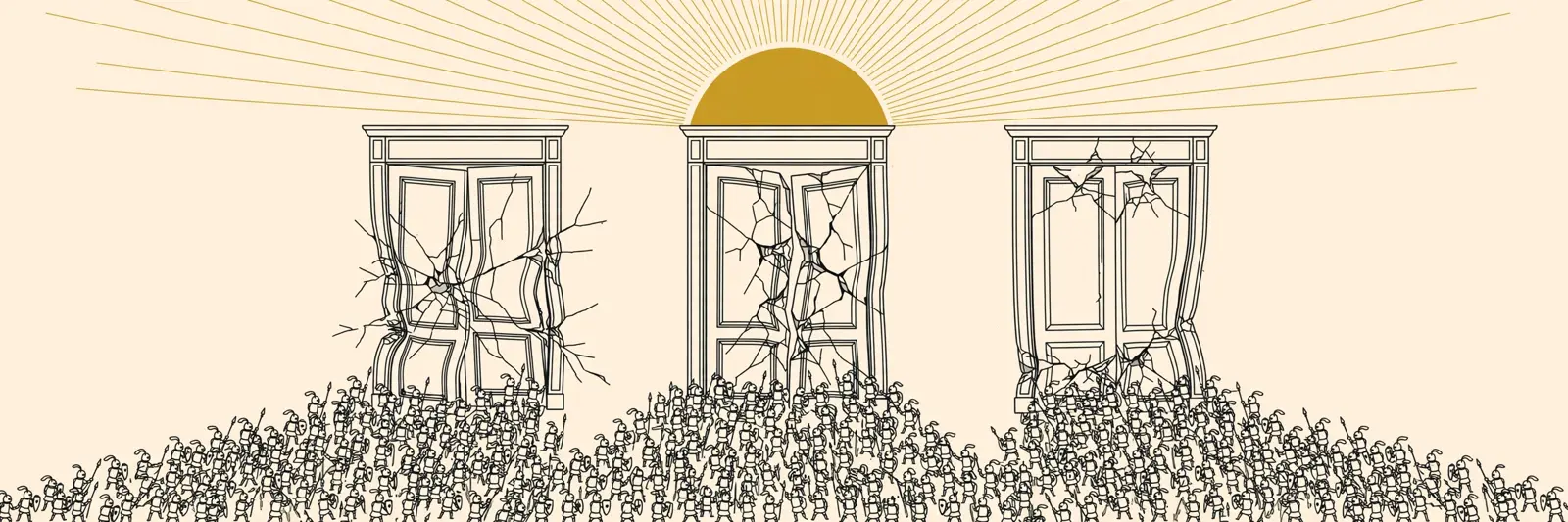
The numbers that followed were absurd for a 19.99 dollar independent game. Silksong passed 100,000 simultaneous players on Steam within about half an hour. Its Steam peak reached 587,150 concurrent players, the 17th highest peak in the platform's history. Analytics firm Alinea Analytics estimated more than five million players across all platforms in the first three days, including over three million copies sold on Steam alone, worth roughly 50 million dollars, plus about a million more players arriving through Xbox Game Pass. "I can confidently say this is the single biggest indie launch we've ever tracked in that time period," said Alinea's Rhys Elliot.
Critics backed the players. A week after launch, Silksong held a top critic average of 92 on OpenCritic. And when the release date finally dropped in August, the original Hollow Knight's monthly players, not counting Nintendo Switch, had surged 200 percent to about two million, according to IDG Intelligence data reported by GamesBeat. The sequel's arrival lifted the whole series.
Watch: The World Design of Hollow Knight: Silksong, from Game Maker's Toolkit. Brown comes back for the sequel and shows how Pharloom inverts the first game, turning a descent into a climb toward the Citadel.
There were no asterisks attached to the price, either. No microtransactions. No battle pass. No loot boxes. Twenty dollars bought the whole, enormous game.
In December 2025, Team Cherry announced a free expansion, Sea of Sorrow, coming in 2026, and shared the running total: over seven million copies purchased in about three months, "alongside millions more playing on Xbox Game Pass." "That's over seven million of you who've purchased the game," the studio wrote. "It's a truly staggering number of players, more than we could have ever expected (enough to crash all of the storefronts!)"
Awards season ratified the whole run. At The Game Awards in December 2025, Silksong won Best Action/Adventure, on a night otherwise swept by Expedition 33, the production from a core team of about thirty people in France that we profile in our companion post. The two biggest stories in games in 2025 were, at heart, the same story told twice: small teams, fair prices, and work so good it bent the calendar around itself.
The mastery culture: a vast game, beaten in 58 minutes
The community that waited also competes, and it started competing immediately. Most players need dozens of hours to finish Silksong. Within its first week, speedrunners were already trading the record back and forth: Onaku posted an any-percent finish, meaning a race to the credits by any route, of 1 hour 46 minutes, and BlueSR answered within hours, pushing the mark under an hour and a half and then lower still. By September 26, less than a month after launch, a runner named Nebula reached the credits in 58 minutes and 52 seconds, the first completion of the game in under an hour.
The game itself issues the dare. Silksong carries an achievement called Speedrunner for finishing in under five hours. A week after launch, 0.1 percent of players held it. A companion achievement, Speed Completion, asks for full 100 percent completion in under 30 hours, and so few players had earned it that the figure rounded to zero. The original Hollow Knight shows where this road eventually leads: after years of practice by thousands of runners, its fastest glitchless completion stands at 30 minutes and 49 seconds.
This is not a sideshow. It is part of why the phenomenon lasted. A game that can be mastered this deeply never really empties out. There is always a faster route, a cleaner boss fight, a harder mode to survive. During the silent years, the first game kept generating races, records and challenge runs, and every one of them kept the audience warm while recruiting new players into the wait. The community did not just endure the seven years. It trained through them.
Why it took seven years
The natural assumption, during the long quiet, was that something had gone badly wrong. In their August 2025 interview with Bloomberg, Gibson and Pellen calmly explained that nothing had. "It was never stuck or anything," Gibson said. "It was always progressing. It's just the case that we're a small team, and games take a lot of time. There wasn't any big controversial moment behind it."
The real cause was almost embarrassingly wholesome: they were enjoying themselves, and every new idea made the game bigger. "I think we're always underestimating the amount of time and effort it'll take us to achieve things," Gibson said. "It's also that problem where, because we're having fun doing it... 'This is a very enjoyable space to be in. Let's perpetuate this with some new ideas.'" Pellen admitted that for a stretch of two to three years, he genuinely believed the game was within a year of release.
At one point, Gibson had to ban himself from sketching. "I remember at some point I just had to stop sketching," he said, "because I went, 'Everything I'm drawing here has to end up in the game. That's a cool idea, that's in. That's a cool idea, that's in.' You realize, 'If I don't stop drawing, this is going to take 15 years to finish.'"
The silence, too, was a decision. "We felt like continued updates were just going to sour people on the whole thing," Gibson explained, "because all we could really say is, 'We're still working on it.'" Pellen added that their real responsibility "was just to work on the game." So they said nothing, and worked.
And the scope they were protecting was real. According to the game's own marketing materials, Silksong shipped with roughly 200 kinds of enemies and about 40 bosses, numbers that games three times its price rarely reach. Seven years of fun bought a very large game. The catch, as the next section admits, is what seven years cost, and who is allowed to spend them.
The honest lesson
Here is the caveat, and it matters: almost nobody can copy this. GamesBeat's own analysis of the launch concluded that Silksong is an exception to the reality of game development, not a redefinition of it. Team Cherry could take seven years because a 15 million copy hit had already removed money pressure, and because the first game was so beloved that its community treated waiting as a team sport. Silence from an unknown studio is just silence.
Run the tiny-team math and the impossibility sharpens. Seven million copies at 19.99 dollars comes to roughly 140 million dollars in gross sales, before the stores take their share. Against that stands a cost base of a handful of people, one modest office, no publisher taking a cut and no investors to answer to, since Team Cherry publishes its own games. The interest-free loan that funded the seven years was Hollow Knight itself, still selling millions of copies while its sequel was being drawn. The schedule was not a strategy chosen from a menu. It was a luxury good, bought with a once-in-a-decade hit.
The phenomenon had a shadow side, too, and honesty requires naming it. The games that fled September lost launch windows their own small teams had planned around for months, and some never got that moment back. The store crashes that morning became a badge of honor for Silksong, but they also locked every other game on those stores out of their normal sales during the biggest indie news day of the year. And the fans' ritual, joyful as it mostly was, was also a weight on a handful of people who had chosen silence partly to escape exactly that weight. None of this makes the story smaller. It makes it true. A phenomenon bends the world around it, and bending is not free.
But the transferable parts are real, and they are almost boring. Make something excellent. Price it fairly. Respect your audience's intelligence. Finish what you start. Silksong is what happens when those plain virtues are allowed to compound for a decade: a game so anticipated that other games fled its release date, so trusted that it broke the stores that sold it, and so good that seven million people paid for it without a single advertisement forcing their hand. (For the industry-wide version of this shift, see our companion post on the year the blockbuster broke.)
Why this belongs at Starvard
Silksong is a masterclass in the exact skills Starvard teaches. It is a design story about scope, taste and knowing when to stop adding: see our design course. It is a focus story about three people doing deep, patient work for years while the whole internet shouted for updates: see our course on focus. And it is a learning story, because millions of players willingly practice a demanding game until they master it: see Learning How to Learn. Craft compounds. This game is the proof.
Watch
Hollow Knight: Silksong - Release Trailer, from Team Cherry's official channel. The August 21, 2025 announcement itself: two minutes that ended six years of waiting. Watch it knowing 323,297 people were watching live.
Hollow Knight: Silksong Gameplay - Nintendo Treehouse: Live | E3 2019, from Nintendo of America. The 2019 gameplay deep dive that fans rewatched for six years while they waited. It shows how much of the final game was already there at the start.
Daily Silksong - Sea of Sorrow News - Day 303 [Ft. Raime], from Daily Silksong News. Proof the ritual survived success: after 1,693 daily videos waiting for the game, the channel simply started again, counting the days to the expansion.
Sources
- Bloomberg (Jason Schreier's August 2025 interview with Team Cherry), via GoNintendo, for Hollow Knight's 15 million copies and the developers' account of the long wait: gonintendo.com
- 80 Level, reporting the same Bloomberg interview, for the "never stuck," sketching, and silence quotes from Ari Gibson and William Pellen: 80.lv
- Nintendo Life, "The Road to Silksong," for the seven-year timeline, the clown makeup ritual, and the missed twelve-month Xbox window: nintendolife.com
- IGN reporting on Daily Silksong News, via Tech News Vision, for the 1,693 daily videos, the host Araraura, and the channel's subscriber count: technewsvision.co.uk
- Dexerto, reporting Streams Charts data, for the 323,297 peak live viewers of the August 21, 2025 announcement video: dexerto.com
- Siliconera, for the list of games that delayed to avoid Silksong and the Sunny Side Up quote: siliconera.com
- GamesBeat, reporting Alinea Analytics estimates, SteamDB figures and IDG Intelligence data, for the five million players in three days, the Steam concurrent peak and its all-time ranking, the 92 OpenCritic average, and the original game's player surge: gamesbeat.com
- Nintendo Life, for Team Cherry's December 2025 announcement of over seven million copies sold and the free Sea of Sorrow expansion: nintendolife.com
- Wikipedia, "Hollow Knight," for the 2013 game jam origin, the 2014 Kickstarter (a goal of 35,000 Australian dollars, over 57,000 raised from 2,158 backers), the four free expansions, the same-day Switch announcement and release at E3 2018, and the design details, including the Shade death system, Steel Soul mode and the Pantheon boss rushes: en.wikipedia.org
- Spilled, reporting the Bloomberg interview, for Hollow Knight's sales ladder (500,000 copies by November 2017, one million by mid 2018, 2.8 million by February 2019, and about 12 million more after Silksong was announced), the financial freedom those sales bought, and the enemy and boss counts in the game's marketing materials: spilled.gg
- Wikipedia, "Hollow Knight: Silksong," for Team Cherry's decision to send no advance review copies and the reasoning the studio gave Jason Schreier: en.wikipedia.org
- Dot Esports, The Game Awards 2025 winners list, for Silksong winning Best Action/Adventure: dotesports.com
- DualShockers, for the first week of Silksong speedrun records, the Speedrunner achievement's 0.1 percent earn rate, and the original Hollow Knight's 30 minute 49 second glitchless world record: dualshockers.com
- TheGamer, for Nebula's 58 minute 52 second completion of Silksong, the game's first run under one hour: thegamer.com
- Game Maker's Toolkit, "The World Design of Hollow Knight" and "The World Design of Hollow Knight: Silksong," the design analyses woven into this post: youtube.com
- ThatGuyGlen, "How Hollow Knight Was Made and First Appeared on Newgrounds," documentary on the studio's game jam and Kickstarter origins: youtube.com