 Starvard
The Psychology of Human Thought · Chapter 18 of 19
Chapter 18: Affect and Thought: The Relationship Between Feeling and Thinking
by Joseph Forgas
Since time immemorial, philosophers, writers, and artists have wondered about the intricate relationship between feeling and thinking, affect and cognition. Humans are certainly an emotional species. Our feelings seem to influence and color everything we think and do (Zajonc, 2000), in ways that we do not yet fully understand. Philosophers such as Blaise Pascal put it very succinctly: ‘The heart has its reasons that reason does not understand’. Yet apart from some early exceptions (e.g., Rapaport, 1942/1961; Razran, 1940), focused empirical research on the links between affect and cognition has been slow to emerge. One possible reason is the widespread assumption in Western philosophy that affect is an inferior and more primitive faculty of human beings compared to rational thinking, an idea that can be traced all the way to Plato (Adolphs & Damasio, 2001; Hilgard, 1980; see also Chapter 2, “History of the Field of the Psychology of Human Thought”). Affective states indeed have some unique properties. They often have broad non-specific effects on thinking and behavior, can occur spontaneously and often subliminally, they are difficult to control, and they are linked to powerful and sometimes visible bodily reactions. Most importantly, affective states have an invasive quality, influencing our thoughts and behaviors (Dolan, 2002; James, 1890).
ism and cognitivism), neither assigned great importance to the study of the functions of affective states, such as moods and emotions. Radical behaviorists considered all unobservable mental events (including affect) as irrelevant to scientific psychology. The emerging cognitive paradigm in the 1960s largely focused on the study of cold and rational mental processes, and initially also had little interest in the study of affect. Thus, understanding the delicate interplay between feeling and thinking still remains one of the greatest puzzles about human nature (Koestler, 1967/1990). It was only in the last few decades that researchers started to focus on how moods and emotions influence how people think and behave.
This chapter reviews what we now know about the multiple roles that affective states play in influencing both the content (what we think) and the process (how we think) of cognition. After a brief introduction looking at some early work and theories linking affect and cognition, the chapter is divided into two main sections. First, research on affective influences on the content of thinking is reviewed, focusing especially on how positive and negative affective states preferentially produce positive and negative thoughts, a pattern of thinking called af-fect congruence. The second section of the chapter surveys evidence for the processing effects of affect,
Yet, of the two major paradigms that dominated the brief history of our discipline (behavior-
https://doi.org/10.17885/heiup.470.c6681 Psychology of Human Thought • Chapter 18 • 341
Forgas Affect and Thought
documenting how affect influences the quality of our information processing strategies.
to suppress their fear. Fear produced more negative evaluations of another person just encountered, and ironically, this effect became even greater when judges were actively trying to suppress their fear. This paradox pattern was interpreted as consistent with the psychodynamic mechanism of suppression and projection, suggesting that “suppression of fear facilitates the tendency to project fear onto another social object” (Feshbach & Singer, 1957, p.286).
For the purposes of our discussion, affect is used as a generic term to encompass two distinct kinds of feeling states. Moods may be defined as “relatively low-intensity, diffuse, subconscious, and enduring affective states that have no salient antecedent cause and therefore little cognitive content” (Forgas, 2006, pp. 6–7). Distinct emotions in contrast are more intense, conscious, and short-lived affective experiences (e.g., fear, anger, or disgust). Moods tend to have relatively uniform and reliable cognitive consequences, and much of the research we deal with looks at the cognitive consequences of moods. Emotions such as anger, fear, or disgust tend to have more context and situation-dependent effects that are less uniform (e.g., Unkelbach, Forgas, & Denson, 2008).
Subsequently, Byrne and Clore (1970) returned to a classical-conditioning approach to explore how affective states can color thinking and judgments. They placed participants into pleasant or unpleasant environments (the unconditioned stimuli) to elicit good or bad moods (the unconditioned response), and then assessed their evaluations of a person they just met (the conditioned stimulus; Gouaux, 1971; Griffitt, 1970). As expected, manipulated positive affect reliably produced more favorable judgments than did negative affect. These early studies, although based on very different theoretical models (psychoanalysis, behaviorism, etc.), produced convergent evidence demonstrating an affect congruent bias in thinking.
Early Evidence Linking Affect andCognition
Although radical behaviorists showed little interest in affect, Watson’s classic conditioning research with Little Albert is an early demonstration of affect congruence in judgments—when negative affect produces negative reactions (Watson & Rayner, 1920). These studies showed that reactions to an initially neutral stimulus, such as a furry rabbit, became more negative after participants experienced unexpected negative affect, elicited by a sudden loud noise. Watson—incorrectly, as it turns out—thought that most complex affective reactions are acquired in a similar way throughout life as a result of ever-more complex and subtle layers of stimulus associations. In a later study linking affect and thought, Razran (1940) found that people responded to sociopolitical messages more favorably when they were in a positive affective state (just received a free lunch!) rather than in a bad affective state (being exposed to aversive smells). Politicians seem to instinctively know this, using positive affect manipulations (upbeat music, free food and drinks, etc.) to improve the likely acceptance of their messages.
18.1 Affect Congruence: AffectiveInfluences on the Content ofThinking
In the studies described above, positive affect produced more positive thoughts and negative affect produced more negative thoughts. Interest in this pattern of affect congruence re-emerged in the last few decades. Investigators now wanted to understand the information-processing mechanisms that can explain how affect can come to infuse the con-tent and valence (positivity or negativity) of cognition. Three convergent theories accounting for affect congruence have been proposed: (1) asso-ciative network theories emphasizing underlying memory processes (Bower, 1981; 1991), (2) affect-as-information theory relying on inferential processes (Clore & Storbeck, 2006; Schwarz & Clore, 1983), and (3) an integrative Affect Infusion Model(AIM; Forgas, 1995, 2006), a theory that seeks to ex-
In a subsequent psychoanalytically oriented study, Feshbach and Singer (1957) induced negative affect using electric shocks and then instructed subjects
342 • Psychology of Human Thought • Chapter 18
A Memory Effect? The Associative Network Explanation Forgas
plain how different thinking strategies can increase or decrease the extent of affect infusion.
pattern (e.g., Bower, 1991; Fiedler, 2002; Forgas, 1995; Mayer, Gaschke, Braverman, & Evans, 1992). This occurs because more open, elaborate processing increases the opportunities for affectively primed memories and associations to be retrieved and incorporated into a newly constructed response (Forgas, 1995; 2006).
18.1.1 A Memory Effect? TheAssociative NetworkExplanation
The first cognitive model to explain affect congruence suggested that affective states influence cognition because affect is linked to memory within a shared associative network of memory representations (Bower, 1981). When an affective state is experienced, for whatever reason, that affect may automatically prime or activate units of knowledge or memories previously associated with the same affective state. Such affectively primed constructs are then more likely to be primed or activated, and used in subsequent constructive cognitive tasks. For example, Bower (1981) found that happy or sad people were more likely to remember details from their childhood and also remembered more events that occurred in the past few weeks that happened to match their current affective state. Similar affect congruence was also demonstrated in how people interpreted their own and others’ observed social behaviors. When happy or sad participants viewed the same videotape of an encounter, judges in a positive affective state saw significantly more skilled, positive behaviors both in themselves and in other people, while those in a negative mood interpreted the same observed behaviors more negatively (Forgas, Bower, & Krantz, 1984).
18.1.2 Affect as a Heuristic? TheAffect-As-Information Theory
Following Bower’s (1981) work, an alternative theory sought to explain affect congruence by proposing that instead of computing a judgment on the basis of recalled features of a target, individuals may “ask themselves: ’how do I feel about it?’ [and] in
doing so, they may mistake feelings due to a preexisting state as a reaction to the target” (Schwarz, 1990, p. 529; see also Schwarz & Clore, 1983; Clore & Storbeck, 2006). In other words, rather than properly constructing a response, the pre-existing affective state is used as a heuristic shortcut indicating their reaction to a target. For example, affect incidentally induced by good or bad weather was found to influence evaluative judgments on a variety of unexpected and unfamiliar questions in a telephone interview (Schwarz & Clore, 1983). In a similar situation, we also found affect congruence in survey responses of almost 1000 subjects who completed a questionnaire after they had just seen funny or sad films at the cinema (Forgas, 1995).
The affect-as-information model is closely based on related research showing that people often rely on various shortcuts in their judgments. The model is also related to earlier conditioning models that predicted a blind, unconscious connection between affect and coincidental responses (Byrne & Clore, 1970). This kind of affective influence is far less likely to explain affective influences on more complex cognitive tasks, involving memory and associations where more elaborate computation is required. Affect as a simple, direct source of evaluation seems most likely when “the task is of little personal relevance, when little other information is available, when problems are too complex to be solved systematically, and when time or attentional resources are limited” (Fiedler, 2001, p. 175), as in the casual sur-
Further research showed that affect congruence is subject to some limiting conditions (see Blaney, 1986; Bower & Mayer, 1989). Affect-congruence seems most robust (a) when the affective state is clear, strong, and meaningful, (b) the cognitive task is self-referential, and (c) when more open, elaborate, and constructive thinking is used (Blaney, 1986; Bower, 1991; Bower & Mayer, 1989). In general, quick, easy, familiar and regularly performed tasks are less likely to show affect congruence. In contrast, cognitive tasks that call for more constructive, openended thinking (such as judgments, associations, inferences, impression formation, and planning behaviors) are most likely to show an affect-congruent
Psychology of Human Thought • Chapter 18 • 343
Forgas Affect and Thought
vey situations studied by Schwarz and Clore (1983), and also in the study showing affective influences on responses to a street interview after seeing happy or sad movies by Forgas (1995). In most realistic situations when people need to think constructively about new, unfamiliar and complex problems, moodcongruent associations in memory offer a more plausible explanation for affect congruence than simply using affect as a heuristic cue.
and processing resources are limited (e.g., in the telephone and street survey situations studied by Schwarz & Clore, 1983, and in Forgas, 1995). Heuristic processing only results in affect congruence when affect can be used as a convenient shortcut to infer a reaction (Schwarz & Clore, 1983; see also Clore & Storbeck, 2006). (4) Only the fourth processing style, substantive processing, involves constructive and effortful thinking. This kind of thinking should be used when the task is new and relevant and there are adequate processing resources available (for example, trying to form a judgment about a new person you are likely to see a lot of in the future). Substantive processing should produce affect congruence because it increases the likelihood of incorporating affectively primed thoughts and memories in constructing a response (Forgas, 1994; 1999). In summary, the AIM explains how four different processing strategies may promote or inhibit affect congruence in thinking and judgments (Fiedler, 2001; Forgas, 1995). One interesting and counter-intuitive prediction of this model is that sometimes, more extensive and elaborate thinking may actually increase affective distortions in judgments by increasing the likelihood that affectively primed information will be used (Forgas, 1992; Sedikides, 1995). Such a paradoxical pattern has now been found in a range of studies, as we will see below.
18.1.3 Putting it all Together: TheAffect Infusion Model (AIM)
The research reviewed so far suggests that the occurrence of affect congruence in thinking (more positive thoughts in positive mood, more negative thoughts in negative mood) very much depends on how a particular cognitive task is processed. The Affect Infusion Model (AIM; Forgas, 1995; 2006) relies on this principle to explain the presence or absence of affect congruence in different situations. The AIM identifies four alternative processing strategies that vary in terms of (a) their openness (how much new information needs to be accessed), and (b) the degree of effort used in processing a cognitive task. The first, direct-access strategy involves the simple and direct retrieval of a pre-existing response, likely to be used when a task is familiar and of low relevance, producing no affect infusion (for example, if somebody asked your opinion about a familiar target, like President Trump, and you already have a well-defined and stored judgment, simply reproducing this judgment requires no constructive thinking and will not be influenced by how you are feeling at the time). (2) Motivated processing occurs when thinking is dominated by a specific motivational objective requiring highly targeted and selective information search and processing strategies that inhibit open, constructive thinking (e.g., when trying hard to make a good impression at a job interview, this objective will dominate your responses, and your affective state will not have much of an affect congruent influence) (Clark & Isen, 1982; Sedikides, 1994). (3) The third, heuristic processing strategy (using whatever easy shortcuts are available) involves low-effort processing used when time, involvement
18.1.4 Affect Congruence in Memory
Affect plays a key role in memory. The events we remember are almost always marked out for special attention by their affective quality (Dolan, 2002). And by definition, only the things we actually remember—the available contents of memory— can be used for thinking. Considerable research now shows that affect indeed does have a significant influence on what we remember. People are consistently better at remembering memories that are either consistent with their current affective state (affect congruence), or have been experienced in a similar, matching rather than dissimilar affective state (affect-state dependent memory).
Several studies found that people are better at retrieving both early and recent autobiographical mem-
344 • Psychology of Human Thought • Chapter 18
Affect-state Dependence in Memory Forgas
ories that match their current mood (Bower, 1981; Miranda & Kihlstrom, 2005). Depressed people also selectively remember negative experiences and negative information (Direnfeld & Roberts, 2006). This pattern is also confirmed with implicit tests of memory when happy or sad subjects are asked to complete a few letters to make a word that first comes to mind (e.g., can- may be completed into words like cancer or candy; Ruiz-Caballero & Gonzalez, 1994). It turns out that happy people reliably come up with more positive, and sad people with more negative words in such a task. We found that happy or sad participants also selectively remembered more positive and negative details respectively about the good or bad characteristics of people they had read about (Forgas & Bower, 1987). This pattern was also confirmed in a study by Eich, Macaulay, and Ryan (1994), who asked happy or sad students to remember 16 specific episodes from their past. There was a clear affect congruent pattern in what they recalled.
ing depression. Fortunately, with non-clinical subjects, this spiral is rare as sad people automatically escape the vicious circle of negativity by automatically switching to an affect-incongruent processing strategy after a while. For example, after initially retrieving negative memories, non-depressed participants in a negative mood spontaneously shifted to retrieving positive memories as if to lift their mood (Josephson, Singer, & Salovey, 1996).
18.1.5 Affect-state Dependence inMemory
Affective states also impact on memory by selectively facilitating the retrieval of information that has been learnt in a matching rather than a non-matchingaffective state. Such affect-state dependent mem-ory is a special case of state dependence. We all remember information better when the same state is reinstated in which the event was first encountered. For example, a list of words learnt when you were feeling happy is more likely to be remembered when you feel happy again rather than sad at the time of retrieval (Bower, 1981). In extreme cases of state dependency, serious memory deficits can also occur in patients with alcoholic blackout, chronic depression, dissociative identity and other psychiatric disorders (Goodwin, 1974; Reus, Weingartner, & Post, 1979). Bipolar patients with intense affective fluctuations also show a marked pattern of affectstate dependence in remembering (Eich, Macaulay, & Lam, 1997).
These affect-congruent memory effects occur because an affective state can selectively activate affect-congruent information (Bower, 1981). People will actually spend longer reading and encoding affect-congruent material into a richer pre-activated network of affect-congruent memory associations. Not surprisingly, they are also better in remembering such information later on (see Bower, 1991). Affect may also direct selective attention to affectcongruent information when it is first encountered. For example, affect influences participants’ attentional filter, focusing attention on faces that showed affect-congruent rather than incongruent expressions (Becker & Leinenger, 2011). Positive affect can also produce a marked attentional bias toward positive, rewarding words (Tamir & Robinson, 2007), and greater attention to positive images (Wadlinger & Isaacowitz, 2006). In contrast, depressed people pay selectively greater attention to negative information (Koster, De Raedt, Goeleven, Franck, & Crombez, 2005), negative facial expressions (Gilboa-Schechtman, Erhard-Weiss, & Jecemien, 2002), and negative behaviors (Forgas et al., 1984). Such an affect-congruent bias has its dangers, because through selective attention to negative events, negative affect may easily spiral into a state of endur-
Affect-state dependence is a rather subtle effect (Bower & Mayer, 1989; Kihlstrom, 1989), and is most likely to be found when the task requires open and constructive processing. Accordingly, affectstate dependence is more likely in constructive free recall tasks rather than in recognition tasks (Eich, 1995; Bower & Mayer, 1989), and more robust when the recalled events are self-relevant and the encoding and retrieval affect are distinctive, well matched and salient (Eich, 1995; Eich & Macauley, 2000; Ucros, 1989). There are also important individual differences between people in their susceptibility to affect congruence and state-dependent memory (Bower, 1991; Smith & Petty, 1995).
Psychology of Human Thought • Chapter 18 • 345
Forgas Affect and Thought
18.1.6 Affect Infusion in Associationsand Judgments
Paradoxically, affective influences on judgments tend to be greater when the targets require more constructive and elaborate processing because they are more complex and atypical (e.g., Forgas, 1992; 1995). Several studies found that the more people needed to think in order to compute a difficult and complex judgment, the greater the likelihood that their affectively primed ideas influenced the outcome. In one experiment, participants were asked to form impressions about characters who had either typical and predictable features (eg. typical medical students), or were atypical and complex (eg. a medical student who is also a hippy; Forgas, 1992). Affect had a significantly greater impact when judges had to form impressions of such complex, atypical characters (Figure 18.1).
The increased availability of affect-related information in memory should also have a marked influence on the kinds of associations and inferences people make, and subsequently, of how complex or ambiguous social information is interpreted. Bower (1981) found that after receiving a mood induction, people generated more mood-congruent ideas when daydreaming or free associating to ambiguous TAT pictures. Happy people also generated more positive than negative associations to words such as life(e.g., love and freedom vs. struggle and death) than did sad subjects. The selective priming and greater availability of affect-congruent ideas in memory can ultimately also influence complex social judgments, as judges also tend to rely on their most available, affect-consistent thoughts when making an interpretation of complex and ambiguous stimuli. For example, after an affect induction, judges made significantly more affect-congruent judgments when evaluating faces (Forgas, 2013; Gilboa-Schechtman et al., 2002), and they also form more affect-consistent impressions about others as well as themselves (Forgas et al., 1984; Forgas & Bower, 1987; Sedikides, 1995).
These judgmental effects can be quite robust, even influencing judgments about very well-known people, such as a person’s real-life partners. Forgas (1994) in one experiment showed that temporary affective state significantly influenced judgments about one’s partner as well as real, recurring relationship conflicts. Ironically, affective influences were stronger when judgments about more complex, difficult relationship situations required longer and more constructive processing. In other words, the more one needs to think about a judgmental task,
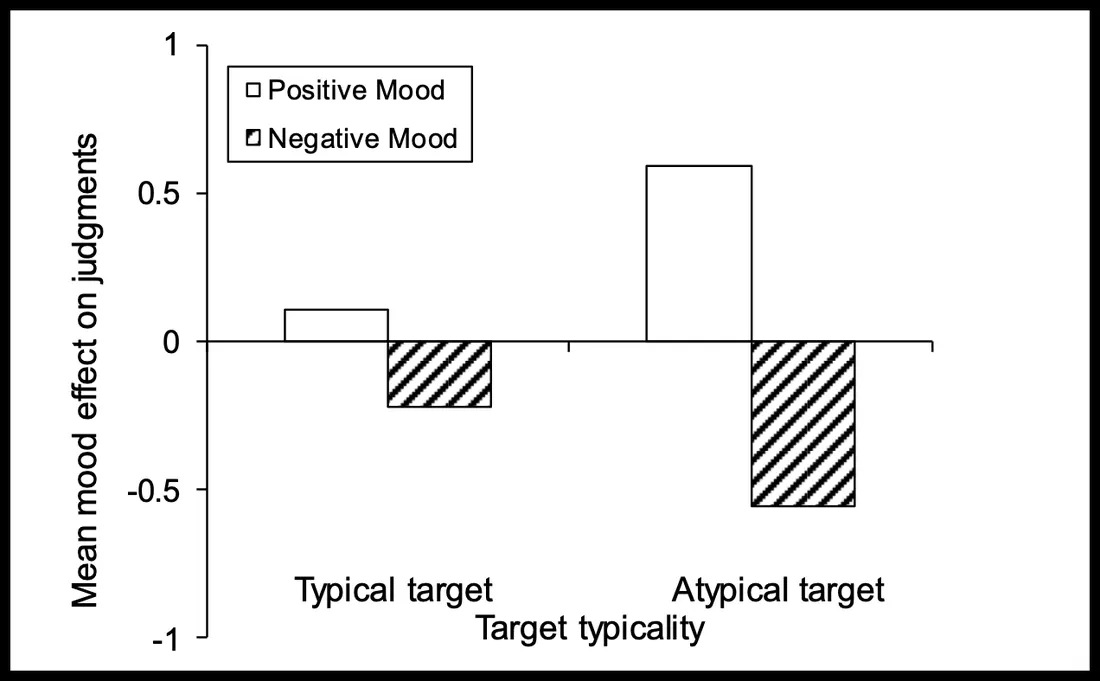
Figure 18.1: Affect-congruence in judgments is magnified when the target is complex and unusual and so requires more constructive
and extensive processing (after Forgas, 1992).
346 • Psychology of Human Thought • Chapter 18
Affect and Self-Perception Forgas
18.1.8 Affect Congruence in SocialBehaviors
the more likely that one’s prevailing affective state will come to bias the outcome. Some personality characteristics, such as high trait anxiety, may interfere with these effects, as highly anxious people are often less likely to process information in an open, constructive manner.
As we have seen, affective states often influence what people think. Because planning strategic social behaviors necessarily requires some degree of constructive, open information processing in calculating what to do (Heider, 1958), affect should ultimately also influence how people actually behave in social situations. Positive affective states, by activating more positive evaluations and inferences, should elicit more optimistic, positive, confident, and cooperative behaviors. In contrast, negative mood may produce more avoidant, defensive, and unfriendly behaviors. In one experiment, positive and negative affective states were induced in people (by showing them happy and sad films) before they engaged in a complex, strategic negotiation task (Forgas, 1998a). Those in a positive affective state employed more trusting, optimistic, and cooperative and less competitive negotiating strategies, and actually achieved better outcomes. Those in a negative mood were more pessimistic, competitive and ultimately, less successful in their negotiating moves (Figure 18.2).
18.1.7 Affect and Self-Perception
Can fluctuating affective state also bias how we think about ourselves? It turns out that the answer is ‘yes’ (Sedikides, 1995). For example, students in a positive affective state are more likely to claim credit for their success in a recent exam, but are less likely to blame themselves for failure (in Forgas, 1995). These findings were replicated in a study by Detweiler-Bedell and Detweiler-Bedell (2006), who concluded that consistent with the AIM, “constructive processing accompanying most self-judgments is critical in producing mood-congruent perceptions of personal success” (p. 196). Sedikides (1995) further found that central, well-established ideas about ourselves tend to be processed more automatically and less constructively and thus are less likely to be influenced by how we happen to feel at the time. In contrast, judgments about more “peripheral” and vague self-conceptions require more substantive processing and are more influenced by a person’s affective state. Long-term, enduring individual differences in self-esteem also play a role, as high selfesteem people are less influenced by their temporary affective state when judging themselves (Smith & Petty, 1995). Low self-esteem judges in turn have a less clearly defined and less stable self-concept and are more influenced by their fluctuating affective states (Brown & Mankowski, 1993).
Other kinds of social behaviors, for example, the way people chose their words when formulating a request, are also significantly influenced by how the person feels at the time (Forgas, 1999). Individuals in a negative affective state tend to make more pessimistic implicit inferences about the likely success of their requests, and so they use more polite, elaborate and cautious request forms. Positive affect has the opposite effect: it increases optimism and results in more confident and less elaborate and polite request formulations
Affect also has an impact on how people respondto an unexpected real-life request. In a realistic field study, students in a library were induced in a positive or negative affective state by finding folders on their desks containing affect inducing pictures and text (Forgas, 1998b). Soon afterwards they received an unexpected polite or impolite request from a passing student (actually, a confederate) asking for some stationery needed to complete an essay. There was a marked affect-congruent pattern. Negative mood resulted in more critical, negative evaluations of the request and requester, and reduced compli-
These results are consistent with the Affect In-fusion Model described previously (Forgas, 1995), and show that affectively primed thoughts and associations are more likely to influence associations and judgments when more extensive, open and constructive processing is required. Other work suggests that affect congruence in self-judgments may eventually be spontaneously corrected as people shift to a more targeted, motivated thinking style, reversing the initial affect-congruent pattern (Sedikides, 1994).
Psychology of Human Thought • Chapter 18 • 347
Forgas Affect and Thought
18.2 Affective Influences on ThinkingStrategies
ance, but positive mood yielded a more positive evaluation and greater willingness to help. These effects were even stronger when the request was more unexpected and impolite and so required more substantive processing.
The evidence surveyed so far clearly shows that affect has a marked informational influence on the valence and content of our thinking, resulting in affect-congruent effects on memory, attention, associations, judgments and social behaviors. Affect also has a second effect on cognition, influencing howpeople think, that is, the process of cognition. This section will look at evidence for the informationprocessing consequences of affect. Early studies suggested that people in a positive affective state tend to think in a more superficial and less effortful way. Those feeling good made up their minds more quickly, used less information, tended to avoid more effortful and systematic thinking, yet, ironically, also appeared more confident about their decisions. Negative affect, in contrast, seemed to produce a more effortful, systematic, analytic and vigilant processing style (Clark & Isen, 1982; Isen, 1984; Schwarz, 1990). Positive affect can also produce distinct processing advantages as happy people tend to adopt a more creative, open, and inclusive thinking style, use broader cognitive categories, show greater mental flexibility, and perform better on secondary tasks (Bless & Fiedler, 2006; Fiedler, 2001; Frederickson, 2009).
Affect infusion can be particularly important when performing complex strategic social behaviors such as self-disclosure that plays a critical role in the development and maintenance of intimate relationships. By facilitating access to affect-congruent memories and associations, people in a positive affective state disclose more positive, intimate, varied, and abstract information about themselves (Forgas, 2011). Negative affect has exactly the opposite effect, resulting in less open and positive selfdisclosure. Studies such as these provide convergent evidence that temporary fluctuations in affective state can result in marked changes not only in thinking (memory, associations and judgments), but also in actual social behaviors. In other words, our affective states play an important informational function in thinking and responding to the social world. These effects are most marked when an open, constructive processing style is adopted (Forgas, 1995; 2006) that increases the scope for affectively primed information to become activated and used (Bower, 1981).
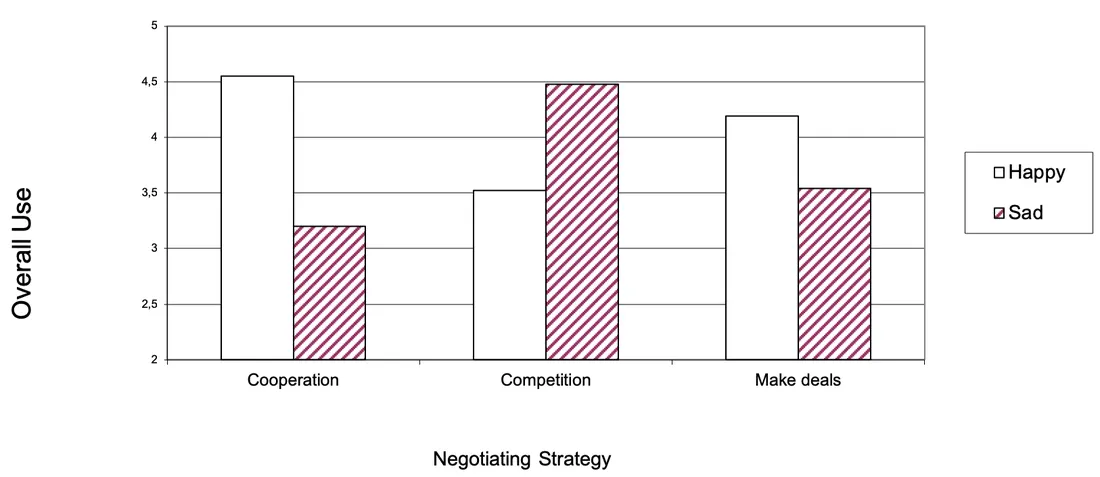
Figure 18.2: Affect-congruent influences on negotiating strategies: positive affect promotes cooperation and making deals, negative
affect promotes competition (After Forgas, 1998a).
348 • Psychology of Human Thought • Chapter 18
Linking Affect to Processing Style Forgas
18.2.1 Linking Affect to ProcessingStyle
and System 2 thinking. In important ways, it appears that positive affect promotes faster, simpler, and more heuristic and creative thinking, while negative affect produces a slower, more systematic and more analytic thinking style.
How can we explain such affectively induced processing differences? Early theories emphasized mo-tivational factors. According to the mood mainte-nance/mood repair hypothesis, positive affect may motivate people to maintain this pleasant state by avoiding effortful activity such as elaborate thinking. In contrast, negative affect is aversive, and should motivate people to shift to a more vigilant, effortful information processing style as a useful strategy to improve their affect (Clark & Isen, 1982; Isen, 1984). A somewhat similar cognitive tuningaccount (Schwarz, 1990) proposed that affective states have a fundamental signaling/tuning function, automatically informing us about the level of vigilance and processing effort required in a given situation. Thus affective states have important adaptive and motivational functions, consistent with a functionalist/evolutionary view of affect (Dolan, 2002). However, this view has been challenged by some experiments demonstrating that positive mood does not always reduce processing effort, as performance on simultaneously presented secondary tasks is not necessarily impaired (e.g., Fiedler, 2001).
Several experiments show that positive affect indeed promotes more assimilative and abstract language representations, the use of fewer and broader cognitive categories, and greater focus on the global rather than the local features of a target (Forgas, 2006; Frederickson, 2009; Gasper & Clore, 2002; Isen, 1984; Koch, Forgas, & Matovic, 2013). Further, positive affect increases, and negative affect decreases people’s tendency to rely on their preexisting internal knowledge in cognitive tasks, and improves memory for self-generated information (Fiedler, Nickel, Asbeck, & Pagel, 2003). Thus, bothpositive and negative affect can confer processing advantages, albeit in response to different situations. In contrast to the dominant hedonic emphasis on the benefits of positive affect in our culture, an important implication of this model is that positive affect is not always advantageous, and negative affect can often produce distinct processing advantages, as the experiments to be reviewed next will show.
An integrative theory by Bless and Fiedler’s (2006) suggests that the fundamental, evolutionary significance of affect is not simply to regulate processing effort, but rather to trigger equally effortful but qualitatively different processing styles. The model identifies two complementary adaptive functions, assimilation and accommodation, triggered by positive and negative affect, respectively (cf. Piaget, 1954). Assimilation means using existing internal knowledge to understand the world, whereas accommodation requires greater attention to new, external information to modify internal representations (Bless & Fiedler, 2006; p. 66; Piaget, 1954; see also Chapter 10, “Decision Making”, on dual process theories in psychology). Positive affect signals safety and familiarity, so that existing knowledge can be relied upon. In contrast, negative affect functions as a mild alert signal, triggering more careful and accommodative processing. This processing dichotomy bears more than a passing resemblance to Kahneman’s (2011) distinction between System 1
18.2.2 Can Negative Affect ImproveCognitive Performance?
As negative affect promotes more accommodative, externally focused processing, this should improve memory as well. In one field experiment, happy or sad shoppers (on sunny or rainy days, respectively) saw a variety of unusual small objects displayed in a local shop (Forgas, Goldenberg, & Unkelbach, 2009). Their affective state (induced by good or bad weather on that day) had a significant effect on memory. Those in a negative mood (on rainy days) had significantly better memory for the details of what they saw in the shop than did happy people (on sunny days; Figure 18.3). Laboratory experiments confirmed this pattern, as memory for the details of essays read was also significantly better in a negative compared to a positive affective state (Forgas, 2013). Negative affect can also improve recall and reduce errors in eyewitness memory (Forgas, Vargas,
Psychology of Human Thought • Chapter 18 • 349
Forgas Affect and Thought
& Laham, 2005). In one experiment using a real-life incident, students witnessed a staged aggressive encounter during a lecture (Forgas et al., 2005, Exp. 2). A week later, while induced into a positive or negative affective state, witnesses received questions about the incident that included false, misleading information. Happy affect increased the tendency to assimilate these false details into memory, but negative affect eliminated this source of error in eye-witness reports. Conceptually similar results were reported by Clore and Storbeck (2006), who also found that individuals in a negative mood were significantly less likely to show false memory effects than those in positive moods, consistent with negative affect promoting more attentive and accommodative thinking. Paradoxically, even though happy affect reduced eye-witness accuracy, it in-creased eye-witness confidence, suggesting that witnesses had no real internal awareness of the processing consequences of their affective states.
example, the fundamental attribution error (FAE) or correspondence bias refers to the pervasive tendency by people to attribute intentionality and internal causation to an actor and underestimate external, situational constraints (Gilbert & Malone, 1995). This happens because people focus on the most salient information, the actor, and ignore peripheral cues. As negative mood promotes more attentive, detailoriented processing, it should reduce the incidence of this common judgmental bias. This was confirmed in one experiment (in Forgas, 2013) where happy or sad subjects were asked to judge the attitudes of the writer of an essay that was either freely chosen, or was assigned to them. Happy persons were more likely and sad people were less likely to commit the fundamental attribution error by incorrectly attributing internal causation based on a coerced essay. Memory data confirmed that those in a negative affective state also remembered more details, consistent with accommodative processing.
Many judgmental inaccuracies are due to humans’ excessive reliance on using judgmental shortcuts or heuristics (Kahneman, 2011). It seems that positive affect may increase, and negative affect reduce such judgmental biases when forming impressions. One relevant example is primacy effects, when early information about a person dominates our subsequent
18.2.3 Affective Influences onJudgmental Accuracy
Many common judgmental errors occur in everyday life because people are imperfect and often inattentive information processors (Kahneman, 2011). For
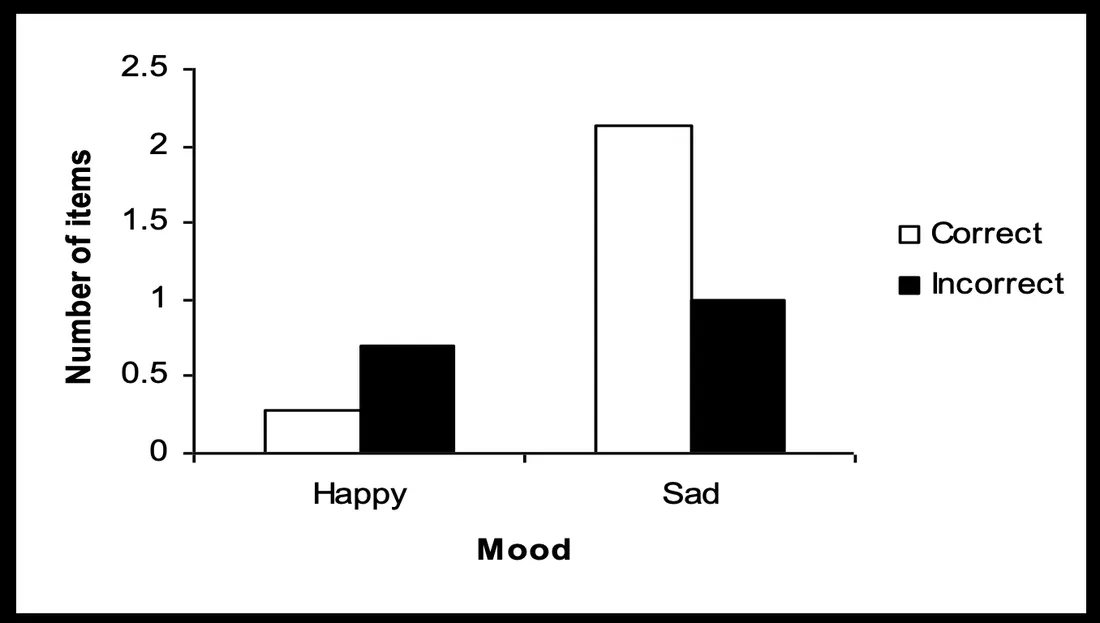
Figure 18.3: Mean number of target items seen in a shop correctly remembered as a function of affective state (happy vs. sad) induced
by good or bad weather (after Forgas, Goldenberg & Unkelbach, 2009).
350 • Psychology of Human Thought • Chapter 18
Affective Influences on Stereotyping Forgas
impressions. In one experiment, participants formed impressions about a character (Jim) described in two paragraphs in either an introvert–extrovert or an extrovert–introvert sequence (Forgas, 2011). Subsequent impression-formation judgments showed that positive affect significantly increased reliance on heuristic primacy cues (relying on whatever information came first; Figure 18.4). In contrast, negative mood, by recruiting a more accommodative, System 2 processing style, almost eliminated the usual primacy effect. We should note, however, that negative affect can only improve judgmental accuracy when relevant stimulus information is actually available. Ambady and Gray (2002) found that in the absence of diagnostic details, “sadness impairs [judgmental] accuracy precisely by promoting a more deliberative information processing style” (p. 947).
when evaluating a student accused of misconduct, whereas negative mood reduced this tendency. Generally speaking, negative affect tends to promote greater attention to specific, individuating information when forming impressions of other people (Forgas, 2013). Similar effects were demonstrated in an experiment where happy or sad subjects had to form impressions about the quality of a brief philosophical essay allegedly written by a middle-aged male academic (stereotypical author) or by a young, alternative-looking female writer (atypical author). Once again, results showed that positive affect increased the judges’ tendency to be influenced by irrelevant stereotypical information about the age and gender of the author. In contrast, negative affect eliminated this judgmental bias (in Forgas, 2013).
Relying on stereotyped expectations can ultimately also impact on behaviors. We tested this prediction using the ‘shooters bias’ paradigm assessing subliminal aggressive tendencies, where happy or sad people had to make rapid on-line decisions about whether to shoot at rapidly presented videotaped targets who did or did not appear to be holding a weapon (Correll et al., 2007). US subjects often display a strong implicit bias on this task and shoot more at Black rather than White targets (Correll et al., 2007). In our study we manipulated the im-
18.2.4 Affective Influences onStereotyping
Positive affect, by promoting assimilative thinking and the use of pre-existing knowledge in judgments, may also promote stereotyping. For example, Bodenhausen, Kramer, and Süsser (1994) found that happy participants relied more on ethnic stereotypes
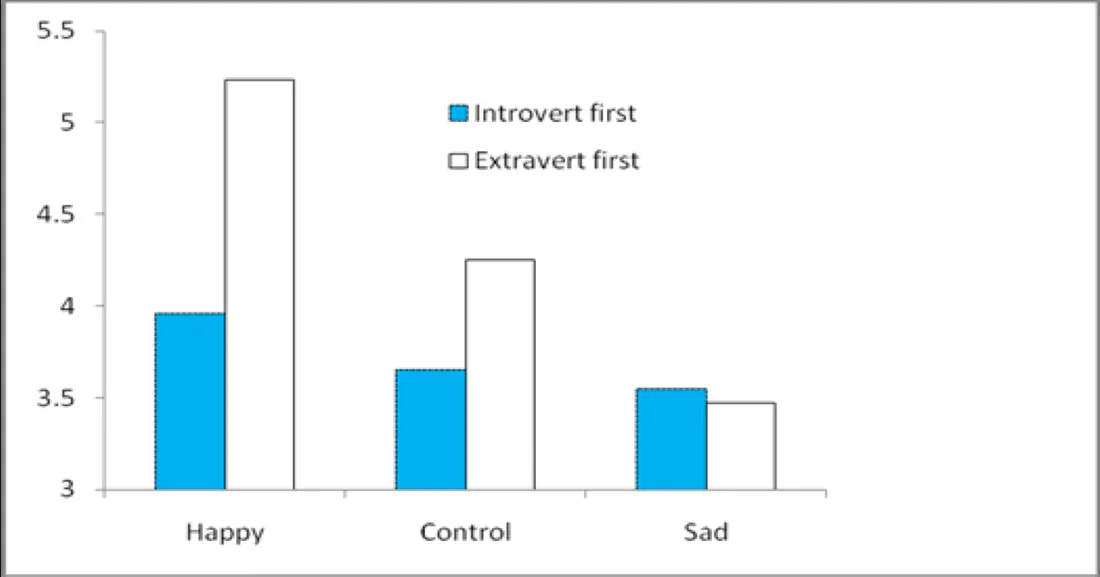
Figure 18.4: Primacy effects on impressions formation are increased by positive affect, and eliminated by negative affect: Judges
perceive the target person as more extroverted when the extroverted description comes first, and this primacy effect is strongest in a positive rather than negative mood (vertical axis = extraversion judgments; differences between the columns indicate the size of the primacy effect; after Forgas, 2011).
Psychology of Human Thought • Chapter 18 • 351
Forgas Affect and Thought
18.2.6 Mood Effects on BullshitReceptivity: Perceiving MeaningWhere There is None
ages so that some targets appeared to be Muslims, wearing a turban, while in the control condition the same person was shown without a turban.. In this case, we found a strong “turban effect”, that is, Muslim targets elicited more aggression. Yet the most intriguing finding was that positive affect further increased this selective response tendency to shoot at muslim targets, while negative affect reduced it (Unkelbach, Forgas, & Denson, 2008). Thus, affective influences on stereotyped thinking may extend to influencing actual aggressive behaviors as well.
Perhaps the most striking form of gullibility occurs when people see meaning in meaningless, randomly generated information. Such absurd gullibility has been repeatedly demonstrated even in ideologically biased academic journals dealing with postmodernist theory, radical feminism and ‘grievance studies’. Several such academic journals accepted for publication a number of articles composed of intentionally meaningless jargon and politically correct verbiage (Sokal & Bricmont, 1998). Pennycook et al. (2015) confirmed a similar effect, showing that people often perceive vacuous, pseudo-profound “bullshit” text as meaningful.
18.2.5 Affective Influences onGullibility
Much of our knowledge about the world is based on second-hand information we receive from others that is often ambiguous and not easily verified (eg. hearsay, gossip, urban myths, fake news, conspiracy theories, trivia claims, etc.). Gullibility (accepting invalid information as true) can be just as problematic as rejecting valid information (excessive skepticism). Affective states also seem to play a role in how such decisions are made (Forgas, 2008; 2013, in press). For example, one study asked happy or sad participants to judge the probable truth of a number of urban legends and rumours (Forgas, 2018). Positive mood promoted greater gullibility for novel and unfamiliar claims, whereas negative mood promoted skepticism, consistent with a more externally focused, attentive, and accommodative thinking style. In another experiment, participants’ recognition memory was tested two weeks after they were informed about the truth or falsity of various claims taken from a trivia game. Sad participants were better able to correctly distinguish between the true and false claims they had seen previously. In contrast, happy participants tended simply to rate previously seen and thus familiar statements as likely to be true (in essence, a familiarity/fluency effect). This pattern suggests that happy affect promoted reliance on the simple “what is familiar is true” heuristic, whereas negative mood conferred a clear cognitive advantage improving judges’ ability to accurately remember the truth value of the statements.
Can affect influence bullshit receptivity? One experiment asked participants in a positive or negative mood (after viewing cheerful or sad videotapes) to rate the meaningfulness of two kinds of verbal ‘bullshit’ text, including vacuous New Age pronouncements (e.g. “Good health imparts reality to subtle creativity”), and meaningless scientificsounding psychological jargon phrases (e.g. “subjective instrumental sublimations”; Forgas, Matovic, & Slater, 2018). People in a positive mood were more gullible and saw more ‘meaning’ in these nonsense statements than did those in the neutral and negative mood groups (see Figure 18.5). Positive mood judges were not only more gullible, but also were faster to produce a judgment, and also had worse recall and recognition memory than did those in the neutral and negative mood conditions, consistent with the prediction that positive mood produced a less attentive information processing style.
In a related study, we also looked at mood effects on bullshit receptivity using abstract visual rather than verbal stimuli. Participants in public places received a mood induction (reminiscing about positive or negative life episodes) and then judged the meaningfulness of four modern abstract expressionist paintings. Positive mood again increased the perceived meaningfulness of these abstract images compared to negative mood.
352 • Psychology of Human Thought • Chapter 18
Mood Effects on Decoding Interpersonal Messages Forgas
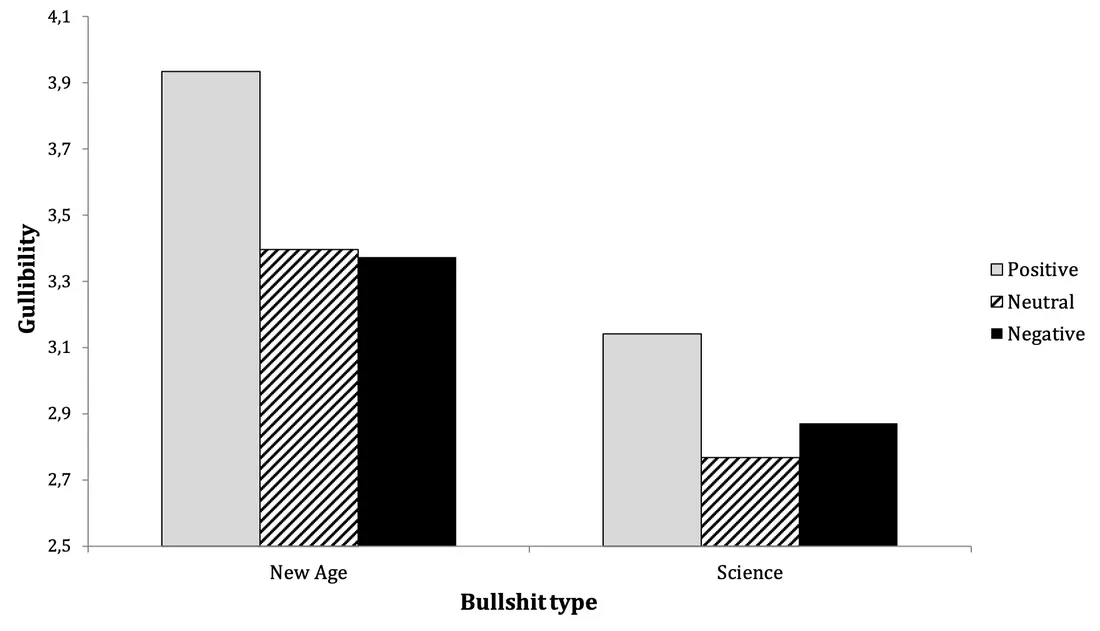
Figure 18.5: Mood effects on bullshit receptivity (seeing meaning in nonsense sentences): positive mood increased gullibility compared
to neutral and negative mood (after Forgas, Matovic, & Slater, 2018).
18.2.7 Mood Effects on DecodingInterpersonal Messages
Koch, & Forgas, 2014) participants received a mood induction (watched happy or sad films), and were next asked to detect confusing, ambiguous sentences whose meaning was unclear. Results showed that negative mood promoted the more accurate detection of verbal ambiguity, consistent with the adoption of a more accommodative processing style. This was also confirmed by more extensive processing, and the more accurate recall when in a negative mood (Figure 18.6).
Interpersonal communications are often also ambiguous and have no objective truth value (Heider, 1958, see also Chapter 12, “Language and Thought”). Accepting or rejecting such messages is critically important for effective social interaction. For example, people in a negative affective state were significantly less likely than those in a positive state to believe that various facial expressions were authentic (in Forgas, 2013).Taking this line of reasoning one step further, can affective states also influence people’s ability to detect deception? In one study, happy or sad participants watched videotaped interrogations of suspects accused of theft who were either guilty or not guilty (Forgas & East, 2008). As predicted, those in a positive mood were more gullible, as they accepted more denials as true. In contrast, negative affect resulted in more guilty judgments, and also improved the participants’ ability to correctly identify targets who were deceptive. So negative affect not only increased overall skepticism, but improved people’s ability to accurately detect deception.
18.2.8 Affective Influences on Behavior
Our behavioral strategies may also benefit when negative affect triggers a more thorough processing style. To take one example, negative affect may optimize the way people process, produce, and respond to persuasive messages. In a number of studies, participants in a negative affective state were more sensitive to message quality, and were more persuaded by strong rather than weak arguments. In contrast, those in a positive affective state were not influenced by message quality, and were equally persuaded by strong and weak arguments (e.g., Sinclair, Mark, & Clore, 1994). Affective states may also influence the production and quality of persuasive messages. Those experiencing induced negative af-
Detecting ambiguity in verbal messages is an equally important task. In one study (Matovic,
Psychology of Human Thought • Chapter 18 • 353
Forgas Affect and Thought
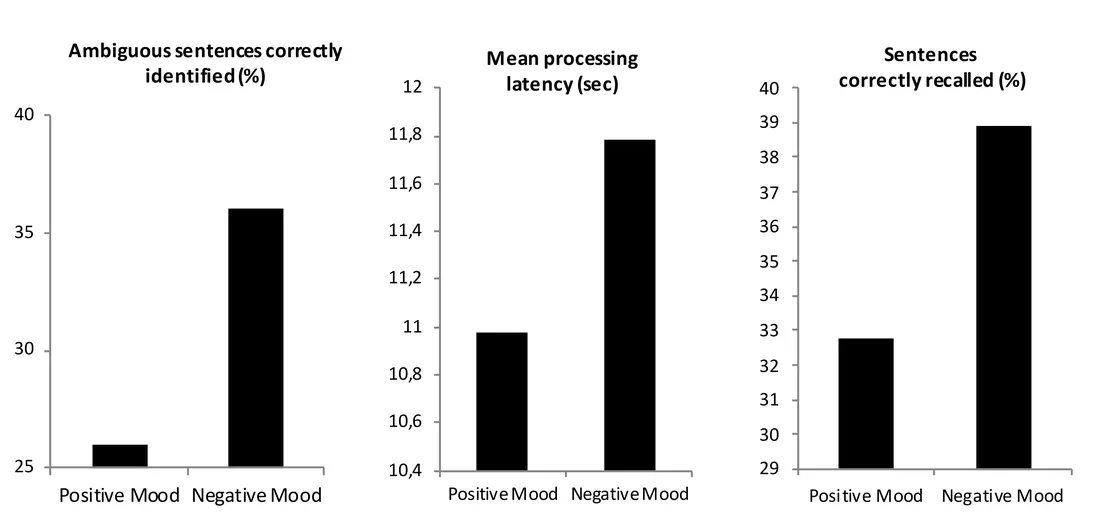
Figure 18.6: The effects of positive and negative mood on (a) the ability to correctly identify ambiguous sentences (left panel), (b)
the time taken to process the task (middle panel), and (c) the ability to remember the target sentences (right panel; after Matovic et al., 2014).
fect produced significantly higher quality and more effective persuasive arguments on topical issues than people in a positive state (Forgas, 2013). Negative affect also resulted in identifiable benefits when performing demanding interpersonal tasks, such as ingratiation (Forgas, Matovic, & Slater, 2018), consistent with the adoption of a more externally oriented, concrete processing style (Bless & Fiedler, 2006; Fiedler, 2001). Overall, participants in a negative mood perform significantly better in complex communication tasks, and are less likely to violate the rules of effective communication compared to those in a positive affective state (Koch, Forgas, & Matovic, 2013).
as the norm of fairness, produced significantly more generous and fair allocations in a series of decisions.
18.3 Conclusions
Understanding how affect influences thinking remains one of the most fascinating questions in psychology, an issue that has also occupied philosophers since time immemorial. Recent neuropsychological research suggests that these two fundamental human faculties, feeling and thinking, operate in close interdependence, with affect playing an evolutionary signalling role alerting the organism to significant events in the environment (Dolan, 2002). This chapter reviewed experimental evidence that broadly confirms this view, and suggested that the role of affect on thinking can be classified into two major kinds of influence. Informational effects impact on the content and valence (positivity vs. negativity) of thinking usually resulting in affect congruence. Processing effects occur because affective states trigger qualitatively different, more or less assimilative vs. accommodative processing strategies.
Decisions about the way we actually treat others may also be influenced by affective states. For example, affect was found to influence the degree of selfishness versus fairness when people allocate resources amongst themselves and others in strategic games, such as the dictator game (Tan & Forgas, 2010). Positive affect, by increasing internally focused, assimilative processing resulted in more selfish allocations. Negative affect, in contrast, focusing greater attention on external information such
The evidence reviewed here highlights the potentially adaptive and beneficial processing conse-
354 • Psychology of Human Thought • Chapter 18
Conclusions Forgas
quences of both positive and negative affective states. Contrary to the popular preoccupation with the universal desirability of positive affect in Western culture, the research shows that negative affect can often produce important adaptive advantages, improving memory, judgments and behavioral strategies (Forgas, 2013; in press). The implication is that our persistent and unilateral emphasis on positivity and happiness may be misplaced; instead, both negative and positive affect should be accepted as a normal part of human functioning (see also Chapter 19, “Culture and Thought”). Of course, intense and enduring negative affective states such as depression can be hugely debilitating, and require clinical intervention.
In summary, there is now clear evidence that affective states have a powerful, yet often subconscious influence on what people think (content effects) as well as how people think (processing effects). These effects are often subtle and subject to a variety of boundary conditions and contextual influences. A better understanding of the complex interplay between affect and cognition remains one of the most important tasks for psychology as a science. A great deal has been achieved in the last few decades, but in a sense, the enterprise has barely begun. Hopefully this chapter will contribute to a better understanding of the fascinating relationship between affect and cognition.
Summary
1. Affective states represent evolutionary adaptation and their main function is to inform / alert the organism and to promote appropriate responses in a given situation.
2. Affect can influence thinking through multiple mechanisms, influencing both the content and valence of what we think, as well as how we think (information processing effects).
3. Affect congruence in memory, attention, associations and judgments is typically produced by the selective priming of affect-congruent associations.
4. More open and productive thinking tends to magnify affect infusion.
5. Positive affect tends to promote a faster, more heuristic and also more creative thinking style. Negative affect promotes a slower, more attentive and more externally oriented thinking style.
6. In some situations, mild negative affect can improve memory and judgments and also produce more effective social behaviors.
Psychology of Human Thought • Chapter 18 • 355
Forgas Affect and Thought

Review Questions
1. Why does affect have an invasive quality on our thinking?
2. What is the difference between affect congruence, and affect state dependence in memory processes?
3. How can negative affect reduce heuristic biases in judgments?
4. What is the influence of affective states on the way people think and communicate in social situations?
5. On the basis of this chapter, what would be your advice to a person who experiences temporary bad moods?
Hot Topic
The last few years produced genuine insights into the influence of affective states on thinking. The current research project seeks to extend this work into two new directions. First, several experiments investigate affective influences on the way people communicate, including the sending and decoding of both verbal, and nonverbal messages. Recently completed experiments showed that paradoxically, mild negative affective states seem to promote a more attentive and externally oriented information processing style that results in more competent and successful communication strategies. For example, participants in a negative affective state were better at both producing, and dealing with ingratiating messages, and they were also better at constructing more effective verbal messages in compliance with normative conversational requirements (Matovic & Forgas, 2018). In another ongoing experiment, we are also looking at the influence of affective states on verbal creativity. For example, we are asking happy or sad participants to produce suitable captions to various cartoon drawings, or formulate verbal responses in conflict situations, and the quality of their responses will be evaluated.

Joseph Forgas
The second line of research explores how affective states influence judgments involving gullibility vs. scepticism. In particular, we are interested in the possibility that negative affect may reduce gullibility and increase skepticism. In a post-truth age of ‘fake news’ and the widespread use of manipulative misinformation both in commerce and in public life, understanding what factors promote critical thinking is of great practical importance. Several of our earlier experiments suggested that negative affect can reduce people’s susceptibility to misleading information in their eyewitness memories (Forgas, Vargas, & Laham, 2005). Further, negative affect also reduced the ‘truth bias’, the tendency to believe as true ambiguous information simply because it happens to be
salient and can be processed more easily (Koch & Forgas, 2012). Following on from this work, our recent studies looked at the phenomenon of ‘bullshit receptivity’—the tendency for people to believe that meaningless, randomly generate gibberish text is actually meaningful. We used randomly generated New Age pronouncements from the work of Deepak Chopra, a New Age guru as the stimuli, as well as randomly generated psychological jargon terms. We found that participants who
356 • Psychology of Human Thought • Chapter 18
References Forgas
were induced into a positive affective state (after watching cheerful, happy videos) were significantly more gullible and showed higher ‘bullshit receptivity’ than those in a negative affective state.
In a companion experiment, we asked happy and sad participants to judge the meaningfulness of various abstract expressionist paintings. Again, positive affect increased and negative affect reduced their willingness to perceive meaning in these images. Further studies will look at the reasons why these effects occur. For example, the universal human tendency to seek and find patterns in otherwise random information may also be influenced by affect. The evolutionary significance of these mild, but reliable affective influences on how we see and evaluate complex information will also be explored. The role of affective states in promoting or inhibiting mental flexibility—the ability to see multiple meanings in ambiguous information—will also be studied, as a step towards better understanding the role of affect in why people often accept dubious information.
References
Forgas, J. P., Vargas, P., & Laham, S. (2005). Mood effects on eyewitness memory: Affective influences on susceptibility to misinformation. Journal of Experimental Social Psychology, 41, 574–588. doi:10.1016/j.jesp.2004.11.005
Koch, A. S. & Forgas, J. P. (2012). Feeling good and feeling truth: The interactive effects of mood and processing fluency on truth judgments. Journal of Experimental Social Psychology, 48, 481–485. doi:10.1016/j.jesp.2011.10.006
Matovic, D. & Forgas, J. P. (2018). Mood Effects on Ingratiation: Affective Influences on Producing
and Responding to Ingratiating Messages. Journal of Experimental social Psychology, 76, 186–197. doi:10.1016/j.jesp.2018.02.002
References
Adolphs, R., & Damasio, A. R. (2001). The interaction
cial cognition and behaviour (pp. 65–84). New York: Psychology Press.
of affect and cognition: A neurobiological perspective. In J. P. Forgas (Ed.), Handbook of affect andsocial cognition (pp. 27–49). Mahwah, NJ: Erlbaum. doi:10.4324/9781410606181
Bodenhausen, G. V., Kramer, G. P., & Süsser, K. (1994).
Happiness and stereotypic thinking in social judgment. Journal of Personality and Social Psychology, 66, 621–632. doi:10.1037/0022-3514.66.4.621
Ambady, N., & Gray, H. (2002). On being sad and mis-
taken: Mood effects on the accuracy of thin-slice judgments. Journal of Personality and Social Psychology, 83, 947–961. doi:10.1037//0022-3514.83.4.947
Bower, G. H. (1981). Mood and memory. Ameri-can Psychologist, 36, 129–148. doi:10.1037//0003- 066x.36.2.129
Becker, M. W., & Leinenger, M. (2011). Attentional
Bower, G. H. (1991). Mood congruity of social judgments.
selection is biased toward mood-congruent stimuli. Emotion. 1248–1254. doi:10.1037/a0023524
In J.P. Forgas (Ed.), Emotion and social judgments(pp. 31–53). Oxford: Pergamon.
Blaney, P. H. (1986). Affect and memory: A review. Psy-
Bower, G. H., & Mayer, J. D. (1989). In search of mood-
chological Bulletin, 99, 229–246. doi:10.1037//0033- 2909.99.2.229
dependent retrieval. Journal of Social Behavior andPersonality, 4, 121–156.
Bless, H., & Fiedler, K. (2006). Mood and the regulation
Brown, J. D., & Mankowski, T. A. (1993). Self-esteem,
of information processing and behavior. In J.P. Forgas (Ed.), Hearts and minds: Affective influences on so-
mood, and self-evaluation: Changes in mood and the way you see you. Journal of Personality and
Psychology of Human Thought • Chapter 18 • 357
Forgas Affect and Thought
Social Psychology, 64, 421–430. doi:10.1037//0022- 3514.64.3.421
tion. Journal of Abnormal and Social Psychology, 55, 283–288. doi:10.1037/h0042811
Byrne, D., & Clore, G. L. (1970). A reinforcement model
Fiedler, K. (2001). Affective influences on social infor-
of evaluation responses. Personality: An InternationalJournal, 1, 103–128.
mation processing. In J.P. Forgas (Ed.), Handbook ofaffect and social cognition (pp. 163–185). Mahwah, NJ: Erlbaum.
Clark, M. S., & Isen, A. M. (1982). Towards understand-
ing the relationship between feeling states and social behavior. In A. H. Hastorf & A. M. Isen (Eds.), Cog-nitive social psychology (pp. 73–108). New York: Elsevier.
Fiedler, K., Nickel, S., Asbeck, J., & Pagel, U. (2003).
Mood and the generation effect. Cognition and Emo-tion, 17, 585–608. doi:10.1080/02699930302301
Forgas, J. P. (1992). On mood and peculiar people: Affect
Clore, G. L., & Storbeck, J. (2006). Affect as informa-
and person typicality in impression formation. Jour-nal of Personality and Social Psychology, 62, 863– 875. doi:10.1037/0022-3514.62.5.863
tion about liking, efficacy and importance. In: J.P. Forgas (Ed.). Affect in social thinking and behav-ior. (pp. 123–142). New York: Psychology Press. doi:10.4324/9780203720752
Forgas, J. P. (1994). Sad and guilty? Affective influ-
ences on the explanation of conflict episodes. Jour-nal of Personality and Social Psychology, 66, 56–68. doi:10.1037/0022-3514.66.1.56
Correll, J., Park, B., Judd, C. M., Wittenbrink, B., Sadler,
M. S., & Keesee, T. (2007). Across the thin blue line: Police officers and racial bias in the decision to shoot. Journal of Personality and Social Psychology, 92, 1006–1023. doi:10.1037/0022-3514.92.6.1006
Forgas, J. P. (1995). Mood and judgment: The affect
infusion model (AIM). Psychological Bulletin, 117, 39–66. doi:10.1037//0033-2909.117.1.39
Detweiler-Bedell, B., & Detweiler-Bedell, J. B. (2006).
Forgas, J. P. (1998a). On feeling good and getting your
Mood-congruent perceptions of success depend on self-other framing. Cognition and Emotion, 20, 196– 216. doi:10.1080/02699930500294996
way: Mood effects on negotiating strategies and outcomes. Journal of Personality and Social Psychology, 74, 565–577. doi:10.1037/0022-3514.74.3.565
Direnfeld, D. M., & Roberts, J. E. (2006). Moodcongruent memory in dysphoria: The roles of state affect and cognitive style. Behavior Research and Ther-apy, 44, 1275–1285. doi:10.1016/j.brat.2005.03.014
Forgas, J. P. (1998b). Asking nicely? Mood effects on
responding to more or less polite requests. Person-ality and Social Psychology Bulletin, 24, 173–185. doi:10.1177/0146167298242006
Dolan, R. J. (2002) Emotion, Cognition, and Behavior.
Forgas, J. P. (1999). On feeling good and being rude:
Science, 1191–1194. doi:10.1126/science.1076358
Affective influences on language use and requests. Journal of Personality and Social Psychology, 76, 928– 939. doi:10.1037/0022-3514.76.6.928
Eich, E. (1995). Searching for mood dependent memory.
Psychological Science, 6, 67–75. doi:10.1111/j.1467- 9280.1995.tb00309.x
Forgas, J. P. (Ed.). (2006). Affect in social thinking
Eich, E., & Macaulay, D. (2000). Are real moods re-
and behavior. Psychology Press: N.Y. doi:10.4324/ 9780203720752
quired to reveal mood-congruent and mood-dependent memory? Psychological Science, 11, 244–248. doi:10.1111/1467-9280.00249
Forgas, J. P. (2011). Affective influences on selfdisclosure strategies. Journal of Personality andSocial Psychology, 100(3), 449–461. doi:10.1037/ a0021129
Eich, E., Macaulay, D., & Lam, R. (1997). Mania, depression, and mood dependent memory. Cognition and Emotion, 11, 607–618. doi:10.1080/026999397379836b
Forgas, J. P. (2013). Don’t Worry, Be Sad! On the Cogni-
tive, Motivational and Interpersonal Benefits of Negative Mood. Current Directions in Psychological Sci-ence, 22, 225–232. doi:10.1177/0963721412474458
Eich, E., Macaulay, D., & Ryan, L. (1994). Mood depen-
dent memory for events of the personal past. Journalof Experimental Psychology: General, 123(2), 201– 215. doi:10.1037//0096-3445.123.2.201
Forgas, J. P. (2018). Mood effects on gullibility. Manuscript, University of New South Wales, Sydney.
Feshbach, S., & Singer, R. D. (1957). The effects of fear
Forgas, J. P. (in press). Mood effects on gullibility. Cur-
arousal and suppression of fear upon social percep-
rent Directions in Psychological Science.
358 • Psychology of Human Thought • Chapter 18
References Forgas
Forgas, J. P., & Bower, G.H. (1987). Mood effects on
Gouaux, C. (1971). Induced affective states and interper-
person perception judgments. Journal of Personalityand Social Psychology, 53, 53–60. doi:10.1037//0022- 3514.53.1.53
sonal attraction. Journal of Personality and SocialPsychology, 20, 37–43. doi:10.1037/h0031697
Griffitt, W. (1970). Environmental effects on interper-
Forgas, J. P., Bower, G. H., & Krantz, S. (1984). The
sonal behavior: Temperature and attraction. Journalof Personality and Social Psychology, 15, 240–244. doi:10.1037/h0029432
influence of mood on perceptions of social interactions. Journal of Experimental Social Psychology, 20, 497–513. doi:10.1016/0022-1031(84)90040-4
Heider, F. (1958). The psychology of interpersonal rela-
Forgas, J. P., & East, R. (2008). On being happy and
tions. New York: Wiley. doi:10.1037/10628-000
gullible: Mood effects on skepticism and the detection of deception. Journal of Experimental Social Psychol-ogy, 44, 1362–1367. doi:10.1016/j.jesp.2008.04.010
Hilgard, E. R. (1980). The trilogy of mind: Cognition, affection, and conation. Journal of the His-tory of the Behavioral Sciences, 16(2), 107–117. doi:10.1002/1520-6696(198004)16:2%3C107::AID- JHBS2300160202%3E3.0.CO;2-Y
Forgas, J. P., Goldenberg, L., & Unkelbach, C. (2009).
Can bad weather improve your memory? Mood effects on memory in a real-life setting. Journalof Experimental Social Psychology, 54, 254–257. doi:10.1016/j.jesp.2008.08.014
Isen, A. M. (1984). Towards understanding the role of
affect in cognition. In R. S. Wyer & T. K. Srull (Eds.), Handbook of social cognition (Vol. 3, pp. 179–236). NJ: Erlbaum.
Forgas, J. P., Matovic, D., & Slater, I. (2018). Mood ef-
fects on bullshit receptivity: Positive affect increases, and negative affect reduces gullibility and the acceptance of meaningless statements as meaningful. Manuscript, UNSW, Sydney.
James, W. (1890). The Principles of Psychology. Holt,
New York. doi:10.1037/10538-000
Josephson, B. R., Singer, J. A., & Salovey, P. (1996).
Mood regulation and memory: repairing sad moods with happy memories. Cognition and Emotion, 10, 437–444. doi:10.1080/026999396380222
Forgas, J. P., Vargas, P., & Laham, S. (2005). Mood
effects on eyewitness memory: Affective influences on susceptibility to misinformation. Journalof Experimental Social Psychology, 41, 574–588. doi:10.1016/j.jesp.2004.11.005
Kahneman, D. (2011). Thinking, fast and slow. London:
Penguin Books.
Kihlstrom, J. F. (1989). On what does mood-dependent
Fredrickson, B. L. (2009). Positivity. New York, NY:
memory depend? Journal of Social Behavior andPersonality, 4, 23–32.
Crown.
Gasper, K., & Clore, G. L. (2002). Attending to the big
Koch, A. S., Forgas, J. P., & Matovic, D. (2013). Can
picture: Mood and global versus local processing of visual information. Psychological Science, 13, 34–40. doi:10.1111/1467-9280.00406
negative mood improve your conversation? Affective influences on conforming to Grice’s communication norms. European Journal of Social Psychology, 43, pp. 326–334. doi:10.1002/ejsp.1950
Gilbert, D. T., & Malone, P. S. (1995). The correspondence bias. Psychological Bulletin, 117, 21–38. doi:10.1037//0033-2909.117.1.21
Koestler, A. (1967). The Ghost in the Machine (1990
reprint ed.). Penguin Group.
Gilboa-Schechtman, E., Erhard-Weiss, D., & Jecemien, P.
Koster, E. H. W., De Raedt, R., Goeleven, E., Franck,
(2002). Memory for facial expressions in depressed and anxious men and women. Psychiatry Research, 113, 279–293. doi:10.1016/s0165-1781(02)00266-4
E., & Crombez, G. (2005). Mood-Congruent Attentional Bias in Dysphoria: Maintained Attention to and Impaired Disengagement From Negative Information. Emotion, 5(4), 446–455. doi:10.1037/1528- 3542.5.4.446
Goodwin, D. W. (1974). Alcoholic blackout and state-
dependent learning. Federation Proceedings, 33, 1833–1835.
Matovic, D., Koch, A. S., & Forgas, J. P. (2014). Can
Gotlib, I. H, & Joormann, J. (2010). Cognition and de-
negative mood improve language understanding? Affective influences on the ability to detect ambiguous communication. Journal of Experimental Social Psy-chology, 52, 44–49. doi:10.1016/j.jesp.2013.12.003
pression: current status and future directions. An-nual Review of Clinical Psychology, 6, 285–312. doi:10.1146/annurev.clinpsy.121208.131305
Psychology of Human Thought • Chapter 18 • 359
Forgas Affect and Thought
Mayer, J. D., Gaschke, Y. N., Braverman, D. L., & Evans,
Personality and Social Psychology, 69, 759–777. doi:10.1037//0022-3514.69.4.759
T. W. (1992). Mood-congruent judgment is a general effect. Journal of Personality and Social Psychology, 63, 119–132. doi:10.1037/0022-3514.63.1.119
Sinclair, R. C., Mark, M. M., & Clore, G. L. (1994). Mood-related persuasion depends on misattributions. Social Cognition, 12, 309–326. doi:10.1521/soco.1994.12.4.309
Miranda, R., & Kihlstrom, J. (2005). Mood congruence in childhood and recent autobiographical memory. Cognition and Emotion, 19, 981–998. doi:10.1080/02699930500202967
Sokal, A. D., & Bricmont, J. (1998). Fashionable Non-
sense: Postmodern Intellectuals’ Abuse of Science. Picador USA: New York.
Pennycook, G., Cheyne, J. A., Barr, N., Koehler, D. J.,
& Fugelsang, J. A. (2015). On the reception and detection of pseudo-profound bullshit. Judgment andDecision Making, 10, 549–563.
Smith, S. M., & Petty, R. E. (1995). Personality moder-
ators of mood congruency effects on cognition: The role of self-esteem. Journal of Personality and So-cial Psychology, 68, 1092–1107. doi:10.1037//0022- 3514.68.6.1092
Piaget, J. (1954). The construction of reality in the child.
New York: Free Press. doi:10.1037/11168-000
Rapaport, D. (1961/1942). Emotions and memory. New
Tamir, M., & Robinson, M. D. (2007). The happy spotlight: Positive mood and selective attention to rewarding information. Personalityand Social Psychology Bulletin, 33, 1124–1136. doi:10.1177/0146167207301030
York: Science Editions. doi:10.1037/11400-000
Razran, G. H. (1940). Conditioned response changes in
rating and appraising sociopolitical slogans. Psycho-logical Bulletin, 37, 481–493.
Reus, V. I., Weingartner, H., & Post, R. M. (1979).
Tan, H. B., & Forgas, J. P. (2010). When happiness makes
us selfish, but sadness makes us fair: Affective influences on interpersonal strategies in the dictator game. Journal of Experimental Social Psychology, 46, 571– 576. doi:10.1016/j.jesp.2010.01.007
Clinical implications of state-dependent learning. American Journal of Psychiatry, 136, 927–931.
doi:10.1176/ajp.136.7.927
Ruiz-Caballero, J. A., & Gonzalez, P. (1994). Implicit
Ucros, C. G. (1989). Mood state-dependent memory: A
and explicit memory bias in depressed and nondepressed subjects. Cognition and Emotion, 8, 555– 570. doi:10.1080/02699939408408959
meta-analysis. Cognition & Emotion, 3, 139–169. doi:10.1080/02699938908408077
Unkelbach, C., Forgas, J. P., & Denson, T. F. (2008). The turban effect: The influence of Muslim headgear and induced affect on aggressive responses in the shooter bias paradigm. Journal ofExperimental Social Psychology, 44, 1409–1413. doi:10.1016/j.jesp.2008.04.003
Schwarz, N., & Clore, G. L. (1983). Mood, misattri-
bution and judgments of well-being: Informative and directive functions of affective states. Journalof Personality and Social Psychology, 45, 513–523. doi:10.1037/0022-3514.45.3.513
Schwarz, N. (1990). Feelings as information: Informa-
Wadlinger, H., Isaacowitz, D. M. (2006). Positive affect
tional and motivational functions of affective states. In E. T. Higgins & R. Sorrentino (Eds.), Handbook ofmotivation and cognition (Vol. 2, pp. 527–561). New York: Guilford.
broadens visual attention to positive stimuli. Motiva-tion and Emotion, 30, 87–99. doi:10.1007/s11031- 006-9021-1
Watson, J. B., & Rayner, R. (1920). Conditioned emo-
Sedikides, C. (1994). Incongruent effects of sad mood
on self-conception valence: It’s a matter of time. Eu-ropean Journal of Social Psychology, 24, 161–172. doi:10.1002/ejsp.2420240112
tional reactions. Journal of Experimental Psychology, 3, 1–14. doi:10.1037/h0069608
Zajonc, R. B. (2000). Feeling and thinking: Closing the
Sedikides, C. (1995). Central and peripheral selfconceptions are differentially influenced by mood: The differential sensitivity hypothesis. Journal of
debate over the independence of affect. In J. P. Forgas (Ed.), Feeling and thinking: The role of affect insocial cognition (pp. 31–58). New York: Cambridge University Press.
360 • Psychology of Human Thought • Chapter 18
Glossary Forgas
Glossary
affect congruence Selective attention to, access
to infer their reaction rather than computing a response based on the actual features of the stimulus. 342
to, and use of information from memory that has previously been associated with the current affective state, resulting in an affectcongruent bias in thinking. 341, 342, 344
associative network model A theory that pre-
dicts that affective states are linked to thoughts and memories in a cognitive network of associations, such that the experience of an affective states facilitates the recall and use of cognitive contents previously associated with it in the past. 342
Affect Infusion Model A model predicting that
the infusion of affect into thinking and judgments depends on the kind of information processing strategy used, with more open, generative strategies increasing affect infusion. 342, 344, 347
affect state dependence Improved memory and
emotion Intense, conscious and directed affective
use for information that has been acquired in a similar, matching affective state. 344, 345
state with clear cognitive content. 342
affect-as-information A theory that predicts that
mood Mild, nonspecific and often enduring and
in some evaluative judgments, people may use their current affective state as a heuristic cue
subliminal positive or negative affective state with little cognitive content. 342
Psychology of Human Thought • Chapter 18 • 361