 Starvard
The Psychology of Human Thought · Chapter 12 of 19
Chapter 12: Language and Thought
by Andrea Bender
Language is not indispensable for thought. Nonhuman animals solve complex cognitive tasks while lacking anything close to the human communication system; and human children achieve incredible cognitive feats long before they are able to participate in conversations. Still, language is our most powerful tool for the bulk of cognitive activities we frequently engage in, from the categorization of our perceptions to the planning of our actions. But the language we speak as our mother tongue is also a tool with a history and of a specific shape. It is structured through and through, in ways that differ from one language to the next, and it comprises classification systems, sets of contrasts, and requests for specifications that would seem to afford and suggest some lines of thought more easily than others. As we know from research on problem-solving (see Chapter 9, “Problem Solving”), tools are typically used in a specific context and for specific purposes, while using them in novel ways is challenging for humans (e.g., Duncker, 1935). A similar phenomenon might therefore be expected for language when used as a tool for describing observations, categorizing them, or drawing inferences from them. This analogy raises a tantalizing question: Do speakers of different languages develop different views of the world?
tion (Irmen & Kurovskaja, 2010; Prewitt-Freilino et al., 2012), and the finding that repetitions of wrong statements make them sound true (the illusory trutheffect; Bacon, 1979; Hasher et al., 1977), all attest to the power that language can unfold in shaping the social world (see Chapter 11, “The Nature of Language”). But does it gain this power by only shaping the world we live in or also by directly affecting our cognition? To what extent do systematic differences between languages and their grammatical structures cause differences in how their speakers perceive, categorize, reason, or make decisions?
To address these questions, we first present the principle of linguistic relativity and its various readings (sections 12.1 and 12.2). Two of the most plausible readings are then examined in more detail, illustrated with one example each: color perception and numerical cognition (section 12.3). Against this backdrop we then elaborate on the role of language as a cognitive tool (section 12.4).
12.1 The Principle of LinguisticRelativity
The idea that language may affect thought can be traced back at least to the 18th century, to scholars like Johann Gottfried Herder (1744–1803) or Wilhelm von Humboldt (1767–1835). Today, however, it is most strongly associated with the names of ethnolinguists Edward Sapir (1884–1939) and Benjamin Lee Whorf (1897–1941), which is why
Suggestive phrasings that influence interpretation and memory (Carmichael et al., 1932; Loftus & Palmer, 1974), requests for using gender-neutral or -inclusive language to reduce gender discrimina-
https://doi.org/10.17885/heiup.470.c6675 Psychology of Human Thought • Chapter 12 • 213
Bender Language and Thought
the idea in more recent literature is often referred to as the “Sapir Whorf hypothesis” or the “Whorfian hypothesis”. Whorf (1956) himself used the term “principle of linguistic relativity”, deliberately in the style of Einstein’s principle of relativityin physics—for two reasons. First, Whorf made a claim similar to Einstein’s, namely, that objective or absolute descriptions of the world independent of a given viewpoint are impossible (hence “relativity”), in this case because our perceptions
and hence is no longer a formal gender language. Still, it differentiates gender in personal pronouns (“he”, “she”, “it”), but even this apparently basic categorization is not a linguistic universal. Polynesian languages such as Tongan, for instance, distinguish between a single person, pairs of persons, and groups of persons, and between selections of people that do or do not include the addressee, but they do not care about gender.
According to Thesis 2, linguistic categorizations like gender classes or inclusion criteria for personal pronouns help us to organize and structure the “kaleidoscopic flux of impressions” in which the world is presented (Whorf, 1956, p. 213f.). Since the linguistic categories constitute the largely indiscernible background against which our conscious considerations take place, they do their organizing work without our noticing it. It may appear only consistent, therefore, to assume that linguistic categories in the language in which one forms one’s thoughts would contribute to shaping those very thoughts. Applied to our example, such organizing would be at work if speakers of German associated the sun more strongly with female attributes because die Sonne is feminine, and the moon more strongly with male attributes because der Mond is masculine—in contrast to, for instance, speakers of Spanish, for which el sol is masculine and la luna feminine (Koch et al., 2007).
and categorizations are influenced by the linguistic structures implicit in our native languages. Second, Whorf considered this linguistic relativity a premise for research, not its target (hence a “principle” and not a “hypothesis”). In the cognitive sciences, and specifically in cognitive psychology, this idea is still highly controversial, even to this date.
12.1.1 Fundamental Theses
The principle of linguistic relativity is based on three general theses (Lucy, 1997; Wolff & Holmes, 2011):
• Languages differ with regard to how they describe the world. [Thesis 1]
• The specific way in which a language describes the world affects the experiences made by its speakers. [Thesis 2]
Thesis 3, finally, implies that speakers of German differ in their associations of sun and moon from speakers of Spanish precisely because the two languages assign grammatical gender reversely to these two words. Examples like these are the key target of crosslinguistic studies on linguistic relativity, and we come back to findings from such studies in section 12.2.
• Speakers of different languages therefore experience the world differently. [Thesis 3]
Let us illustrate this argument with a concrete example. Even closely related languages differ with regard to classes into which they sort their nouns (Thesis 1). So-called formal gender languages assign a grammatical gender to every single noun. Romance languages like French, Italian, or Spanish, for instance, contain two of these classes: masculineand feminine. Other Indo-European languages like Greek, German, or Russian make use of a neuterin addition to the masculine and feminine. Parts of Norwegian, Swedish, or Dutch conflate two of these, namely, masculine and feminine gender as commongender in opposition to the neuter gender. And English has given up all gender distinctions (at least those that are not grounded in biological gender)
12.1.2 Do Languages Differ in theirDescription of the World?
As you may have noticed, if you read Chapter 7 on deductive reasoning carefully, the three theses form a syllogistic argument, in which Thesis 3 follows logically from Theses 1 and 2. In other words, if the first two theses are considered true, the third one must also be considered true. But even the apparently least controversial Thesis 1 was rejected
214 • Psychology of Human Thought • Chapter 12
Do Different Descriptions of the World Affect Our Experiences? Bender
for several decades in both psychology and linguistics. Distinguished scholars advocated the position that the commonalities of human languages, which they attributed to a “universal grammar” module in humans, by far outweigh the differences between languages (e.g., Chomsky, 1986; Pinker, 1994). On this account, the diversity in, for instance, gender categories and gender assignment to nouns across languages would be considered a minor detail that would be irrelevant to how people perceive objects and their properties.
reason, the controversial debate has shifted in recent years and is now focusing on Thesis 2: Does the specific way in which a language describes the world really affect the experiences of its speakers? In other words: Do speakers of English and of Greek perceive motions in distinct and different ways?
12.1.3 Do Different Descriptions of theWorld Affect Our Experiences?
The most radical position with regard to the relation of language and thought is the position of behaviorism, as represented by John Watson. Watson conceived of thought simply as inner speech—a position that soon turned out to be untenable. The position at the opposite end of the spectrum is advocated, for instance, by Noam Chomsky, the linguist who became famous in the 1950s for crushing behaviorist accounts of language. The view he made popular is that language and thought are two entirely separate and distinct modules (e.g., Chomsky, 1986), hence precluding, by definition, any potentiality of linguistic relativity (Pinker, 1994). Prevailing for decades, this view still has supporters, but is slowly losing ground. Specifically, developmental psychologists in the tradition of Lev Vygotsky and Jean Piaget have been arguing that, while cognition and language may emerge and develop independently from one another, they become entangled later on in a complex relationship. This view is further supported by empirical evidence that cognitive development more generally spurs on language development (overview in Harley, 2014).
With more indepth investigations of a broad range of languages, however, the differences between languages are now taken more seriously (Dabrowska, 2015; Evans & Levinson, 2009), and some of these differences are involved in coding and emphasizing relevant information in sensible, if even in languagespecific ways. For instance, when expressing motion by way of verbs, some languages (such as English, Russian, or Chinese) emphasize the manner of the movement over its path whereas others (including Spanish, Greek, or Japanese) emphasize path over manner. For illustration, compare the following two sentences which are borrowed from Papafragou and Selimis (2010, p.227, footnote 2):
(1) The bird is flying out of the cage.
(2) The bird is exiting from the cage (flying).
In (1), the emphasis rests on the manner of motion (here: flying in contrast to, say, tripping), while in (2) it rests on the path of motion (exiting in contrast to, say, entering). In English, the manner of motion is expressed by the verb itself (“flying”), whereas path information is expressed by way of a preposition (“out of”). A roughly comparable statement in Greek (2) expresses information on the path of motion in the verb (“exiting”) whereas the manner of motion would have to be explicated by way of an attribute (here as “flying”) or actually in a second sentence with a new verb.
The principle of linguistic relativity differs from both the behaviorist and the modular position in that it considers language and thought neither as identical nor as entirely separate. Nor do proponents of linguistic relativity dispute that thought is possible without language or that it (at least ideally) precedes language use. However, they emphasize more strongly than others the possibility that properties of the language one speaks may also affect aspects of how one thinks. Unfortunately, neither Sapir nor Whorf elaborated their ideas on linguistic relativity into a coherent theory. As one consequence, research in this field is plagued to this date by a plurality of possible readings. Our attempt
Such language-specific differences are also documented for other types of semantically meaningful categories (such as tense in verbs, or the distinction between countable objects and substances; see, Wolff & Holmes, 2011, for an overview). For this
Psychology of Human Thought • Chapter 12 • 215
Bender Language and Thought
to systematize these readings follows the overview presented by Wolff and Holmes (2011).
(language as meddler or as augmenter, respectively),
One of the central dimensions on which possible readings differ is concerned with the question of whether language and thought are structurally parallel or different. The former case would support the position of linguistic determinism: In this case we would be able to engage only in those thoughts that our language permits. This most extreme form of linguistic relativity—frequently associated with Whorf even though he himself was rather ambivalent on this view (Whorf, 1956; and see Lee, 1996)—is of little intuitive plausibility and also refuted by empirical research (overview in Wolff & Holmes, 2011). This research demonstrated clearly that thought is more strongly guided by properties of the world than by linguistic labels (Imai & Gentner, 1997; Malt & Wolff, 2010).
• thinking after language, that is, when linguistic effects linger on and thereby ‘color’ our thoughts in language-specific ways (language as spotlight and language as inducer).
In section 12.2, we explain in more detail the first and third reading (thinking before and after language) as they are closely associated, before turning to two examples of the second reading (thinking with language) in section 12.3.
12.2 Thinking before and afterLanguage
12.2.1 Thinking before Language(“Thinking for Speaking”)
Even if one accepts that language and thought may be structured in distinct ways, linguistic relativity could still unfold in one of several ways (Wolff & Holmes, 2011; and see Figure 12.1). Depending on the specific reading, these would assume an influence of language during
Lexical items make differentiations possible, as for distinguishing between pastel green, moss green, and turquoise. Grammatical structures do not simply afford such differentiations but require them. When we put our thoughts into words—and even before we can begin doing this—a number of decisions need to be made. These include having relevant information available that need to be specified according to the grammar/grammatical rules of the language we intend to use. For illustration, take the categories of tense and aspect that in many languages tend to be realized in the verb. Both categories provide information on time, but they focus on different facets
• thinking before language, that is, when we organize our thoughts to prepare a linguistic utterance (i.e., thinking for speaking),
• thinking with language, that is, when linguistic representations enter into conflict with, or instead support, non-linguistic representations
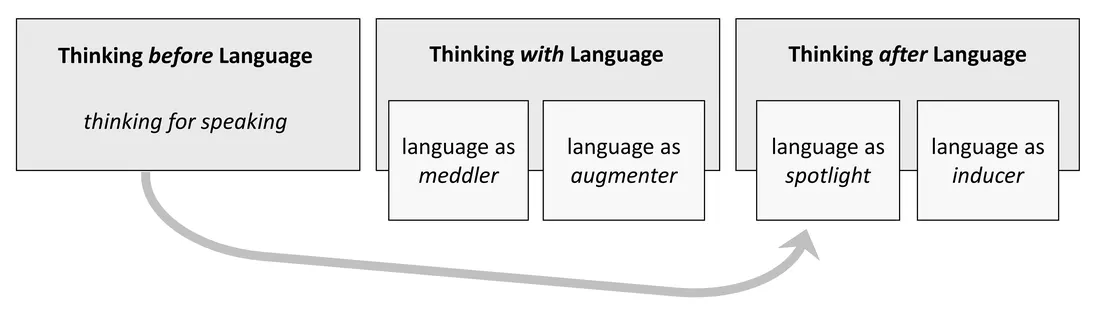
Figure 12.1: The most plausible ways in which language may affect thinking (according to Wolff & Holmes, 2011), and the relation
between them.
216 • Psychology of Human Thought • Chapter 12
Thinking after Language Bender
of time: Tense specifies the time in which an event takes place (e.g., in the past, present, or future), while aspect specifies how this event extends over time (e.g., whether it is ongoing versus terminated, or whether it is progressive versus habitual).
linger on also in contexts in which respective information is not immediately required for verbalization, that is, during thinking without imminent need for speaking. In emphasizing some distinctions—say, with regard to time point or temporal course—more than others through compulsory grammatical categories (here: tense or aspect), languages would therefore still direct attention to the same types of information in a regular and sustained manner, like a spotlight (this is why Wolff & Holmes, 2011, dub this instance of thinking after language the spotlighteffect). One of the instances Wolff and Holmes cite for this effect is the gender distinction mentioned earlier.
In German, each verb form always requires an instantiation of tense—for example, the present tense in (3) and the past tense in (4)—but largely disregards aspect.
(3) Dieser Papagai redet. [“This parrot talks”]
(4) Dieser Papagai redete. [“This parrot talked”]
In English, aspect needs to be specified in addition to tense, with (5) indicating habitual action, whereas (6) indicates progressive action:
Yet, both in terms of theoretical plausibility and of empirical support, the category of grammatical gender has remained a rather controversial case. Semantic gender languages assign a gender only to living things that possess a biological gender (sex), whereas formal gender languages extend the gender distinction to all nouns regardless of whether their referents have a sex. English is an example of the former, German of the latter. The two languages alike assign masculine gender to living things like “man”, “son”, or “rooster”, and feminine gender to “woman”, “daughter”, or “hen”. But while almost
(5) This parrot talks.
(6) This parrot is talking.
In Tongan and other Polynesian languages, or in Chinese, neither tense nor aspect is expressed in the verb.
In order to form a grammatically correct sentence, speakers of German therefore need to specify whenan event is happening, but need not specify whether it is or is not ongoing. In other words: The aim to express something in language forces one to pay attention to specific types of information while we may safely ignore others. This effect of language on thought, famously labeled “thinking for speaking” by Slobin (1996), emerges before language is actually used and can be observed in various domains (Gennari et al., 2002; Papafragou et al., 2008). A second example for this type is the distinct focus, described earlier (in section 12.1.2), that languages direct at either the manner or the path of motion (Papafragou & Selimis, 2010).
all inanimate things are neuter in English, a large proportion of them are categorized as masculine or feminine in German (e.g., der Mond [themasc moon], die Sonne [thefem sun]). Hence, as a formal class, grammatical gender does not reflect genuine differences in the world. It serves the purely linguistic function to generate congruence within sentences, and particularly between the noun and the accompanying article and adjective, as in (7) and (8):
(7) ein_ heller Mond [“a bright moon”]
(8) eine helle Sonne [“a bright sun”]
Notably, also, relatively few languages distinguish exactly between the two genders of interest, namely, masculine and feminine gender; many others categorize on different grounds, with some even conflating the two (such as Swedish or Dutch) and some distinguishing up to 20 different genders (Corbett, 1991).
12.2.2 Thinking after Language
If we accept an influence of thinking for speaking, it follows almost naturally that an entire life of occasions in which we need to verbalize our thoughts would form habits regarding what we pay attention to. These habits should have a certain likelihood to
Psychology of Human Thought • Chapter 12 • 217
Bender Language and Thought
12.3 Thinking with Language
Gender distinctions have still attracted considerable interest as a subject for studies on linguistic relativity (e.g., Boroditsky et al., 2003; Konishi, 1993). A popular measure in these studies is the gendercongruency effect (see Chapter 11, “The Nature of Language”). It emerges if the grammatical gender of a noun (e.g., masculine in the case of Mond) is congruent with the association of the respective referent with a specific sex (here: moon as male). However, the more sophisticated the methods used for investigation (e.g., adopting implicit tasks instead of direct assessments), the more difficult it turned out to replicate the initially positive findings (overview in Bender et al., 2018).
Besides the obvious case of thinking for speakingand the likely case of the spotlight effect, both of which arise from the need to focus on information requested by one’s grammar, two more readings of linguistic relativity have been investigated quite extensively in the past decades: one focusing on the possibility that linguistic representations enter into conflict or interfere with non-linguistic representations (language as meddler), the other focusing on the possibility that linguistic representations support, augment, or even make possible non-linguistic representations (language as augmenter). In both of these cases, it is the role of language as a cognitive tool that opens up an influence of language on thought.
For better suited and more convincing examples of the spotlight effect we therefore need to turn to domains in which linguistic categories do reflect— and make salient—genuine characteristics of the world. Only then do they have the potential and the power to habitually redirect attention to these characteristics.
12.3.1 Language as Meddler: The Caseof Color Perception
Color is an excellent example for investigating the influence of language on perception and other cognitive processes because colors can be exactly defined and measured in terms of the wavelength of light. The color terms we use to denote different colors verbalize a categorical system that we impose on the physically unstructured color spectrum, and hence are a product of thought. The interesting question now is whether these color terms, once established, also impact on thought. That is: If two languages divide the color spectrum in different ways, will the speakers of these languages also perceive the colors in different ways?
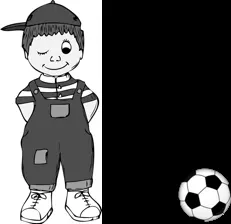
One such example is spatial referencing. A frame of reference (FoR) is a linguistic tool for describing relations between entities. It provides a coordinate system for locating a thing (say: a ball) in reference to another thing (say: a boy) and comes in three types (Levinson, 2003): The absolute FoR is aligned with external fixed points such as the cardinal directions or a river; the intrinsic FoR is aligned with the point of reference (here the boy); and the relativeFoR is aligned with the perspective of an observer. Importantly, languages differ in which of these FoRs they can use or prefer, and this in turn affects people’s wayfinding skills, their cospeech gestures, how they memorize relations and orders, or how they think about time (Bender & Beller, 2014; Levinson, 2003; Majid, Bowerman, Kita, Haun, & Levinson, 2004).
That languages indeed differ in how they divide the color spectrum has been well known for half a century (Berlin & Kay, 1969), systematically documented in the World-Color-Survey, a largescale research program at the University of California, Berkeley (http://www1.icsi.berkeley.edu/wcs/). This research program focuses on basic color terms— words that are elementary, generally applied, and broadly understood. In order to qualify as elementary, a color term needs to be a single word; composed expressions like “dark red” or “forest green” are therefore excluded. A color term is considered general if it can be applied to any kind of object; a term like “blond” is hence excluded because its
218 • Psychology of Human Thought • Chapter 12
Language as Meddler: The Case of Color Perception Bender
usage is restricted to hair. Terms like “magenta” or “burgundy”, finally, do not qualify because they are
se, but does influence other cognitive processes involved in similarity judgments, rapid distinctions between hues, learning of new color categories, or the recognition of hues (Kay & Kempton, 1984; Mitterer et al., 2009; Roberson et al., 2005).
not widely known.
Following these specifications, English is considered to comprise eleven basic color terms: “black”, “grey”, and “white” for achromatic colors, and “red”, “yellow”, “green”, “blue”, “orange”, “pink”, “pur-
One such study (Winawer et al., 2007) investigated whether a categorical boundary affects color discrimination in speakers of Russian compared with speakers of English, using stimuli from the color range denoted as “blue” in English (Figure 12.2a). Participants were shown squares in different shades of blue arranged in a triad and were asked which of the two on the bottom matches the one on the top (Figure 12.2b). In some trials, the non-identical hue at the bottom was from the same color category as the target hue; in others, it was from the complementary color category. It turned out that shades of blue were indeed easier to distinguish if they belonged to different categories than if they belonged to the same category. Interestingly, this holds particularly for stimuli projected onto the right visual field, which is connected to the left hemisphere in the brain (Gilbert et al., 2006). Brain areas involved in color perception and language processing are activated faster and more strongly by the distinction of colors that belong to different categories (Siok et al., 2009) and of colors that are easy to name (Tan et al., 2008).
ple”, and “brown” for chromatic colors (Berlin & Kay, 1969). Many languages have fewer basic color terms than English, but some languages also have more. For instance, English uses different terms for green and blue, whereas Welsh subsumes them under one term (Lazar-Meyn, 2004), and both Italian (Paggetti et al., 2016) and Russian (Davies & Corbett, 1994) distinguish blue further into a light blueand a dark blue (Table 12.1).
Do, therefore, speakers of Welsh, English, and Italian or Russian perceive the respective colors differently? This question can be investigated by selecting colors with equal intervals in their hue so that the selected colors in one language all fall into the same category (e.g., blue), while they are separated by a categorical boundary in the other language, as with goluboj versus sinij (see Figure 12.2a). If the linguistic categorization has an impact on perception, the difference between hues that are separated by the categorical boundary should be overestimated, compared to the identical difference between two hues that belong to the same category. In our example, this would be the case for speakers of Russian, but not English. In adopting this strategy, several studies could demonstrate that such a categorical boundary does not influence color perception per
Whether such effects of categorical boundaries originate from conscious processes has not been conclusively clarified. At first glance, it seems plausible that people use a naming strategy and that different naming of colors leads to differently remembered
Table 12.1: Basic color terms in four Indo-European languages for the green-blue section.
Welshglas
Englishgreenblue
Italianverdeazzurroblu
Russianzelenyj (Зелёный)
goluboj (голубо́й)sinij (си́ний)
Psychology of Human Thought • Chapter 12 • 219
Bender Language and Thought
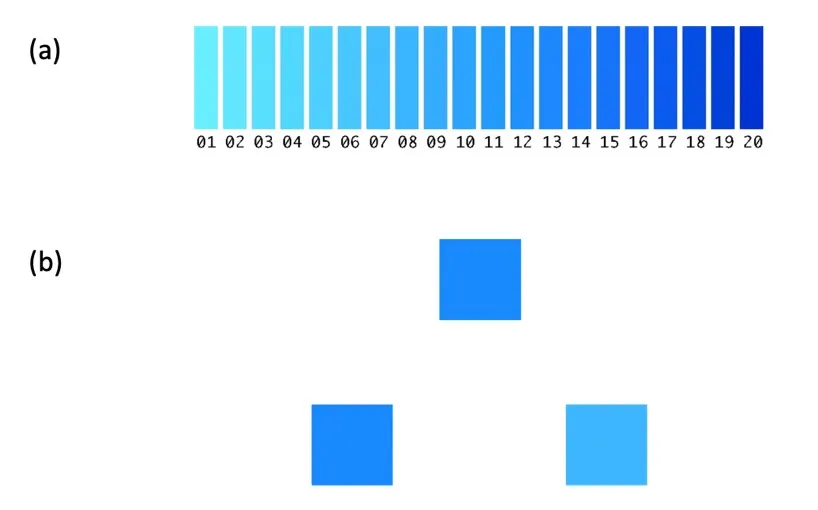
Figure 12.2: Stimuli used in the study by Winawer and colleagues (2007): the different shades of blue (a) and an example of a stimuli
triad (b). Participants were asked to pick one of the two squares from the lower row that matched the color of the single square above (©(2007) National Academy of Sciences, U.S.A.; permission to reprint granted).
colors (Mitterer et al., 2009). However, participants themselves reported that the colors they categorized as different actually looked different (Kay & Kempton, 1984, p.75). At least in this type of task, it seems, therefore, that what tips the scales is not the explicit verbal naming of the color but rather an automatic, non-conscious activation of categorical information.
ceptor cells responsible for human color vision are particularly sensitive for certain wavelengths of light and hence for certain color experiences. In other words: If verbally mediated differentiations are able to modify cognitive processes even in this fundamental domain, an even stronger influence might be expected in domains in which biological constraints are less pronounced.
The studies on color perception are the classic in the field of linguistic relativity and have contributed greatly to advancing the field in terms of both theoretical clarification and methodological elaboration. Still, the potential effects of the (color) lexicon should not be overrated. While the lexicon provides options for differentiation from which speakers can choose, these options can easily be complemented in case they turn out to be insufficient. If you deem neither “red” nor “brown” the appropriate label for the color of a chestnut, you can consider using “redbrown” or “chestnut-colored” or simply invent a new label such as “maroon”. But the fact that color perception is strongly determined by biological and anatomic factors renders findings in this domain still significant. After all, color vision is based on the exact same mechanism in all members of our species (apart from those with color blindness); the photore-
12.3.2 Language as Augmenter: TheCase of Numerical Cognition
Handling numbers is a key skill in modern daily lives. While mathematics is something that many people try to keep at arm’s length, the ability to precisely assess the number of a set of items certainly strikes most as utterly simple. And yet, competently dealing with numbers is not at all natural. A biologically evolved precondition that we share with many other species is the ability to perceive quantity. This includes the ability to keep track of up to four distinct items by way of immediate perception (called subitizing) and to approximately estimate larger quantities (Feigenson et al., 2004). By contrast, the ability for exact quantification (i.e., accurately assessing, remembering, and reconstructing
220 • Psychology of Human Thought • Chapter 12
Language as Augmenter: The Case of Numerical Cognition Bender
numbers beyond the subitizing range) is uniquely human. It presupposes cultural mediation, specifically a cultural tool, and extensive training (Núñez, 2017). The prototypical tool essential for acquiring this competence is a conventionalized counting sequence: an ordered list of number representations (numerals), each of which refers to a clearly defined exact number (Wiese, 2003).
don, 2004; Pica et al., 2004). Similar issues are also observed in home-signers. A home-sign is a rudimentary sign language typically developed by deaf children to hearing parents. As home-signs are created in the absence of linguistic input, they typically lack conventionalized and stable counting sequences (Spaepen et al., 2011). And even students of US American Ivy League universities experience the very same challenges in numerical tasks if they are prevented (e.g., by verbal interference) from actively using number words (Frank et al., 2012).
Not all natural languages used by humans comprise such counting sequences. Mundurukú, for instance, a language spoken in Amazonia, is counted among the few attestable cases in which numerals do occur, but lack precise numerical meaning. The fifth numeral p˜ug põgbi, for instance, does not mean precisely 5, but only roughly 5, and can refer to values from 4 up to 12, depending on context (Pica et al., 2004). Pirahã, another Amazonian language, is claimed to comprise no numerals at all (Everett, 2005). Psychological studies in these two Amazonian groups indicate that the lack of precise numerals impairs the ability to exactly memorize, recall, and match larger quantities (Frank et al., 2008; Gor-
However, the potential for differences between languages is not confined to the presence or absence of counting sequences. Counting sequences themselves can also vary extensively in terms of their properties, which depend on the number and shape of the elements in a sequence, their order and relations, or the modality in which they are realized (Bender & Beller, 2012; Chrisomalis, 2010; Widom & Schlimm, 2012). No two number systems on this planet would therefore be exactly alike. Even a number as simple and small as 5 can be denoted in
Table 12.2: A selection of possibilities for representing 5.
Language/Cultural ExampleRepresentationDecomposition / TranslationRange
Pirahã (Amazonia/Brazil) “hói”, “hoí”, or “baágiso” (depending
“somewhat larger size or amount”
[1 – 6] (hói) [2 – 10] (hoí) [3 – 10] (baágiso)
on elicitation order)
Mundurukú (Amazonia/Brazil) “p˜ug põgbi“ one hand [4 – 12]
English (various places) “five” 5 [5]
French (various places) “cinq” 5 [5]
Tongan (Polynesia) “nima” 5 [5]
Adzera (Papua New Guinea) “iru? da iru? da bits” 2 + 2 + 1 [5]
various ||||| or |||| 1 + 1 + 1 + 1 + 1 [5]
various
1 + 1 + 1 + 1 + 1 [5]
Roman (Early Middle Ages; Mediterranean)
5 [5]
Sources: Beller & Bender (2008), Frank et al. (2008), Pica et al. (2004), and Turner (1951).
Psychology of Human Thought • Chapter 12 • 221
Bender Language and Thought
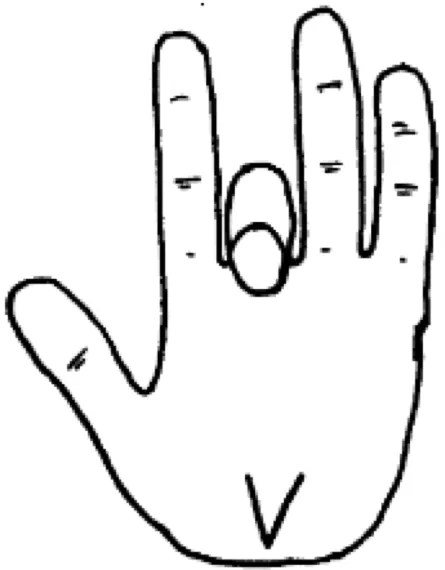
fundamentally different ways (for some concrete examples, see Table 12.2): vaguely as “many”, by an elementary word like “five”, by a compound translating into “2 + 2 + 1”, by five distinct notches on a stick (or four upright notches crossed by a transverse notch), or by presenting a hand with all fingers extended (or closed).
a symbol refers as well as the sums of all relevant 100 single-digit addition facts. In other words: One need to know beforehand that the sum of 6 and 7 is 13, and that adding 1, 1, and 2 yields 4. Proceduralknowledge includes, minimally, that numbers need to be written so that the smallest values (the most rightward number in each number representation) are aligned, that numbers need to be added by position, starting from the right, and what to do with carries:
The most obvious property in which counting sequences can differ is the modality in which they are implemented: through objects such as tally sticks or knotted strings (in the case of material systems); through fingers and body parts more generally (in the case of body-based systems); through number words (in the case of verbal systems); and through written notation such as the Hindu-Arabic digits or the Roman numerals (in the case of notational systems). Other properties (illustrated below) involve the presence or absence of a base and perhaps a sub-base, the size of such bases, or the regularity and transparency of how larger number words are composed.
Adding the very same numbers with Roman numerals (XXVI and XVII) also requires declarative and procedural knowledge. Here, however, the declarative knowledge only needs to include the order of the basic symbols (according to their value) and the simplification rules inherent in the counting sequence, such as IIIII →V and VV →X. Procedu-ral knowledge gets by with a few very simple tricks: start by joining the symbols of the addends
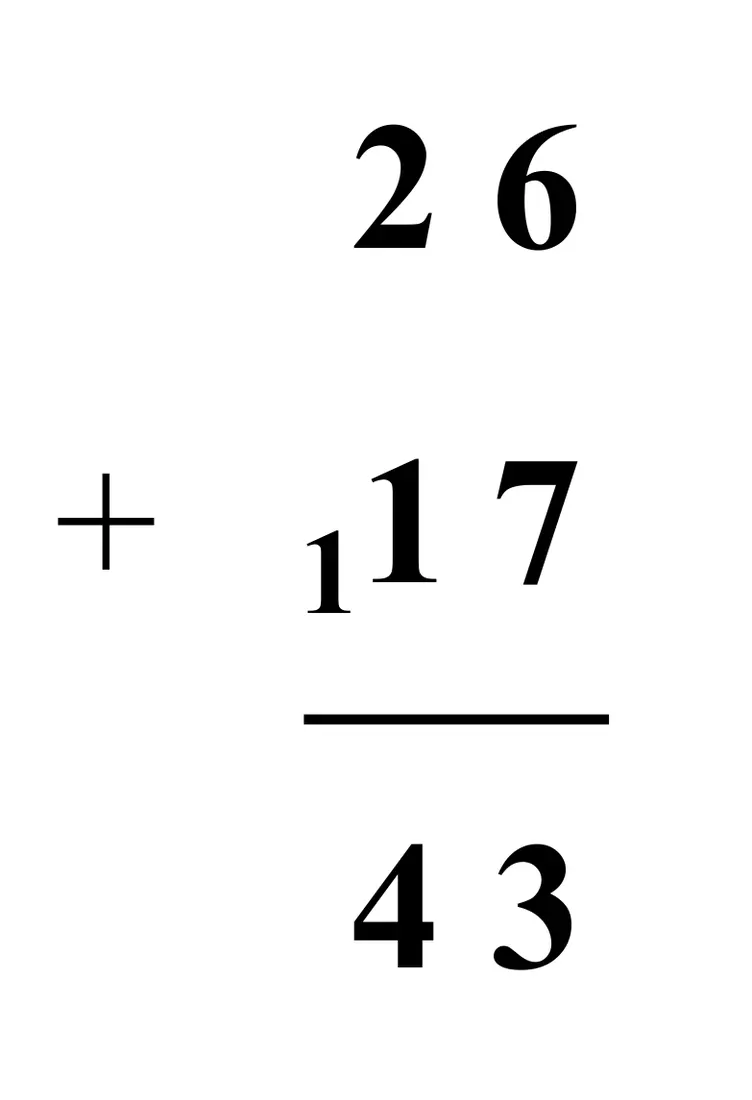
Crucially, these properties have cognitive implications, that is, they affect how numbers are represented and processed (Bender & Beller, 2017; Bender et al., 2015; Schlimm & Neth, 2008). The Hindu-Arabic digits, for instance, constitute a decimal system; digits from 1 through 9 are represented by distinct symbols, the base 10 and the powers to which it is raised (e.g., 100, 1000, etc.) are represented by position (this is why the principle is often called “place-value”: the value of a number is codetermined by its place). The Roman numerals, by contrast, constitute a system that uses sub-base 5 in addition to base 10; basic numbers are largely represented in a cumulative manner (as I, II, III), whereas sub-base, base, and their powers are represented by distinct symbols (V, X, L, C, D, and M). Due to this cumulative representation of basic numbers instead of a place-value principle, it is actually easier to execute basic arithmetic operations such as addition or multiplication with the (original) Roman numerals than with Hindu-Arabic digits (Schlimm & Neth, 2008). Let us illustrate this for the addition of 16 and 27. All additions require both declarative and procedural knowledge. Declarative knowledge in the Hindu- Arabic system includes the numerical value to which
X X V I X V I I
order them according to their values
X X X V V I I I
and then simplify, with V V →X:
X X X X I I I
As this example illustrates, the manner in which numbers are represented in each of the two systems has an impact on how numerical information is processed—some operations are just more straightforward with one type of representation than with another. This phenomenon is called representationaleffect (Zhang & Norman, 1995), and it emerges not only for notational systems but for number systems in general (Bender & Beller, 2012, 2018).
Another instance of this effect is that a system will be understood, learned, and mastered more easily if it is regularly structured and transparent. Compared
222 • Psychology of Human Thought • Chapter 12
Language as Tool for Thought Bender
to number systems in East-Asian and Polynesian languages (Bender et al., 2015; Miura, 1987), the systems in many Indo-European languages including English are pretty irregular. The number words from 1 through 10 are distinct and arbitrary, as in all decimal verbal systems. Once base 10 is reached, starting a new counting cycle with regularly composed number words such as “ten-and-one”, “tenand-two”, etc. would reveal the base 10 structure. English, however, blurs this structure with its specific number words “eleven” and “twelve”. Not even “thirteen” is recognizable as “ten-and-three”, which is why only at “fourteen” may a novice begin to sense a recurrent pattern in the suffixed “-teen” (Bender & Beller, 2018). Moreover, the difference between numerals like “thirteen” and “thirty” hinges on a crucial distinction between -teen and -ty, both of which refer to the same number (10) though and should therefore actually be identical. As a consequence of these irregularities, English-speaking children take more time than Chinese-speaking children to learn their system and require more effort for grasping its decimal structure and the algorithms based on it (Fuson & Kwon, 1991; Miller et al., 1995).
ity: the standard state of a familiar language serving as a well-known tool (sections 12.4.1), and the implications that arise from using a foreign language as an unfamiliar tool (sections 12.4.2). In contrast to the familiar tool, which reinforces our cognitive habits, the unfamiliar tool seems to reset these habits to some extent.
12.4.1 Familiar Tool: Thinking byLanguage
The first language we acquire is our native language or mother tongue, and this language is with us during major parts of cognitive development, while we learn to categorize the things we perceive, discover the world of numbers, or try to figure out solutions for reasoning tasks and decision problems. As noted by developmental psychologists in the tradition of Vygotsky and Piaget, language and thought become entangled in a complex relationship during this process. In other words: language itself is like a glue that keeps our non-domain-specific, cross-modular, propositional thoughts together, “not just in the sense that language is a necessary condition for us to entertain such thoughts but in the stronger sense that natural language representations are the bearers of those propositional thought-contents” (Carruthers, 2002). An example of the crucial role of language is the emergence and development of a “theory of mind” in children, which seems to benefit greatly from linguistic support (Pyers & Senghas, 2009; de Villiers, 2007). Theory-of-mind abilities emerge in all normally developing human children; their onset, however, depends on the amount of mental-state talk in parent-child interactions. For instance, whereas in the Western world, reflections on others’ mental states are a topic of widespread interest and conversation, numerous societies across the world appear to adopt a perspective according to which mental states are private and opaque (Luhrmann 2011). This reluctance to openly speculate about the feelings, intentions, or thoughts of others affects the ease with which children acquire an understanding of such notions (Vinden 1996; Wassmann et al. 2013).
12.4 Language as Tool for Thought
As should have become clear by now, language is an important tool for thought, aiding the coding, categorization, and storing of information as well as processes of reasoning, decision making, and problem solving. As we know from classic experiments in psychology (see Chapter 9, “Problem Solving”), the properties of a tool and the habits acquired during its usage tend to affect how the tool is applied. One instance illustrating this influence is the phenomenon of functional fixedness: the tendency to use a tool in conventional ways even if a new problem requires a novel application (Duncker, 1935; Glucksberg & Danks, 1968). A second instance is the so-called seteffect (or Einstellung effect): the tendency to stick to a procedure that has worked before even if the new problem requires a novel approach (Luchins & Luchins, 1959). Applied to the case of language, we distinguish in this last section two states of familiar-
A second example for illustrating the role of language for cognition in a more general sense is nu-
Psychology of Human Thought • Chapter 12 • 223
Bender Language and Thought
merical cognition, for here the invention of number words was indispensable for processes of counting and calculating (see section 12.3.2). In this case, specific linguistic representations are so essential for cognitive processing that they are considered a component of cognition itself. Such instances constitute cases of extended cognition, in which information is distributed to both mental and non-mental states and in which cognitive processing involves both types of information (Clark & Chalmers, 1998; Hutchins, 1995; Norman, 1993). For instance, the computation of 26 and 17 described earlier requires information on what each numerical symbol means or how to execute a column addition (stored mentally), but also relies on the presence of the numerals (stored on a piece of paper).
sensory impression, for instance because the stimulus perception itself was imprecise or because our memory of it is fading away.
It is exactly this correlation that Cibelli and colleagues (2016) observed, both in empirical studies in which they manipulated the time span between the presentation of the stimulus and the recall of the memory, and in computer simulations of data from cross-linguistic studies. Their account also provides an elegant explanation of why effects of linguistic relativity are not always reliably replicated—namely, when experimental designs enable relatively high degrees of certainty in participants’ perception or memory. Finally, this model also allows accounting for influences of language on cognition while at the same time supposing a universal foundation for cognition.
Explanations of why using language as a tool would affect thought follow a slightly different track, where perception and categorization are concerned. Explanations in this domain are based on the wellknown fact that information processing unfolds as an interplay between bottom-up processing of sensory signals and top-down predictions about what these signals might be. In this interplay, language plays a key role in that it serves as a main source for generating predictions. If these predictions happen to match the stimulus perceived, they help to discover things that would have otherwise been missed (Lupyan & Clark, 2015; Lupyan & Ward, 2013).
In the two instances described in sections 12.3.1 and 12.3.2, language is actively used as an aid to coding, storing, and reasoning: the color terms provided by language as a tool for identifying and memorizing color, and number words as a tool for counting and calculating. In these cases, language directly affects cognitive processes, either because the linguistic representations enter into conflict with non-linguistic representations (language as meddler) or because the linguistic representations support, augment, or even make possible the non-linguistic representations (language as augmenter). Typically, this kind of online influence diminishes when participants are prevented from making use of language, for instance, by way of a verbal interference task (e.g., Frank et al., 2012; Roberson & Davidoff, 2000). The same holds, of course, for instances of thinking for speak-ing, as in the absence of a need for speaking the effect will not arise. Instances of thinking after lan-guage are different. Here, the language-inherent need to pay attention to some information more than other information has led to a form of habituation that renders grammatically relevant aspects salient (spotlight effect) even without immediate involvement of language. An indirect or offline influence of language like this is less likely suppressed by verbal interference.
This approach is refined by Cibelli and colleagues (2016) for the controversial case of color perception. It takes its point of departure in the category ad-justment model proposed by Huttenlocher and colleagues (1991), according to which we tend to use information from two different sources when we have to draw inferences under uncertainty. One source is a fine-grained representation of the perceived stimulus itself, the other source is a categorical system devoted to the organization of perceptions and memories. If, for instance, we try to recall the exact color of a stimulus, the two sources would be the color seen and the linguistic color category in which it falls. An influence of language on memory would here be diagnosed when the recalled color shade shifts in the direction of the prototypical shade of the respective color category. This should be the stronger, the less certain we are with regard to our
224 • Psychology of Human Thought • Chapter 12
Unfamiliar Tool: Thinking in a Foreign Language Bender
Table 12.3: Framing variants of the Asian Disease task.
Alternative A (certain)Alternative B (uncertain)
positive framing200 people will be saved. 1/3 probability that all 600 will be saved, 2/3 probability that none will be saved.
negative framing400 people will die. 1/3 probability that nobody will die, 2/3 probability that all 600 will die.
12.4.2 Unfamiliar Tool: Thinking in aForeign Language
texts, including gambling, mental book-keeping, risk awareness, or moral judgments (overview in Hayakawa et al., 2016). In moral dilemmas, for instance, people using a foreign language are more inclined to make utilitarian decisions by weighing the result more strongly than the means or intentions that lead to it (Geipel et al., 2016). When confronted with the (hypothetical) dilemma of sacrificing one human life to save five others, participants find it more acceptable to do so if they only have to hit a switch (thereby diverting a trolley so that it runs over a single person instead of five people) than if they were to actively push the single person from a bridge (thereby bringing the trolley to a halt and preventing it from running over the five people). The outcome is the same in both cases (five lives saved at the cost of one), but the reluctance is much greater in the second case— normally. If, by contrast, the dilemma is presented in a foreign language, the greater good outweighs the moral rule of not inflicting damage on another person, and pushing the single person appears much more acceptable (Costa et al., 2014; Geipel et al., 2015).
Speaking a second language has implications for how one thinks. While habituated patterns of thought typically develop in line with the dominant language, bilinguals seem to switch between patterns of thought, rather than transferring the pattern from their dominant to the non-dominant language (Kousta et al., 2008). In fact, learning a new language with novel grammatical categories appears to entail a cognitive restructuring in the bilingual mind (Athanasopoulos, 2007). But using a second language while thinking may also have more general effects on the outcome of the thinking process.
Keysar and colleagues (2012) first described what has since been called the foreign language effect: When their participants worked on a set of classic decision tasks in a foreign language, their decisions differed significantly from those observed with the same type of problems in their native language. A robust finding in this research field is, for instance, that the decisions we make depend upon framing (Tversky & Kahneman, 1981): We avoid risks if the task is framed positively (as something we can gain), but are risk-seeking if the—actually identical—result is framed negatively (as a loss), as in the case of the “Asian disease” task (Table 12.3).
The exact mechanism underlying such effects of foreign language usage is not yet clear. Keysar and colleagues (2012) interpret their findings as evidence for the assumption that the cognitive processing in the foreign language is accompanied by a greater psychological distance and is not anchored emotionally to the same extent as is the case for processing in the native language (see also Hayakawa et al., 2016; Pavlenko, 2012). This would also explain why swearwords appear less insulting, declarations of love less romantic, and books less exciting in a foreign language (Caldwell-Harris, 2015).
The participants in the study by Keysar and colleagues (2012) exhibited the well-known pattern when working on the task in their native language. When working on it in a foreign language, however, the extent to which they opted for the safe versus risky option was independent of the framing.
A series of studies has now documented such a foreign language effect for various tasks and con-
Psychology of Human Thought • Chapter 12 • 225
Bender Language and Thought
12.4.3 Conclusion
used to adjust uncertain assessments, and it provides conceptual bricks that help scaffold cognitive skills. Still, we are not at the mercy of these tools—if they cease to serve their purpose or to achieve their goal, we are able and apt to adjust them, for instance by simply inventing new color terms or increasing the range of number words needed for counting (Beller & Bender, 2008). It is exactly for this reason that humans in the history of their species were able to attain ever greater goals with increasingly well suited tools (Miller & Paredes, 1996). This also holds for language as our most important tool for thought.
For several decades, the principle of linguistic relativity was disregarded as a topic of interest in the cognitive sciences, largely due to Chomsky’s influence. Reintroduced as a topic worthy of scientific investigation in the 1990ies (Gumperz & Levinson, 1996; Lee, 1996; Lucy, 1992a, 1992b, 1997), it is today one of the most thriving and thrilling fields in cognitive science (e.g., Boroditsky, 2001; Dolscheid et al., 2013; Gentner & Goldin-Meadow, 2003; Haun et al., 2011). As mentioned in the introduction, the discussion is still controversial, but evidence in support of at least some versions of linguistic relativity is accumulating. The same is true for theoretical attempts to reconcile the idea that cognition may be susceptible to influences of language on the one hand with one of the key assumptions of cognitive science, the universality of cognitive processes, on the other (e.g., Cibelli et al., 2016; Lupyan & Clark, 2015). Language provides structure that leads us to pay more attention to some information than to other information; it provides categorical systems that are
Acknowledgment
This chapter is based in large parts on collaborative work with my former colleague and partner, the late Sieghard Beller, to whom I remain indebted for inspiration, fruitful exchange of ideas, and critical feedback. I also wish to thank Stina Hellesund Heggholmen for proofreading and helpful comments on an earlier draft as well as Julia Karl for her terrific work with the typesetting.
Summary
According to the principle of linguistic relativity, most prominently proposed by Whorf, the language we speak affects the way we think. Three theses are central to this account: that languages differ in how they describe the world; that the way in which a language describes the world affects the experiences had by its speakers; and that speakers of different languages therefore have different experiences. The underlying idea is still controversial in parts of cognitive science, but evidence is accumulating in support of its three most plausible readings, namely that language may affect thought in terms of thinking before language (as thinking for speaking), with language (as meddleror as augmenter), and after language (as spotlight). In this chapter, we summarize research on four domains, to illustrate arguments and approaches in the field. In order to raise awareness for critical issues, we begin with grammatical gender, originally claimed as an instance of the spotlight effect, but used here as a counter-example. More convincing instances are spatial references (for the spotlight effect), the influence of the color lexicon on color categorization (language as meddler), and the role of number words for numerical cognition (language as augmenter). In conclusion, we elaborate on the role of language as a tool for thought, including the differences that occur when using a foreign language while thinking.
226 • Psychology of Human Thought • Chapter 12
Conclusion Bender

Review Questions
1. In section 12.1.3 we briefly present several accounts of the relation between language and thought. Which of these qualify as versions of linguistic relativity?
2. Why is grammatical gender a tempting candidate for investigations of linguistic relativity, and why is it still not the most suitable candidate?
3. How are thinking for speaking and the spotlight effect related?
4. In section 12.3.2, we claimed that a conventionalized sequence of number representations is a crucial tool for counting and calculation. How important is it that this sequence consists of number words rather than, say, notches on a stick?
5. How does the foreign language effect speak to the claim that language affects thought?
Hot Topic: Is Grammatical Gender an Instance of Linguistic Relativity?
The relationship between culture, language, and cognition, as well as their (co-)evolution, has fascinated me since the beginning of my academic career when I was working as a cultural anthropologist, and it constitutes the main area of my research in cognitive science and psychology today. My interests include number representations and their cognitive implications, spatial and temporal references, the evolution and cultural constitution of causal cognition, and the possible influence of linguistic categories on thought (known as linguistic relativity).

A topic that has been controversially debated for decades is whether grammatical gender qualifies as an instance of linguistic relativity. In languages with a formal gender system, all nouns are assigned to one of several classes that determine the declension of associated words. For instance, the moon has masculine gender in German (der Mond), whereas the sun has feminine gender (die Sonne). Is, therefore, the sun conceived as more feminine than the moon by German speakers? One indicator for such an influence is the “gender congruency effect”. It emerges if the grammatical gender of a noun (masculine for Mond) is congruent with the association of its referent with a specific sex (here: as male).
Andrea Bender
In previous research, participants were often directly asked for such associations. A major issue with explicit measures like this is that information on grammatical gender can be actively used to aid the decision. In our own work with speakers of German, we therefore used an implicit measure. Participants were asked to categorize nouns according to criteria not obviously related to gender associations. Critically, the stimuli themselves constituted either congruent or incongruent cases; faster and/or more accurate responses in the congruent than the incongruent cases would then attest to a gender congruency effect. We examined nouns for which grammatical gender and biological sex were congruent or incongruent (Bender, Beller, & Klauer, 2016a), for which grammatical gender and allegorical association were congruent or incongruent (Bender, Beller, & Klauer, 2016b), or for which grammatical gender was related to sex (masculine/feminine) or not related to sex (neuter) (Bender, Beller, & Klauer, 2018). Across these studies, a gender congruency effect emerged for all those nouns that had strong male or female connotations, almost regardless of
Psychology of Human Thought • Chapter 12 • 227
Bender Language and Thought
their gender, suggesting that the semantic association of the nouns has a much stronger effect than their grammatical gender.
References
Bender, A., Beller, S., & Klauer, K. C. (2016a). Crossing grammar and biology for gender categorizations:
Investigating the gender congruency effect in generic nouns for animates. Journal of Cognitive Psychology, 28, 530–558. doi:10.1080/20445911.2016.1148042
Bender, A., Beller, S., & Klauer, K. C. (2016b). Lady Liberty and Godfather Death as candidates for linguistic
relativity? Scrutinizing the gender congruency effect on personified allegories with explicit and implicit measures. Quarterly Journal of Experimental Psychology, 69, 48–64. doi:10.1080/17470218.2015.1021701
Bender, A., Beller, S., & Klauer, K. C. (2018). Gender congruency from a neutral point of view: The roles of
gender classes and gender-indicating articles. Journal of Experimental Psychology: Learning, Memory,and Cognition, 44, 1580–1608. doi:10.1037/xlm0000534
References
Athanasopoulos, P. (2007). Interaction between grammat-
ematical cognition and learning: Language and cul-ture in mathematical cognition (pp. 297–320). Cambridge, MA: Academic Press. doi:10.1016/b978-0-12- 812574-8.00013-4
ical categories and cognition in bilinguals: The role of proficiency, cultural immersion, and language of instruction. Language and Cognitive Processes, 22, 689–699. doi:10.1080/01690960601049347
Bender, A., Beller, S., & Klauer, K. C. (2018). Gender
Bacon, F. T. (1979). Credibility of repeated statements:
congruency from a neutral point of view: The roles of gender classes and gender-indicating articles. Journalof Experimental Psychology: Learning, Memory, andCognition, 44, 1580–1608. doi:10.1037/xlm0000534
Memory for trivia. Journal of Experimental Psy-chology: Human Learning and Memory, 5, 241–252. doi:10.1037//0278-7393.5.3.241
Beller, S., & Bender, A. (2008). The limits of counting:
Bender, A., Schlimm, D., & Beller, S. (2015). The cog-
Numerical cognition between evolution and culture. Science, 319, 213–215. doi:10.1126/science.1148345
nitive advantages of counting specifically: A representational analysis of verbal numeration systems in Oceanic languages. Topics in Cognitive Science, 7, 552–569. doi:10.1111/tops.12165
Bender, A., & Beller, S. (2012). Nature and culture of fin-
ger counting: Diversity and representational effects of an embodied cognitive tool. Cognition, 124, 156–182. doi:10.1016/j.cognition.2012.05.005
Berlin, B., & Kay, P. (1969). Basic color terms. Berkeley:
University of California Press.
Bender, A., & Beller, S. (2014). Mapping spatial frames
Boroditsky, L. (2001). Does language shape thought? Mandarin and English speakers’ conceptions of time. Cognitive Psychology, 43, 1–22. doi:10.1006/cogp.2001.0748
of reference onto time: A review of theoretical accounts and empirical findings. Cognition, 132, 342– 382. doi:10.1016/j.cognition.2014.03.016
Bender, A., & Beller, S. (2017). The power of 2: How
Boroditsky, L., Schmidt, L. A., & Phillips, W. (2003). Sex, syntax, and semantics. In D. Gentner & S. Goldin-Meadow (Eds.), Language inmind (pp. 61–79). Cambridge: The MIT Press. doi:10.7551/mitpress/4117.003.0010
an apparently irregular numeration system facilitates mental arithmetic. Cognitive Science, 41, 158–187. doi:10.1111/cogs.12337
Bender, A., & Beller, S. (2018). Numeration systems
as cultural tools for numerical cognition. In D. B. Berch, D. C. Geary, & K. Mann Koepke (Eds.), Math-
Caldwell-Harris, C. L. (2015). Emotionality differences between a native and foreign language:
228 • Psychology of Human Thought • Chapter 12
References Bender
Implications for everyday life. Current Di-rections in Psychological Science, 24, 214–219. doi:10.1177/0963721414566268
Evans, N., & Levinson, S. L. (2009). The myth of language universals: Language diversity and its importance for cognitive science. Behavioral and Brain Sciences, 32, 429–492. doi:10.1017/s0140525x0999094x
Carmichael, L., Hogan H. P., & Walter, A. A. (1932).
An experimental study of the effect of language on the reproduction of visually presented forms. Journal of Experimental Psychology, 15, 73–86. doi:10.1037/h0072671
Everett, D. L. (2005). Cultural constraints on grammar
and cognition in Pirahã. Current Anthropology, 46, 621–646. doi:10.1086/431525
Carruthers, P. (2002). The cognitive functions of lan-
Feigenson, L., Dehaene, S., & Spelke, E. (2004). Core
guage. Behavioral and Brain Sciences, 25, 657–726. doi:10.1017/s0140525x02000122
systems of number. Trends in Cognitive Sciences, 8, 307–314. doi:10.1016/j.tics.2004.05.002
Chomsky, N. (1986). Knowledge of language. New York:
Frank, M. C., Everett, D. L., Fedorenko, E., & Gibson, E.
Praeger Special Studies.
(2008). Number as a cognitive technology: Evidence from Pirahã language and cognition. Cognition, 108, 819–824. doi:10.1016/j.cognition.2008.04.007
Chrisomalis, S. (2010). Numericalnotation. New York: Cambridge University Press. doi:10.1017/cbo9780511676062
Frank, M. C., Fedorenko, E., Lai, P., Saxe, R., & Gib-
Cibelli, E., Xu, Y., Austerweil, J. L., Griffiths, T. L.,
son, E. (2012). Verbal interference suppresses exact numerical representation. Cognitive Psychology, 64, 74–92. doi:10.1016/j.cogpsych.2011.10.004
& Regier, T. (2016). The Sapir-Whorf Hypothesis and probabilistic inference: Evidence from the domain of color. PLoS ONE, 11(7), e0158725. doi:10.1371/journal.pone.0158725
Fuson, K. C., & Kwon, Y. (1991). Chinese-based regu-
lar and European irregular systems of number words: The disadvantages for English-speaking children. In K. Durkin & B. Shire (Eds.), Language in mathemat-ical education (pp. 211–226). Milton Keynes, PA: Open University Press.
Clark, A., & Chalmers, D. (1998). The extended mind.
Analysis, 58, 7–19. doi:10.1111/1467-8284.00096
Corbett, G. (1991). Gender. Cambridge: Cambridge
University Press.
Geipel, J., Hadjichristidis, C., & Surian, L. (2015). The
Costa, A., Foucart, A., Hayakawa, S., Aparici, M.,
foreign language effect on moral judgment: The role of emotions and norms. PLoS ONE, 10(7), e0131529. doi:10.1371/journal.pone.0131529
Apesteguia, J., Heafner, J., & Keysar, B. (2014). Your morals depend on language. PLoS ONE, 9(4), e94842. doi:10.1371/journal.pone.0094842
Geipel, J., Hadjichristidis, C., & Surian, L. (2016). For-
Dabrowska, E. (2015). What exactly is Universal Gram-
eign language affects the contribution of intentions and outcomes to moral judgment. Cognition, 154, 34–39. doi:10.1016/j.cognition.2016.05.010
mar, and has anyone seen it? Frontiers in Psychology, 6:852. doi:10.3389/fpsyg.2015.00852
Davies, I., & Corbett, G. (1994). The basic color terms of Russian. Linguistics, 32, 65–89. doi:10.1515/ling.1994.32.1.65
Gennari, S., Sloman, S. A., Malt, B. C., & Fitch, W.
T. (2002). Motion events in language and cognition. Cognition, 83, 49–79. doi:10.1016/s0010- 0277(01)00166-4
de Villiers, J. (2007). The interface of language and theory of mind. Lingua, 117, 1858–1878. doi:10.1016/j.lingua.2006.11.006
Gentner, D., & Goldin-Meadow, S. (Eds.) (2003). Language in mind. Cambridge: The MIT Press. doi:10.7551/mitpress/4117.001.0001
Dolscheid, S., Shayan, S., Majid, A., & Casasanto,
D. (2013). The thickness of musical pitch: Psychophysical evidence for linguistic relativity. PsychologicalScience, 24, 613–621. doi:10.1177/0956797612457374
Gilbert, A. L., Regier, T., Kay, P., & Ivry, R. B.
(2006). Whorf hypothesis is supported in the right visual field but not the left. Proceedings ofthe National Academy of Sciences, 103, 489–494. doi:10.1073/pnas.0509868103
Duncker, K. (1935). Zur Psychologie des produktiven
Denkens. Heidelberg: Springer. [engl. translation (1945). On problem-solving. Psychological Monographs, 58(5)] doi:10.1037/h0093599
Glucksberg, S., & Danks, J. H. (1968). Effects of dis-
criminative labels and of nonsense labels upon availability of novel function. Journal of Verbal Learning
Psychology of Human Thought • Chapter 12 • 229
Bender Language and Thought
and Verbal Behavior, 7, 72–76. doi:10.1016/s0022- 5371(68)80166-5
mantischen Gehalt? Psychologische Rundschau, 58, 171–182. doi:10.1026/0033-3042.58.3.171
Gordon, P. (2004). Numerical cognition without words:
Konishi, T. (1993). The semantics of grammatical gender:
Evidence from Amazonia. Science, 306, 496–499. doi:10.1126/science.1094492
A cross-cultural study. Journal of PsycholinguisticResearch, 22, 519–534. doi:10.1007/bf01068252
Gumperz, J. J., & Levinson, S. C. (Eds.) (1996). Re-
Kousta, S. T., Vinson, D. P., & Vigliocco, G. (2008). Inves-
thinking linguistic relativity. New York: Cambridge University Press.
tigating linguistic relativity through bilingualism: The case of grammatical gender. Journal of ExperimentalPsychology: Learning, Memory, and Cognition, 34, 843–858. doi:10.1037/0278-7393.34.4.843
Harley, T. A. (2014). The psychology of language [4th
ed.]. Hove: Psychology Press.
Lazar-Meyn, H. A. (2004). Color naming: "Grue" in
Hasher, L., Goldstein, D., & Toppino, T. (1977). Fre-
the Celtic languages of the British Isles. Psycho-logical Science, 15, 288–288. doi:10.1111/j.0956- 7976.2004.00669.x
quency and the conference of referential validity. Jour-nal of Verbal Learning and Verbal Behavior, 16, 107– 112. doi:10.1016/s0022-5371(77)80012-1
Lee, P. (1996). The Whorf theory complex:Acritical reconstruction. Amsterdam: Benjamins. doi:10.1075/sihols.81
Haun, D. B. M., Rapold, C. J., Janzen, G., & Levin-
son, S. C. (2011). Plasticity of human spatial cognition: Spatial language and cognition covary across cultures. Cognition, 119, 70–80. doi:10.1016/j.cognition.2010.12.009
Levinson, S. C. (2003). Spaceinlanguageandcognition:Explorationsincognitivedi-versity. Cambridge: Cambridge University Press.doi:10.1017/cbo9780511613609
Hayakawa, S., Costa, A., Foucart, A., & Keysar, B.
(2016). Using a foreign language changes our choices. Trends in Cognitive Sciences, 20, 791–793. doi:10.1016/j.tics.2016.08.004
Loftus, E. F., & Palmer, J. C. (1974). Reconstruction
of automobile destruction: An example of the interaction between language and memory. Journal ofVerbal Learning and Verbal Behavior, 13, 585–589.
Hutchins, E. (1995). Cognition in the wild. Cambridge:
MIT Press.
doi:10.1016/s0022-5371(74)80011-3
Huttenlocher, J., Hedges, L. V., & Duncan, S. (1991).
Luchins, A. S., & Luchins, E. H. (1959). Rigidity of behav-
Categories and particulars: Prototype effects in estimating spatial location. Psychological Review, 98, 352–376. doi:10.1037//0033-295x.98.3.352
ior: A variational approach to the effect of Einstellung. Oxford, UK: University of Oregon Press.
Lucy, J. A. (1992a). Grammatical categories and cogni-
Imai, M., & Gentner, D. (1997). A cross-linguistic study of early word meaning: Universal ontology and linguistic influence. Cognition, 62, 169–200. doi:10.1016/s0010-0277(96)00784-6
tion. Cambridge: Cambridge University Press.
Lucy, J. A. (1992b). Language diversity and thought.
Cambridge: Cambridge University Press.
Irmen, L., & Kurovskaja, J. (2010). On the semantic con-
Lucy, J. A. (1997). Linguistic relativity. An-nualReviewofAnthropology, 26, 291–312. doi:10.1146/annurev.anthro.26.1.291
tent of grammatical gender and its impact on the representation of human referents. Experimental Psychol-ogy, 57, 367–375. doi:10.1027/1618-3169/a000044
Luhrmann, T. (2011). Toward an anthropological theory
Kay, P., & Kempton, W. (1984). What is the Sapir- Whorf hypothesis? American Psychologist, 86, 65–79. doi:10.1525/aa.1984.86.1.02a00050
of mind. Suomen Antropologi: Journal of the FinnishAnthropological Society, 36(4), 5–69.
Lupyan, G., & Clark, A. (2015). Words and the world: Pre-
Keysar, B., Hayakawa, S. L., & An, S. G. (2012). The
dictive coding and the language-perception-cognition interface. Current Directions in Psychological Sci-ence, 24, 279–284. doi:10.1177/0963721415570732
foreign-language effect: Thinking in a foreign tongue reduces decision biases. Psychological Science, 23, 661–668. doi:10.1177/0956797611432178
Lupyan, G., & Ward, E. J. (2013). Language can boost
Koch, S. C., Zimmermann, F., & Garcia-Retamero, R.
otherwise unseen objects into visual awareness. Pro-ceedings of the National Academy of Sciences, 110, 14196–14201. doi:10.1073/pnas.1303312110
(2007). El sol – die Sonne: Hat das grammatische Geschlecht von Objekten Implikationen für deren se-
230 • Psychology of Human Thought • Chapter 12
References Bender
Majid, A., Bowerman, M., Kita, S., Haun, D. B. M., &
nian indigene group. Science, 306, 499–503. doi:10.1126/science.1102085
Levinson, S. C. (2004). Can language restructure cognition? The case for space. Trends in CognitiveSciences, 8, 108–114. doi:10.1016/j.tics.2004.01.003
Pinker, S. (1994). The language instinct. New York:
William Morrow & Co. doi:10.1037/e412952005-009
Malt, B. C., & Wolff, P. (Eds.) (2010). Wordsand the mind. Oxford: Oxford University Press. doi:10.1093/acprof:oso/9780195311129.001.0001
Prewitt-Freilino, J. L., Caswell, T. A., & Laakso, E. K.
(2012). The gendering of language: A comparison of gender equality in countries with gendered, natural gender, and genderless languages. Sex Roles, 66, 268–281. doi:10.1007/s11199-011-0083-5
Miller, K. F., & Paredes, D. R. (1996). On the shoulders of
giants: Cultural tools and mathematical development. In R. J. Sternberg & T. Ben-Zeev (Eds.), The natureof mathematical thinking (pp. 83–117). Mahwah: Erlbaum.
Pyers, J. E., & Senghas, A. (2009). Language promotes
false-belief understanding evidence from learners of a new sign language. Psychological Science, 20, 805– 812. doi:10.1111/j.1467-9280.2009.02377.x
Miller, K. F., Smith, C. M., Zhu, J., & Zhang, H.
(1995). Preschool origins of cross-national differences in mathematical competence: The role of numbernaming systems. Psychological Science, 6, 56–60. doi:10.1111/j.1467-9280.1995.tb00305.x
Roberson, D., & Davidoff, J. (2000). The categorical
perception of colors and facial expressions: The effect of verbal interference. Memory & Cognition, 28, 977–986. doi:10.3758/bf03209345
Mitterer, H., Horschig, J. M., Müsseler, J., & Majid,
Roberson, D., Davidoff, J., Davies, I. R. L., & Shapiro,
A. (2009). The influence of memory on perception: It’s not what things look like, it’s what you call them. Journal of Experimental Psychology:Learning, Memory, and Cognition, 35, 1557–1562. doi:10.1037/a0017019
L. R. (2005). Color categories: Evidence for the cultural relativity hypothesis. Cognitive Psychology, 50, 378–411. doi:10.1016/j.cogpsych.2004.10.001
Schlimm, D., & Neth, H. (2008). Modeling ancient and
modern arithmetic practices: Addition and multiplication with Arabic and Roman numerals. In B. C. Love et al. (Eds.), Proceedings of the 30th Annual Confer-ence of the Cognitive Science Society (pp. 2097–2102). Austin: Cognitive Science Society.
Miura, I. T. (1987). Mathematics achievement as a func-
tion of language. Journal of Educational Psychology, 79, 79–82. doi:10.1037//0022-0663.79.1.79
Norman, D. A. (1993). Things that make us smart. Read-
ing(?): Addison-Wesley.
Siok, W. T., Kay, P., Wang, W. S. Y., Chan, A. H. D.,
Núñez, R. E. (2017). Is there really an evolved capac-
Chen, L., & Luke, K.-K. (2009). Language regions of brain are operative in color perception. Proceedingsof the National Academy of Sciences of the USA, 106, 8140–8145. doi:10.1073/pnas.0903627106
ity for number? Trends in Cognitive Sciences, 21, 409–424. doi:10.1016/j.tics.2017.03.005
Paggetti, G., Menegaz, G., & Paramei, G. V. (2016). Color
naming in Italian language. Color Research & Appli-cation, 41, 402–415. doi:10.1002/col.21953
Slobin, D. I. (1996). From “thought and language” to “thinking for speaking”. In J. J. Gumperz & S. C. Levinson (Eds.), Rethinking linguistic relativity(pp. 70–96). Cambridge: Cambridge University Press.
Papafragou, A., Hulbert, J., & Trueswell, J. (2008).
Does language guide event perception? Evidence from eyemovements. Cognition, 108, 155–184. doi:10.1016/j.cognition.2008.02.007
Spaepen, E., Coppola, M., Spelke, E. S., Carey,
S. E., & Goldin-Meadow, S. (2011). Number without a language model. Proceedings of theNational Academy of Sciences, 108, 3163–3168. doi:10.1073/pnas.1015975108
Papafragou, A., & Selimis, S. (2010). Event categori-
sation and language: A cross-linguistic study of motion. Language and Cognitive Processes, 25, 224–260. doi:10.1080/01690960903017000
Tan, L. H., Chan, A. H. D., Kay, P., Khong, P.-L., Yip, L.
K. C., Luke, K.-K. (2008). Language affects patterns of brain activation associated with perceptual decision. Proceedings of the National Academy of Sciences, 105, 4004–4009. doi:10.1073/pnas.0800055105
Pavlenko, A. (2012). Affective processing in bilingual speakers: Disembodied cognition? Inter-national Journal of Psychology, 47, 405–428. doi:10.1080/00207594.2012.743665
Turner, J. H. (1951). Roman elementary mathematics: The
Pica, P., Lemer, C., Izard, V., & Dehaene, S. (2004).
Exact and approximate arithmetic in an Amazo-
Operations. The Classical Journal, 47(2), 63–108.
Psychology of Human Thought • Chapter 12 • 231
Bender Language and Thought
Tversky, A., & Kahneman, D. (1981). The framing of
Wiese, H. (2003). Numbers, language, and the hu-man mind. Cambridge: Cambridge University Press. doi:10.1017/cbo9780511486562
decisions and the psychology of choice. Science, 211, 453–458. doi:10.1126/science.7455683
Vinden, P. G. (1996). Junin Quechua children’s under-
Winawer, J., Witthoft, N., Frank, M. C., Wu, L., Wade,
standing of mind. Child Development, 67, 1707–1716. doi:10.1111/j.1467-8624.1996.tb01822.x
A. R., & Boroditsky, L. (2007). Russian blues reveal effects of language on color discrimination. Pro-ceedings of the National Academy of Sciences, 104, 7780–7785. doi:10.1073/pnas.0701644104
Wassmann, J., Träuble, B., & Funke, J. (Eds.). (2013).
Theory of mind in the Pacific: Reasoning across cul-
tures. Heidelberg: Universitätsverlag Winter.
Wolff, P., & Holmes, K. J. (2011). Linguistic relativity.
Wiley Interdisciplinary Reviews: Cognitive Science, 2,
Whorf, B. L. (1956). Language, thought and reality. Cam-
bridge: The MIT Press.
253–265. doi:10.1002/wcs.104
Zhang, J., & Norman, D. A. (1995). A representational
Widom, T. R., & Schlimm, D. (2012). Methodological reflections on typologies for numerical notations. Science in Context, 25, 155–195. doi:10.1017/s0269889712000038
analysis of numeration systems. Cognition, 57, 271– 295. doi:10.1016/0010-0277(95)00674-3
232 • Psychology of Human Thought • Chapter 12
Glossary Bender
Glossary
foreign language effect Processing information
are influenced in their perceptions and categorizations by the linguistic structures implicit in their mother tongue. 214
in a foreign language affects decision making under uncertainty, moral judgments, and emotional responses. 225
representational effect Information is processed
linguistic determinism Strongest version of lin-
differently depending on how it is represented. 222
guistic relativity, according to which people would be able to engage only in those thoughts that their language permits; is of little intuitive plausibility and largely refuted by empirical research. 216
thinking for speaking Coined by Dan Slobin for
the fact that, in order to put our thoughts into words, we need to organize our thoughts in such a way that they specify all those aspects that are required by the grammatical structure of the respective language. 217
principle of linguistic relativity Proposed by Whorf and others, stating that humans cannot objectively describe the world because they
Psychology of Human Thought • Chapter 12 • 233