 Starvard
The Psychology of Human Thought · Chapter 13 of 19
Chapter 13: Expertise
by David Z. Hambrick
People are capable of remarkable feats. Examples range from the everyday—such as the waiter who can remember a dozen orders without writing them down—to the esoteric—such as the chess master who simultaneously plays (and beats) dozens of opponents while blindfolded—to the epic—such as Bob Beamon’s belief-defying long jump of over 29 feet in the 1968 Mexico City Olympics.
This chapter reviews evidence concerning this question and is divided into four sections. The first section provides a brief history of research on expertise, from prehistory to present. The second section focuses on theoretical debates in contemporary expertise research, and particularly the role of training history in explaining individual differences in expertise. The third section describes a multifactorial perspective on expertise, and the final section discusses directions for future research.
What sets elite performers apart from everyone else? Invariably, they have a history of training in their domain. This is true even of people who progress extremely rapidly. For example, the Norwegian chess great Magnus Carlsen took around 5 years of serious involvement in chess to attain grandmaster status (Gobet & Ereku, 2014). Simply put, there are no “instant” experts.
13.1 The Science of Expertise: A BriefHistory
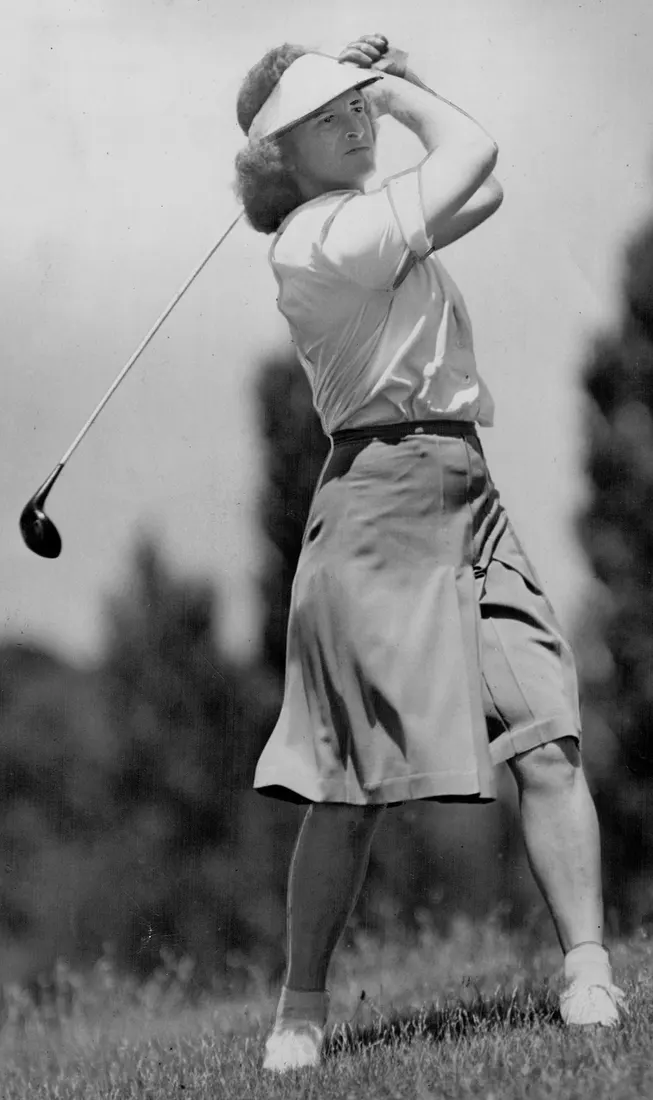
There is no denying that some people acquire complex skills much more rapidly, and reach a much higher level of ultimate performance, than other people. Consider the American golfer Babe Didrikson Zaharias, pictured in Figure 13.1. An extraordinary athlete, Zaharias was an All-American basketball player in high school, and went on to win gold medals in the hurdles and javelin in the 1932 Los Angeles Olympics (van Natta, 2013), equaling her world record in the former. Reports of when Zaharias began playing golf vary. According to legend, she shot a respectable 91 the first time she ever played golf. This is almost certainly not true; as a Sports Illustrated profile noted, “In truth she had played a great deal of golf, beginning as a high school student in Beaumont and continuing in Dallas, where she often hit 1,000 balls a day” (Babe,
As a scientific concept, expertise may be defined as a person’s current level of performance in a complex task. This could be a hobby, such as playing a musical instrument, or a sport, or an occupational task, such as diagnosing a patient. It could also be an everyday task, such as recognizing faces or driving. A major unanswered question in research on expertise is the extent to which performers’ history of training in a domain account for individual differences in expertise (i.e., differences across people in domain-specific performance). For example, is it the amount of intensity of training alone that distinguishes Serena Williams from her highly skilled, but less successful, competition on the Women’s Tennis Association Tour?
https://doi.org/10.17885/heiup.470.c6676 Psychology of Human Thought • Chapter 13 • 235
Hambrick Expertise
1975). Nevertheless, it is clear that Zaharias’ ascent to golfing greatness was rapid. Her first significant victory came in 1935 at the Texas Women’s Amateur, and only five years later, she won a major championship, the Western Women’s Open. She went on to become one of the best golfers in history, winning 41 professional tournaments, including 10 major championships. In 1951, she was inducted into the World Golf Hall of Fame (Babe, 1975; van Natta, 2013).
doubt that even early humans differed in their skill in complex tasks. Presumably, some prehistoric people were more skilled than others at producing and using tools, painting on cave walls, and other tasks of prehistoric life. What did these people think about the origins of these differences? It is impossible to know—by definition, prehistory is the period before written records—but they likely attributed them to supernatural forces. We do get a sense from prehistoric art that early humans were just as captivated by displays of skill as we are today. Paintings from the paleolithic era in the Lascaux cave in France estimated to be 20,000 years old include images of wrestlers and sprinters, and in the Cave of Swimmers in present day Egypt, depictions of archers and swimmers date to 6,000 B.C.E.
Many millennia later, the Ancient Greeks laid the foundation for the contemporary debate over the origins of expertise. In The Republic (ca. 380 B.C.E.), Plato made the innatist argument that “no two persons are born alike but each differs from the other in individual endowments.” Aristotle countered with the empiricist argument that experience is the ultimate source of knowledge (Stanford Encyclopedia of Psychology, 2015). More than two thousand years later, in the mid-19th century, these contrasting philosophical views would frame the scientific debate over the origins of expertise in the new field of psychology. The debate has raged on ever since.
Figure 13.1: Babe Didrikson Zaharias.
Millions of people play golf, but only a handful have played it as well as Zaharias did. Why is this so? What characteristics did Zaharias possess that set her apart from nearly everyone else who has ever played the game? And did she acquire all those characteristics through training? More generally, what underlies individual differences in expertise? To provide context for the contemporary debate surrounding this question, let’s begin with a brief history of scientific research on expertise.
13.1.2 The Classical Era
Born in 1822 into a prominent family of British scientists, Francis Galton was a polymath—a person with wide-ranging learning and knowledge. Over the course of his long career, he published hundreds of scholarly articles, on topics as varied as sociology, geography, anthropology, meteorology, psychology, and statistics (Gillham, 2001). Galton also popularized what is undoubtedly the most often repeated phrase in the social and behavioral sciences: natureand nurture (Fancher, 1979).1 “Nature is all that
13.1.1 Prehistory to Antiquity
The term expertise did not come into common usage in the English language until the 1950s (Hambrick & Campitelli, 2018). However, there is no reason to
1 Galton is often credited with coining (originating) the phrase “nature and nurture”, but the juxtaposition predates him by centuries (see Fancher, 1979). In his 1582 pedagogical guide Elementarie, Richard Mulcaster observed, “Nature makes the boy toward,
236 • Psychology of Human Thought • Chapter 13
The Classical Era Hambrick
a man brings with himself into the world; nurture is every influence without that affects him after his birth”, he wrote in English Men of Science: TheirNature and Nurture (1874).
Galton’s definition of eminence, complaining that one family of lawyers that Galton had included in his analysis “possessed a most extraordinary hereditary genius—for getting on at the bar” (Hereditary Talent, 1870, p. 119). Another reviewer, writing in the British Quarterly Review (1870), dismissed Galton as a “Darwinite”—an intended insult Galton almost certainly took as a compliment—and chastised him for oversimplifying genius. More substantively, based on results of his own study of the backgrounds of eminent scientists, the Swiss botanist Alphonse Pyrame de Candolle (1873) argued that Galton had drastically underestimated the role of favorable environmental circumstances (causes favor-able) in achieving greatness. He noted, for example, that Switzerland had produced 10% of the scientists in his sample despise representing just 1% of the European population (Fancher, 1983).
In 1859, Galton’s half-cousin Charles Darwin had published On the Origin of Species, laying out his theory of evolution. In a nutshell, Darwin’s thesis was that the distinctive features of a species— whether the length of giraffe’s neck or the the peacock’s brilliant plumage—emerge through a process of natural selection whereby traits that help the species survive and reproduce in their habitat are passed from parents to offspring. Galton believed that natural selection operates on human abilities, too. As he wrote in his book Hereditary Genius, “a man’s natural abilities are derived by inheritance, under exactly the same limitations as are the form and physical features of the whole organic world” (Galton, 1869, p. 1). To make his case, using biographical dictionaries, Galton identified nearly a thousand “men of reputation”—people who had made emi-
Decades later, the learning theorist Edward Thorndike (1912) entered the fray, observing that “when one sets oneself zealously to improve any
nent contributions in various fields, such as Wolfgang Amadeus Mozart, Isaac Newton, and Napoleon Bonaparte. By analyzing their family trees, he then documented that these people represented just 300 families, suggesting that biological relatedness had something to do with their success. For example, he noted that the “Bachs were a musical family, comprising a vast number of individuals, and extending through eight generations. . . .There are far more than twenty eminent musicians among the Bachs” (p. 240). Galton concluded that eminence arises from “natural ability” and went so far as to conclude that “social hindrances cannot impede men of high ability, from becoming eminent [and] social advantages are incompetent to give that status, to a man of moderate ability” (p. 41). For Galton, greatness overwhelmingly reflected nature.
ability, the amount gained is astonishing” (p. 108), and adding that “we stay far below our own possibilities in almost everything we do...not because proper practice would not improve us further, but because we do not take the training or because we take it with too little zeal.” (p. 108). Taking a more extreme stance, John Watson (1930), the founder of behaviorism, famously wrote:
Give me a dozen healthy infants, well-formed, and my own specified world to bring them up in and I’ll guarantee to take any one at random and train him to become any type of specialist I might select—doctor, lawyer, artist, merchantchief and, yes, even beggar-man and thief, regardless of his talents, penchants, tendencies, abilities, vocations, and race of his ancestors. (p. 104)
Darwin was effusive in his praise for HereditaryGenius. “I do not think I ever in all my life read anything more interesting and original”, he wrote to Galton in a letter dated December 23rd [1869]. Others were less enthusiastic. One reviewer took issue with
The pendulum had swung from nature—the view that heredity places strict limits on what a person can achieve—to nurture—the view that there are
nurture sees him forward” (Teigen, 1984). And in Shakespeare’s The Tempest, Prospero describes Caliban as “A devil, a born devil, on whose nature / Nurture can never stick.”
Psychology of Human Thought • Chapter 13 • 237
Hambrick Expertise
essentially no limits to what a person can achieve under the right circumstances.
the grandmasters were no different than less skilled players in how many moves ahead they thought. Instead, he found that the grandmaster “immediately ‘sees’ the core of the problem in the position, whereas the expert player finds it with difficulty— or misses it completely...” (p. 320). de Groot also had chess players representing different levels of skill briefly view chess positions and then attempt to reconstruct the positions by placing pieces on an empty board. de Groot found a large advantage of chess skill in recall: the grandmaster and master averaged over 90% correct, the expert only about 70%, and the weakest player just over 50%. Inspired by de Groot’s research, beginning in the 1970s the Carnegie Mellon University scientists William Chase and Herbert Simon conducted a series of studies on chess expertise (Chase & Simon, 1973). (Simon, incidentally, was another polymath: in 1978, he won the Nobel Prize in economics for his concept of bounded rationality.) Replicating de Groot’s (1946/1965) study using more controlled procedures, Chase and Simon began by showing participants representing three levels of chess skill— novice, intermediate, and master—arrangements of chess positions that were either plausible game positions or random, and then had the participants attempt to recreate the arrangements from memory by placing chess pieces on a board. Chase and Simon found that chess skill facilitated recall of the game positions but not the random positions, and therefore concluded that the primary factor underlying chess skill is a large “vocabulary” of game positions that automatically elicit candidate moves. More generally, they concluded that although “there clearly must be a set of specific aptitudes...that together comprise a talent for chess, individual differences in such aptitudes are largely overshadowed by immense differences in chess experience. Hence, the overriding factor in chess skill is practice” (Chase & Simon, 1973, p. 279).
13.1.3 The Modern Era
In the 1930s, the behaviorist mantle was picked up by B. F. Skinner. Skinner rejected as unscientific any notion of mental constructs—the mind—in psychological theorizing (Skinner, 1938). He believed that the science of psychology must focus only on what could be objectively observed: environmental stimuli and behavioral responses. Skinner’s “S-R psychology” had a monumental influence on psychological research. By the 1950s, however, there was growing dissatisfaction with behaviorism as an approach to answering important questions in psychology, such as how we humans acquire our marvelous capacity to use language (Fancher & Rutherford, A.Rutherford, 2012; Gardner, 1985). In a critique of Skinner’s book Verbal Behavior (1957), which attempted to explain language in purely S-R terms, the linguist Noam Chomsky (1959) commented that the “magnitude of the failure of this attempt to account
for verbal behavior serves as a kind of measure of the importance of the factors omitted from consideration” (p. 28). Around the same time, computer science emerged as an academic discipline. The digital processing device—the computer—provided psychologists with a powerful new metaphor for conceptualizing human thought and behavior. Rather than being seen only in terms of S-R relationships, behavior could now be seen as the product of mental operations carried out on information. The cognitive revolution was underway.
A pioneer of this new paradigm was the Dutch psychologist Adriaan de Groot (1946/1965). An international chess master who twice represented the Netherlands in the Chess Olympiad, for his dissertation research de Groot endeavored “to carry outan experimentally based psychological analysis ofchess thinking” (p. 13). To this end, he recruited chess players representing a wide range of skill— from grandmaster to master to less skilled—and had them perform “choice-of-move” problems in which they were given game positions and asked to verbalize their thoughts (to “think out loud”) as they deliberated on what move to make. de Groot found that
A research movement—the Carnegie Mellon School—emerged around Chase and Simon’s work. In the spirit of Watson (1930), the main argument of this movement was that nurture prevails over nature in expert performance: the “software” of the cognitive system—acquired knowledge structures—rather than the “hardware”—genetically-influenced abili-
238 • Psychology of Human Thought • Chapter 13
Testing the Deliberate Practice View Hambrick
ties and capacities—underlies skilled performance. In one dramatic demonstration of this point, Ericsson, Chase, and Faloon (1980) reported a case study of a college student (S.F.), who after more than 230 hours of practice in the lab increased the number of random digits he could recall by a factor of ten, from a typical 7 to 79 digits. Verbal reports revealed that S.F., an accomplished track runner, recoded 3- and 4-digit sequences as running times, ages, or dates, and developed a strategy for encoding the groupings into long-term memory retrieval structures. Ericsson et al. concluded that there is “seemingly no limit to improvement in memory skill with practice” (p. 1182; the current record for digit memorization, set by Lance Tschirhart at the 2015 World Memory Championships, is a bewildering 456 digits.) In another fascinating study, Ericsson and Polson (1988) studied a waiter (J. C.) who could remember up to 20 dinner orders without writing them down using a mnemonic system.
nature and scarcity of exceptional performance. Our account does not depend on scarcity of innate ability (talent). . . .We attribute the dramatic differences in performance between experts and amateurs—novices to similarly large differences in the recorded amounts of deliberate practice (p. 392).
For the next two decades, the deliberate practice view was the dominant theoretical perspective on human expertise.
13.2 Testing the Deliberate PracticeView
The research movement that de Groot set in motion, Chase and Simon cultivated, and Ericsson and colleagues advanced has had a tremendous impact not only on scientific thinking about the origins of expertise, but on the lay public’s understanding of the topic. Particularly over the past decade, there has been an explosion of popular interest in expertise. In his bestselling book Outliers: The Story of Success, the writer Malcolm Gladwell described Ericsson and colleagues’ research on musicians and quipped that 10,000 hours is the “magic number of true expertise” (p. 40). The “10,000 hour rule” was, in turn, the inspiration for Macklemore and Ryan Lewis’s rap song by the same title, which was used as the theme music for a Dr. Pepper soft drink commercial. Other popular books that have featured findings from Ericsson and colleagues’ research include Bounce: The Myth of Talent and the Power of Prac-tice (Syed, 2010), Talent is Overrated: What ReallySeparates World-Class Performers from EverybodyElse (Colvin, 2010), The Talent Code: GreatnessIsn’t Born, It’s Grown. Here’s How (Coyle, 2009), and The Genius in All of Us (Shenk, 2010). In their own popular book, Peak: Secrets from the New Sci-ence of Expertise, Ericsson and Pool (2016) stated, “There is no reason not to follow your dream. De-
The movement gained momentum in the early 1990s with publication of the article that is now the most highly cited article in the expertise literature (to date, the article has been cited nearly 10,000 times). K. Anders Ericsson and his colleagues (Ericsson, Krampe, & Tesch-Römer, 1993) proposed that individual differences in performance in domains such as music, chess, and sports largely reflect differences in the amount of time people have spent engaging in deliberate practice. Reminiscent of Thorndike’s (1912) idea of “proper practice”, Ericsson et al. defined deliberate practice as engaging in structured training activities that have been specifically designed to improve performance in a domain. To test this idea, Ericsson and colleagues reported results of two studies showing that elite musicians (violinists and pianists) had accumulated thousands of hours more deliberate practice than less accomplished counterparts.
Applying their framework to several domains, Ericsson et al. (1993) concluded that “high levels of deliberate practice are necessary to attain expert level performance” (p. 392), and in the next sentence added:
liberate practice can open the door to a world of possibilities that you may have been convinced were out of reach. Open that door” (p. 179).
Our theoretical framework can also provide a sufficient account of the major facts about the
Nevertheless, Ericsson and colleagues’ view has been highly controversial in the scientific literature
Psychology of Human Thought • Chapter 13 • 239
Hambrick Expertise
from the start (see Hambrick et al., 2016, for a discussion). The major criticism is that Ericsson and colleagues have overstated the importance of deliberate practice (for a sample of critiques, see Ackerman, 2014; Anderson, 2000; Gagné, 2013; Gardner, 1985; Marcus, 2012; Schneider, 1998, 2015; Tucker & Collins, 2012; Winner, 1996). The critical question is whether the deliberate practice view is supported by evidence. A theory is scientific insofar as it generates testable predictions: propositions that can be evaluated by collecting and analyzing data. A central claim of the deliberate practice view is that “individual differences in ultimate performance can
average, after correcting for the unreliability of the measures2, deliberate practice accounted for 34% of the between-person variance in chess expertise and 30% of the between-person variance in music expertise, leaving the rest of the variance potentially explainable by factors other than deliberate practice. A meta-analysis focusing on music by another group of researchers (Platz, Kopiez, Lehmann, & Wolf, 2014) revealed similar results: deliberate practice explained 37% of the reliable variance in music performance (see Figure 13.2). Subsequently, my colleagues and I performed a meta-analysis of the relationship between deliberate practice and performance in five domains: music, games, sports, education, and professions (Macnamara, Hambrick, & Oswald, 2014). In each domain, deliberate practice left more of the variance in performance unexplained than it explained, even assuming liberal corrections for the unreliability of the measures.
largely be accounted for by differential amounts of past and current levels of practice” (Ericsson et al., 1993, p. 392, emphasis added).
In any straightforward sense of the word largely, this claim leads to the prediction that deliberate practice should, at the very least, account for the major-ity of the between-person differences in expertise. Does it? The available evidence indicates no. My colleagues and I reanalyzed the results of studies from two of the most popular domains for expertise research: chess and music (Hambrick, Oswald, Altmann, Meinz, Gobet, & Campitelli, 2014). On
In practical terms, this evidence implies that people may require vastly different amounts of deliberate practice to reach a given level of expertise. This point can be illustrated with results of a study of chess skill by the cognitive psychologists Guillermo Campitelli and Fernand Gobet (Gobet & Campitelli,
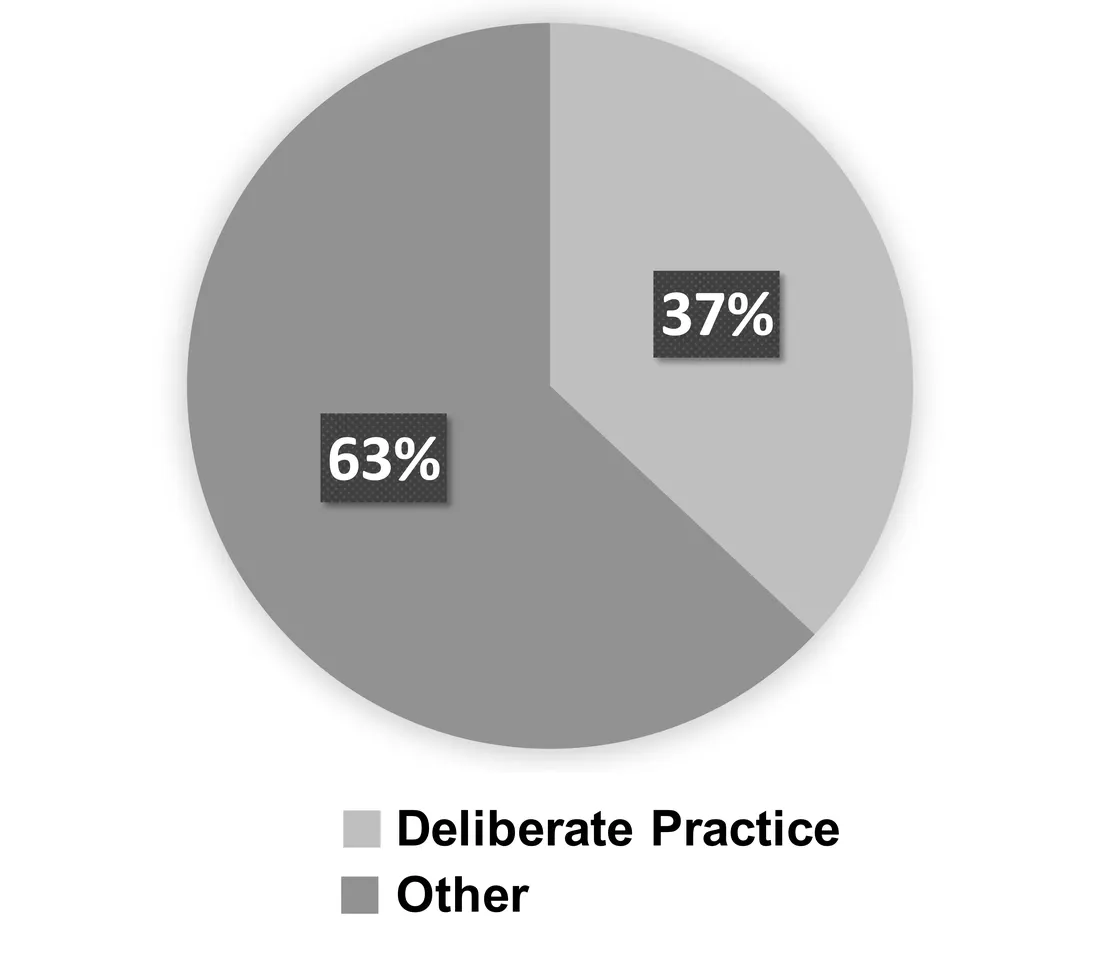
Figure 13.2: Results of Platz, Kopiez, Lehmann, and Wolf’s (2014) meta-analysis of the deliberate practice-music performance
relationship. The pie chart represents the total reliable variance in music performance (i.e., avg. corrected r = .612 x 100 = 37%). The light gray slice represents the amount of reliable variance explained by deliberate practice; the dark gray slice represents the amount not explained by deliberate practice. The meta-analysis included 14 studies.
2 The reliability of a measure, which is an index of how much random measurement error it contains, limits the degree to which that measure can correlate with any other measure.
240 • Psychology of Human Thought • Chapter 13
Testing the Deliberate Practice View Hambrick
2007; Campitelli & Gobet, 2011). Recruiting their participants from a Buenos Aries chess club, they had chess players provide estimates of the amount of time they had spent on deliberate practice for chess and report their official chess rating. As expected, there was a positive correlation between deliberate practice and chess rating; the higher-rated players reported having accumulated more deliberate practice than the lower-rated players. However, the correlation was only moderate in magnitude (r = .42), indicating that some players required much more deliberate practice to reach a given level of skill than other players did. Indeed, the amount of deliberate practice requited to reach “master” status ranged from 3,016 hours to 23,608 hours—a difference of nearly a factor of 8. Furthermore, some players had accumulated more than 25,000 hours of deliberate practice without reaching the master level.
the children (22 of 24) completed the training and reached the criterion (the drop-outs were for reasons unrelated to the training). Based on these findings, Ericsson and Pool (2016) argued that “perfect pitch is not the gift, but, rather, the ability to develop per-fect pitch is the gift—and, as nearly as we can tell, pretty much everyone is born with that gift” (xvi). Clearly, no one is born with a “prepackaged” ability to identical musical pitches; some exposure to music is required to acquire this skill. However, based on Sakakibara’s findings, Ericsson and Pool’s claim that “pretty much anyone” is born with the ability to develop this skill is unjustified because the children in the study were not representative of the general population—they were pupils in a private music school and may have been high on music aptitude, among other factors. It is also not clear that the children exhibited perfect pitch, because the criterion test assessed children’s ability to identify a limited number of pitches. Finally, while the findings do demonstrate that it is possible to teach people how to identify musical pitches, there was a large amount of variability in the amount of time it took them to complete the training: from around 2 years to 8 years (see Figure 13.3). Thus, there
A further illustration of this point comes from a study in which children were trained to identify musical pitches. Sakakibara (2014) enrolled children from a private Japanese music school in a training program designed to train absolute (or “perfect”) pitch—the ability to name the pitch of a tone without hearing another tone for reference. Nearly all
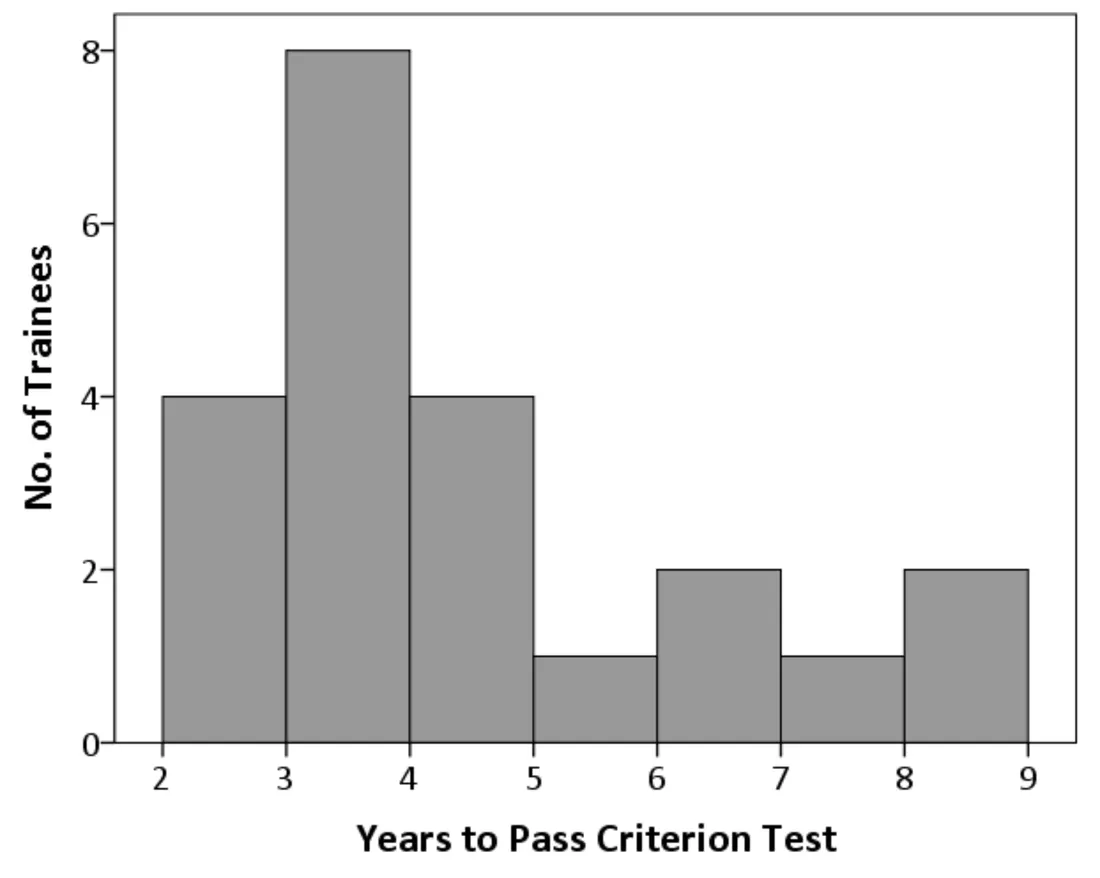
Figure 13.3: Histogram depicting time to completion of pitch identification training in Sakakibara’s (2014) study (N = 22).
Psychology of Human Thought • Chapter 13 • 241
Hambrick Expertise
would appear to be factors that interact with training to influence acquisition of this skill.
ecution or repetition of already attained skills but repeated attempts to reach beyond one’s current level which is associated with frequent failures” (Ericsson, 2007, p. 18). Ericsson’s argument seems to be that, because deliberate practice is not simply “more of the same” but rather is designed to push a person’s performance to new heights, there should be no relationship between past performance in a domain and engagement in deliberate practice. This claim has the appearance of being a logical argument—but it is not. It is also implausible. What seems more likely is that compared to a person who has experienced little success in a domain, a person who has experienced a great deal of success will be more likely to engage in an activity to elevate their performance, for the simple reason that they are more likely to have some reason to do so. To illustrate, imagine two high school basketball players. One is among the best players in the state and is a top prospect for a college scholarship; the other is the worst player on his team—a “benchwarmer.” Who seems more likely to engage in a grueling regimen of deliberate practice to elevate his current level of performance—the superstar or the benchwarmer?
Taken together, the available evidence suggests that deliberate practice is not as important as a predictor of individual differences in expertise as Ericsson and colleagues originally argued. Ericsson has responded to this theoretical challenge with a vigorous defense of his view (Ericsson, 2014; Ericsson, 2016). However, his defense has been undermined by repeated contradictions, inconsistencies, and material errors in his arguments (see Hambrick et al., 2014; Hambrick et al., 2016; Macnamara, Hambrick, & Moreau, 2016). Most notably, Ericsson’s definition of deliberate practice and his criteria for determining whether an activity qualifies as deliberate practice have shifted, making it difficult to test claims about the importance of deliberate practice (see Macnamara et al., 2018, for a discussion). For a theory to remain scientifically viable, theoretical terms must be used in consistent ways.
Two limitations of past research on deliberate practice should be noted, as well. The first is that Ericsson and colleagues have built the case for their view almost entirely on correlational evidence—that is, the finding of positive correlations between deliberate practice and performance from cross-sectional studies in which people representing different levels of skill estimate their past engagement in deliberate practice. The problem with this is that people may differ in accumulated amount of deliberate practice because they differ in aptitude (or talent) forthe domain. As Sternberg (1996) noted, “deliberate practice may be correlated with success because it is a proxy for ability: We stop doing what we do not do well and feel unrewarded for” (p. 350). And as Winner (2000) added,
The second limitation of past research on deliberate practice is that nearly all of the studies of the relationship between deliberate practice and performance—beginning with Ericsson et al.’s (1993) study of musicians—have relied on retrospective self-reports to assess deliberate practice. That is, people are asked to estimate how much they have practiced in the past. To be sure, some procedures (e.g., structured interviews) may yield more accurate estimates than other procedures (e.g., brief questionnaires). However, no retrospective method can ensure perfectly accurate retrospective estimates of practice. (Imagine being asked to estimate how much time you spent practicing the piano or a sport when you were 10 years old. Could you do so with much confidence?) Furthermore, rather than relying on their memory to generate practice estimates, people may base their practice estimates on their current skill level, and their beliefs about the importance of practice may influence their estimates. For example, a person who believes that practice is the most important factor in developing expertise may overestimate their past engagement in practice, whereas a
Hard work and innate ability have not been unconfounded. Those children who have the most ability are also likely to be those who are most interested in a particular activity, who begin to work at that activity at an early age, and who work the hardest at it. Ericsson’s research demonstrated the importance of hard work but did not rule out the role of innate ability. (p. 160)
Responding to this point, Ericsson argued that “[d]eliberate practice does not involve a mere ex-
242 • Psychology of Human Thought • Chapter 13
Beyond the Deliberate Practice View Hambrick
13.3.1 The MultifactorialGene-Environment InteractionModel
person who believes that talent is the most important factor may underestimate their past engagement in practice. The degree to which these biases influence estimates of the correlation between deliberate practice and performance is unknown. The relationship between deliberate practice and performance could be stronger than current estimates indicate, but it could just as well be weaker.
Expanding on existing theory (e.g., Gagné, 2013), the Multifactorial Gene-Environment Interac-tion Model (MGIM) of expertise provides a framework for thinking about what factors influence expertise (Ullén, Hambrick, & Mosing, 2016). As shown in Figure 13.4, the MGIM assumes that (1) expertise arises from influences of both domain-general traits and domain-specific knowledge on expertise (i.e., domain-specific performance); (2) these factors may influence expertise both indirectly and directly; and (3) genetic and environmental factors operate together to produce individual differences in expertise.
13.3 Beyond the Deliberate PracticeView
To sum up, Ericsson and colleagues’ deliberate practice view is not supported by the available evidence: however operationally defined, deliberate practice leaves a large amount of the between-person variability in expertise unexplained. Thus, while deliberate practice may be an important predictor of individual differences in expertise, it is not the only important predictor or even necessarily the largest. Furthermore, Ericsson and colleagues’ case for the importance of deliberate practice is based almost entirely on correlational evidence that does not rule out an influence of aptitude.
At the core of the MGIM is the concept of gene-environment interplay, including both gene-environment correlation (rGE) and gene-environment interaction (G × E). As illustrated in Figure 13.5, rGE occurs when people are exposed to different environments as a systematic function of their genetic differences rather than at random
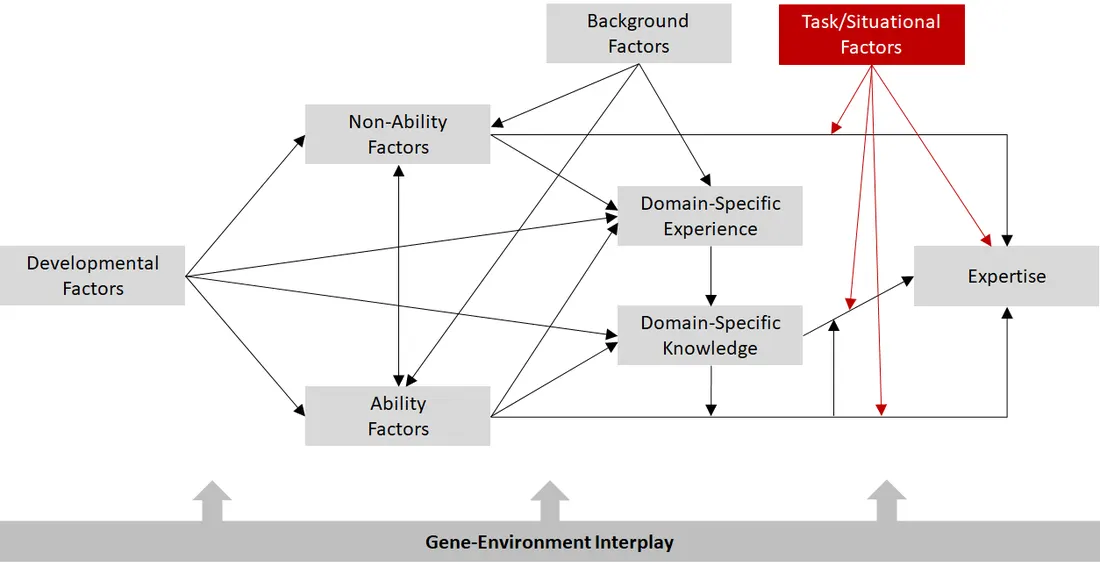
Figure 13.4: The Ullén-Hambrick-Mosing multifactorial gene-environment interaction model (MGIM) of expertise (used with permis-
sion of Routledge from Hambrick, Campitelli, & Macnamara, 2018).
Psychology of Human Thought • Chapter 13 • 243
Hambrick Expertise
(Plomin, DeFries, & Loehlin, 1977). There are three types of rGE, each of which can be seen as fundamental for understanding the development of expertise (see Tucker-Drob, 2018). The first is passiverGE: parents create a home environment that is influenced by their own genetic characteristics, which they pass to their children. For example, parents who have high levels of music aptitude may create a musically-rich environment for their children. The second is active rGE: a person’s geneticallyinfluenced traits influence him or her to actively seek out certain experiences. For example, a child with a high level of music aptitude may beg his or her parents for music lessons and seek out musical experiences on their own. The final type is evocativerGE: a person’s genetically-influenced characteristics elicit particular reactions from other people. For example, a child possessing a high level of music aptitude may be noticed by music teachers, who provide special opportunities for the child to develop musical expertise.
Ericsson et al. (1993) alluded to the former possibility when they claimed that general cognitive ability, which is genetically influenced, is predictive of performance in the initial stages of skill acquisition, but then loses its predictive power (see also Ericsson, 2014). Or it could occur if training enhanced genetic influence on performance. For instance, while Ericsson (2007) claimed that deliberate practice activities “dormant genes that all healthy children’s DNA con-
tain” (Ericsson, 2007, p. 4, emphasis added), it may also activate otherwise dormant genes, variants of which differ across individuals.
13.3.2 Evidence for Genetic Influence
The basic goal of behavioral genetic research is to explain variation across people in some pheno-type—an observable behavior or characteristic—in terms of variation in those people’s genotypes— their genetic makeup (Knopik, Neiderhiser, DeFries, & Plomin, 2016). The most commonly used BG research design is the twin study, which compares identical twins with fraternal twins (for reviews, see Mosing & Ullén, 2016; Mosing, Peretz, & Ullén, 2018). Identical twins are monozygotic (MZ), meaning that they were derived from a single ovum and share 100% of their genes, whereas fraternal twins are dizygotic (DZ), meaning that they were derived
G×E, on the other hand, occurs when the magnitude of genetic influence on an outcome varies as a function of the type or amount of an environmental experience. (In Figure 13.5, G×E is illustrated with intersecting G and E pathways.) In the context of developing expertise, G×E could occur is if training diminished genetic influence on performance.
Genotype

Genetic Effect

Gene-Environment
Gene-Environment
Correlation (rGE)
Interaction (G´E)




Environmental Effect
¯
Phenotype

Environment
Figure 13.5: Illustration of gene-environment interplay, including gene-environment correlation (rGE) and gene × environment
correlation (G×E), in the context of the development of musical expertise.
244 • Psychology of Human Thought • Chapter 13
Evidence for Genetic Influence Hambrick
from separate ova and share only 50% of their genes on average. Thus, to the extent that variation in a trait is influenced by genes, MZ twins should be more similar to each other on that trait than DZ twins are to each other on that trait. In statistical terms, the MZ correlation should be greater than the DZ correlation.
as an instance of rGE—the idea that people’s genotypes influence on whether they engage in music practice. More generally, as mentioned earlier, a person with high aptitude for some activity is probably more likely to practice that activity than a person with lower aptitude (see Sternberg, 1996). Hambrick and Tucker-Drob also found evidence for a G×E: the heritability of musical accomplishment was higher for a group that reported practicing regularly than for a group that did not. This evidence is in line with an earlier twin study on training of the rotary pursuit task, which found that genetic influences on performance as well as learning rate increased after three days of training (Fox, Hershberger, & Bouchard, 1996).
There is evidence from twin studies for a genetic influence on individual differences in expertise. Using a twin design, Coon and Carey (1989) used a sample of over 800 twin pairs to estimate the heritability of musical accomplishment. The twins completed a survey to determine whether they were identical or fraternal, and then completed a survey that included several questions about both music accomplishment and music practice. For a measure of musical achievement, the heritability estimate was 38% for males and 20% for females. In another twin study, Vinkhuyzen, van der Sluis, Posthuma, and Boomsma (2009) analyzed data from a study in which 1,685 twin pairs rated their competence in chess, music, and several other domains. Heritability ranged from 50% to 92% for endorsement of exceptional talent.
In a much larger study, Mosing, Madison, Pedersen, Kuja-Halkola, and Ullén (2014) had over 10,000 twins complete a test of musical aptitude (the Swedish Musical Discrimination Test). The heritability was 50% for rhythm discrimination, 59% for melody discrimination, and between 12% and 30% for pitch discrimination, and averaged around 50% for accumulated amount of music practice. Furthermore, intra-twin pair modeling revealed that identical twins who differed massively in accumulated amount of music practice did not perform significantly different on the tests of music aptitude. Thus, while certain types of knowledge and skill necessary to play music at a high level must be acquired (e.g., how to read music), basic sensory capacities involved in playing music may not be influenced by music practice.
More recently, in a large sample of adolescent twins, Plomin and colleagues found that genetic factors accounted for over half of the variation between expert and less skilled readers, where experts were defined as individuals who scored above the 95th percentile on a standardized test of reading ability (Plomin, Shakeshaft, McMillan, & Trzaskowski, 2014). Drayna, Manichaikul, de Lange, Snieder, and Spector (2001) reported heritability estimates of 80% for performance on the Distorted Tunes Test, which requires the participant to identify incorrect pitches from familiar melodic stimuli.
Taken together, findings of these twin studies indicate that there are both direct and indirect effects of genetic factors on expertise. More specific information about the role of genetic factors in expertise comes from molecular genetics, a type of behavioral genetic research that seeks to identify associations between specific genes and performance. In a series of studies, North and colleagues documented correlations between genotype for the ACTN3 gene, which codes the alpha-actinin- 3 protein in fast-twitch muscles, and performance in various sprint events. For example, in one study (Yang et al., 2003), compared to 18% of control subjects, only 6% of 107 elite athletes from various short-distance events had a variant of ACTN3 that
There is also emerging evidence for rGE and G × E in the development of expertise (see Mosing & Ullén, 2016; Mosing, Peretz, & Ullén, 2018). Using data from the National Merit twin sample, Coon and Carey (1989) found heritability estimates of 38% for males and 20% for females for music achievement. In a more recent analysis of this dataset, Hambrick and Tucker-Drob (2015) found that heritability was substantial not only for musical achievement (26%), but also for a measure of music practice (38%). This finding is readily interpretable
Psychology of Human Thought • Chapter 13 • 245
Hambrick Expertise
made them alpha-actinin-3 deficient. Furthermore, none of the most elite athletes in the sample—the 32 Olympians—were alpha-actinin-3 deficient. There is also an emerging molecular genetic literature on music (see Tan, McPherson, Peretz, Berkovic, & Wilson, 2014, for a review). Di Rosa and colleagues (Di Rosa, Cieri, Antonucci, Stuppia, & Gatta, 2015) used Ingenuity Pathway Analysis (IPA), a procedure for identifying links between biological functions and genes, to identify possible interactions between genes potentially related to musical ability and those deleted in individuals with Williams Syndrome—a genetic disorder that is associated with serious deficits in some cognitive domains but surprisingly good musical skills. Di Rosa et al. reported a potential interaction between a gene related to Williams Syndrome (STXX1A) and one related to music skills (SLC6A4) gene. Both of these genes are involved in serotonin transporter expression, suggesting that serotonin may be involved in the development of musical abilities.
nation, not to mention computing power. However, just as astronomers will not abandon the idea that the universe can be explained in physical terms, expertise researchers should not abandon the idea that genetics must play an important role in expert performance. Moreover, just as neuroscientists do not wait for a complete understanding of how the brain controls thought and behavior to apply their findings to practical problems (e.g., diagnosis, treatment), expertise researchers should not wait for a complete understanding of how genetics influences expert performance to begin making practical use of findings from behavioral genetics. For example, across a range of domains, using information about geneenvironment interplay, it may one day be possible to tailor training using information about people’s genotypes, as is already being done in sports (e.g., Mann, Lamberts, & Lambert, 2011). This type of intervention promises to bring high levels of performance within the reach of more people than is currently the case. As Plomin (2018) noted:
The importance of gene-environment correlation suggests a new way of thinking about the interface between nature and nurture that moves beyond a passive model, which assumes onesize-fits-all training regimes that are imposed on individuals, to an active model in which people select, modify, and create their own environments that foster the acquisition of expertise, in part on the basis of their genetic propensities. (p. xvi)
13.3.3 The Future of Genetic Researchon Expertise
Expertise is a complex phenotype. For example, expertise in a sport reflects multiple, interacting cognitive, motoric, and perceptual subcomponents, each of which may be influenced by different genetic factors. Consequently, it is unreasonable to expect that scientists will ever discover a single genetic variant (or even a small number of genetic variants) that will account for all, nearly all, or even most of the phenotypic variance in expertise in various domains. Instead, what Chabris and colleagues have termed the Fourth Law of Behavioral Genetics will almost certainly hold true for expertise: “A typical human behavioral trait is associated with very many genetic variants, each of which accounts for a very small percentage of the behavioral variability” (Chabris, Lee, Cesarini, Benjamin, & Laibson, 2012, p. 305).
Scientific understanding of the genetics of expertise will presumably always be incomplete, but this is no reason forestall capitalizing on knowledge from this area of research to inform the design of applications that can make people’s lives and society better.
13.4 Conclusions
Just as astronomers may never fully understand the exact sequence of events leading to the creation of the universe, expertise researchers may never be able to fully explain how genetic factors translate into exceptional performance in complex domains. The task may exceed the powers of scientific imagi-
From prehistory to the present, people have probably always been interested in the origins of expertise. For nearly a century, the nurture view of expertise has held sway in psychology. This view argues that individual differences in expertise overwhelmingly
246 • Psychology of Human Thought • Chapter 13
Conclusions Hambrick
reflect the role of environmental factors, with no important role for genetic factors. Most notably, over the past 25 years, Ericsson and colleagues’ (Ericsson et al., 1993) deliberate practice view has had a major impact on both scientific and popular views on the nature and origins of expertise. With the caveat that the evidence is almost entirely correlational, research inspired by this view suggests that training history may well be an important determinant of individual differences in expertise. At the same time, the available evidence indicates that training history is probably not as important as Ericsson and colleagues have argued—and that other factors
are probably more important than they have argued, including genetically-influenced abilities and capacities. Accordingly, my colleagues and I have argued that the science of expertise must embrace the idea that the origins of expertise can never be adequately understood by focusing on one, or one class, of determinant (see Hambrick et al., 2016; Ullén et al., 2016). We believe that research guided by this perspective will shed new light on factors that contribute to expertise, which in turn will provide solid scientific grounding for interventions to accelerate the acquisition of expertise.
Summary
Scientific research on human expertise focuses on the nature and origins of complex skill in domains such as music, sports, and games. A central question in this area of research is why some people reach a higher level of ultimate performance than do other people in these domains. Research reveals that training history cannot account for all, or even most, of the differences across people in expertise. The practical implication of this finding is that people may require vastly different amounts of training to reach a given level of skill. This chapter describes a multifactorial perspective on expertise, which seeks to identify all factors contributing to individual differences in expertise, including both experiential factors (“nurture”) and basic abilities and capacities (“nature”).

Review Questions
1. Describe the two major perspectives on the question of what explains individual differences in expertise.
2. What does the available evidence indicate about the strength of the relationship between “deliberate practice” and expertise?
3. Describe three different types of gene-environment correlation (rGE), with an illustration of how each might contribute to the development of expertise.
4. Ericsson and colleagues’ case for the importance of deliberate practice as a predictor of individual differences in expertise is based largely on correlational evidence. Why is this a problem?
Psychology of Human Thought • Chapter 13 • 247
Hambrick Expertise
Hot Topic
Though I can hardly believe it, I have been studying the same topic (expertise) for nearly 25 years—since my first year of graduate school at Georgia Tech, in 1995. Time flies when you’re having fun. These days, I am fortunate to have a job as a professor. However, my daily activities as a researcher are much the same as they were when I was a graduate student.
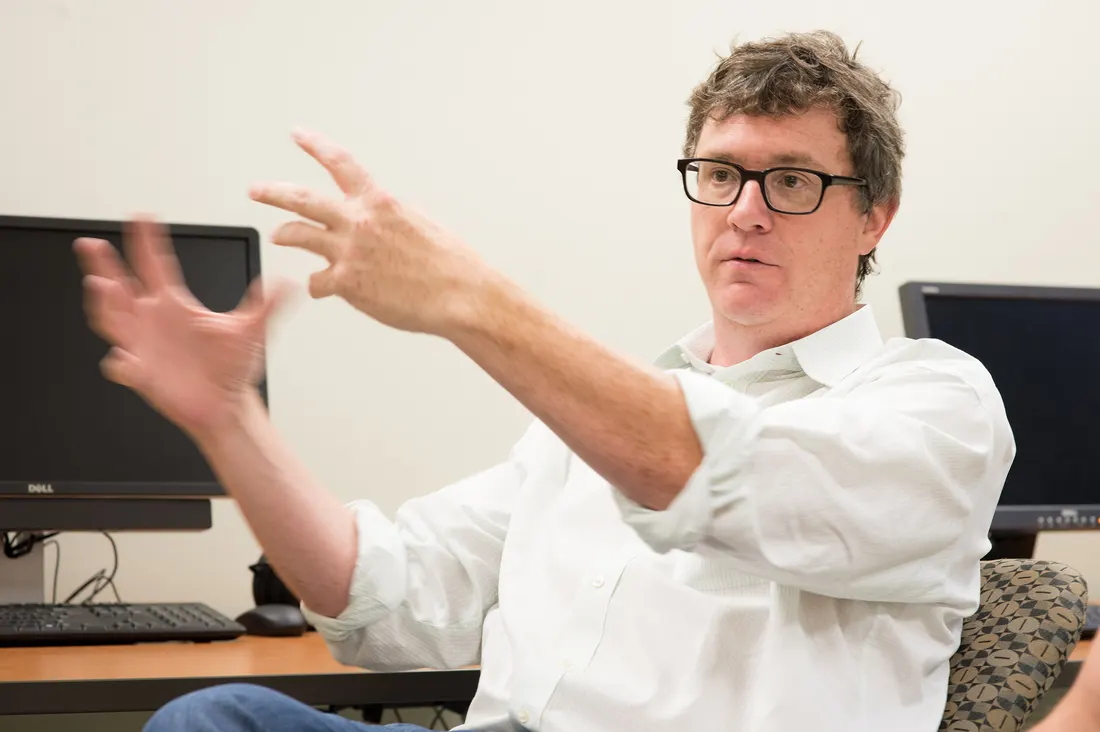
Most days, I write something having to do with my research. This includes working on manuscripts of various types, including scientific reports of research from my lab, book chapters like the one you are reading right now, and grant applications to secure funding for my lab. It also includes writing reviews of manuscripts I have been asked to evaluate for publication in scholarly journals (having an expert from the field evaluate a manuscript that another researcher has submitted to a journal for publication is called “peer review”). Over the years, I have written hundreds of reviews. I can’t say that this is my favorite task, but it’s an essential form of professional service, and I take it seriously (after all, someone has taken time out of their busy schedule to review my manuscript submissions). I also do a lot of writing in my role as editor of the Journal of Expertise. Of course, I also spend a good deal of time on any given day reading what other researchers have written.
Zach Hambrick
I also spend a great deal of time interacting with my students and colleagues about various aspects of the dozen or so research projects that we have going on at any given time. We discuss (in person, or via Skype or e-mail) everything from the logistics of recruiting participants for a project, to questions about how best to analyze data we have collected, to conceptual issues at the core of designing a project. This also includes what is undoubtedly the most important part of my job: mentoring. Whether formally or informally, I advise students almost every day. This is the part of my job that I love the most. More than 20 years ago, my mentors took time out of their busy schedules to help me develop my ideas for research, to read drafts of my manuscripts, and to give me career advice. I can’t thank my mentors enough for the help they gave me, and I try to do the same.
References
Ackerman, P. L. (2014). Nonsense, common sense, and science of expert performance: Talent and individual differences. Intelligence, 45, 6–17. doi:10.1016/j.intell.2013.04.009
Campitelli, G., & Gobet, F. (2011). Deliberate practice: Necessary but not sufficient. Current Di-rections in Psychological Science, 20, 280–285. doi:10.1177/0963721411421922
Anderson, J. R. (2000). Learning and memory: An inte-
Chabris, C. F., Lee, J. J., Cesarini, D., Benjamin, D. J., &
grated approach (2nd Ed.). New York: John Wiley and Sons.
Laibson, D. I. (2012). The fourth law of behavior genetics. Current Directions in Psychological Science, 24, 304–312. doi:10.1177%2F0963721415580430
Babe (1975, October 6). Sports Illustrated. Retrieved
from https://www.si.com/vault/1975/10/06/613675/b abe
Chase, W. G., and Simon, H. A. (1973). The mind’s eye in
chess. In W. G. Chase (Ed.), Visual information pro-cessing, (pp. 215–281). New York: Academic Press. doi:10.1016/b978-0-12-170150-5.50011-1
248 • Psychology of Human Thought • Chapter 13
References Hambrick
Chomsky, N. (1959). A review of B. F. Skinner’s Verbal
Ericsson , K. A., & Polson , P. G. (1988). An experi-
Behavior. Language, 35, 26–58. doi:10.2307/411334
mental analysis of a memory skill for dinner orders. Journal of Experimental Psychology: Learning, Mem-ory, and Cognition, 14, 305–316. doi:10.1037/0278- 7393.14.2.305
Colvin, G. (2010). Talent is overrated. What really sep-
arates world-class performers from everybody else. New York: Penguin.
Ericsson, K. A., & Pool, R. (2016). Peak: Secrets from
Coon, H., & Carey, G. (1989). Genetic and environmental
the new science of expertise. New York: Houghton Mifflin Harcourt.
determinants of musical ability in twins. BehaviorGenetics, 19, 183–193. doi:10.1007/bf01065903
Ericsson, K. A., Chase, W. G., & Faloon S. (1980). Ac-
Coyle, D. (2009). The talent code: It’s born. It’s grown.
quisition of a memory skill. Science, 208, 1181–1182. doi:10.1126/science.7375930
Here’s how. New York: Bantam.
Darwin, C. (1859). On the origins of species bymeans of natural selection. London: John Murray. doi:10.5962/bhl.title.68064
Ericsson, K. A., Krampe, R. T., & Tesch-Römer, C. (1993).
The role of deliberate practice in the acquisition of expert performance. Psychological Review, 100, 363– 406. doi:10.1037/0033-295x.100.3.363
Darwin, C. (1869, December 23). Letter to F. Galton.
Retrieved from: http://galton.org/letters/darwin/darwi n-galton.html
Fancher, R.E. (1979). A note on the origin of the term “nature and nurture.” Journal of the His-tory of the Behavioral Sciences, 15, 321–322. doi:10.1002/1520-6696(197910)15:4%3C321::aidjhbs2300150404%3E3.0.co;2-r
de Candolle, A. (1873). Histoire des sciences etdes savants depuis deux siècles:suivie d’autresétudes sur des sujets scientifiques. Geneva: Fayard. doi:10.5962/bhl.title.39417
Fancher, R.E. (1983). Alphone de Candolle, Francis Galton, and the early history of the nature-nurture controversy. Journal of the His-tory of the Behavioral Sciences, 19, 341–352. doi:10.1002/1520-6696(198310)19:4%3C341::aidjhbs2300190403%3E3.0.co;2-7
de Groot, A.D. (1946/1978). Thought and choice in chess.
The Hague: Mouton. doi:10.1515/9783110800647
Di Rosa, C. D., Cieri, F., Antonucci, I., Stuppia, L., &
Gatta, V. (2015). Music in DNA: From Williams Syndrome to Musical Genes. Open Journal of Genetics, 5(01), 12–26. doi:10.4236/ojgen.2015.51002
Fancher, R. E., & Rutherford, A. (2012). Pioneers of
Drayna, D., Manichaikul, A., de Lange, M., Snieder, H.,
psychology: A history. New York: W. W. Norton & Company.
& Spector, T. (2001). Genetic correlates of musical pitch recognition in humans. Science, 291(5510), 1969–1972. doi:10.1126/science.291.5510.1969
Fox, P. W., Hershberger, S. L., & Bouchard, T. J. J. (1996).
Genetic and environmental contributions to the acquisition of a motor skill. Nature, 384(6607), 356–358. doi:10.1038/384356a0
Ericsson, K. A. (2007). Deliberate practice and the mod-
ifiability of body and mind: Toward a science of the structure and acquisition of expert and elite performance. International Journal of Sport Psychology, 38, 4–34.
Gagné, F. (2013). The DMGT: Changes within, beneath,
and beyond. Talent Development & Excellence, 5, 5–19.
Ericsson, K. A. (2014). Challenges for the estimation
Galton, F. (1869). Hereditary genius. London: Macmillan.
of an upper-bound on relations between accumulated deliberate practice and the associated performance of novices and experts: Comments on Macnamara, Hambrick, and Oswald’s (2014) published meta analysis. Unpublished manuscript. Retrieved from:https://psy.fsu.edu/faculty/ericsson/ericsson.html
doi:10.1037/13474-000
Galton, F. (1874). English men of science: Their nature
and nurture. London: Macmillan & Co. Retrieved from: http://galton.org/books/men-science/pdf/galto n-men-science-1up.pdf
Gardner, H. (1985). The mind’s new science: A history of
Ericsson, K. A. (2016). Summing up hours of any type of
the cognitive revolution. Basic Books.
practice versus identifying optimal practice activities: Commentary on Macnamara, Moreau, & Hambrick (2016). Perspectives on Psychological Science, 11, 351–354. doi:10.1177/1745691616635600
Gillham, N. W. (2001). A life of Sir Francis Galton: From
African exploration to the birth of eugenics. Oxford:
Oxford University Press.
Psychology of Human Thought • Chapter 13 • 249
Hambrick Expertise
Gladwell, M. (2008). Outliers: The story of success. New
Macnamara, B. N., Hambrick, D. Z., & Oswald, F. L.
York: Little, Brown, and Co.
(2014). Deliberate practice and performance in music, games, sports, education, and professions: A meta-analysis. Psychological Science, 25, 1608–1618. doi:10.1177/0956797614535810
Gobet, F., & Campitelli, G. (2007). The role of domain-
specific practice, handedness, and starting age in chess. Developmental Psychology, 43, 159–172. doi:10.1037/0012-1649.43.1.159
Macnamara, B. N., Moreau, D., & Hambrick, D. Z.
(2016). The relationship between deliberate practice and performance in sports: A meta-analysis. Per-spectives on Psychological Science, 11, 333–350. doi:10.1177/1745691616635591
Gobet, F., & Ereku, M. H. (2014). Checkmate to deliber-
ate practice: the case of Magnus Carlsen. Frontiers inPsychology, 5, 878. doi:10.3389/fpsyq.2014.0
Hambrick, D. Z., & Campitelli, G. (2018). Introducing
the Journal of Expertise. Journal of Expertise, 1, 1-5.
Mann, T. N., Lamberts, R. P., & Lambert, M. I. (2014).
High responders and low responders: Factor associated with individual variation in response to standardized training. Sports Medicine, 44, 1113–1124. doi:10.1007/s40279-014-0197-3
Hambrick, D. Z., Macnamara, B. N., Campitelli, G.,
Ullén, F., & Mosing, M. A. (2016). Beyond born versus made: A new look at expertise. Psy-chology of Learning and Motivation, 64, 1–55. doi:10.1016/bs.plm.2015.09.001
Marcus, G. (2012). Guitar zero: The science of becoming
musical at any age. New York: Penguin.
Hambrick, D. Z., Oswald, F. L., Altmann, E. M., Meinz,
Miller, G. A. (1956). The magical number seven, plus or
E. J., Gobet, F., & Campitelli, G. (2014). Deliberate practice: Is that all it takes to become an expert?. Intel-ligence, 45, 34–45. doi:10.1016/j.intell.2013.04.001
minus two: some limits on our capacity for processing information. Psychological Review, 63, 81–97. doi:10.1037/h0043158
Hambrick, D. Z., Altmann, E. M., Oswald, F. L., Meinz, E.
Mosing, M. A., & Ullén, F. (2016). Genetic influences
J., Gobet, F., & Campitelli, G. (2014). Accounting for expert performance: The devil is in the details. Intelli-gence, 45, 112–114. doi:10.1016/j.intell.2014.01.007
on musical giftedness, talent and practice. In G. E. McPherson (Ed.), Musical Prodigies: Interpre-tations from psychology, music education, musicol-ogy and ethnomusicology (pp. 156–167). Oxford, UK: Oxford University Press. doi:10.1093/acprof:oso/ 9780199685851.003.0004
Hambrick, D. Z., & Tucker-Drob, E. M. (2015). The ge-
netics of music accomplishment: Evidence for geneenvironment correlation and interaction. PsychonomicBulletin & Review, 22, 112–120. doi:10.3758/s13423- 014-0671-9
Mosing, M. A., Peretz, I., & Ullén, F. (2018). Genetic
influences on music expertise. In D. Z. Hambrick, G. Campitelli, & B. N. Macnamara (Eds.), The sci-ence of expertise: Behavioral, neural, and geneticapproaches to complex sUkill (pp. 272–282). New York: Routledge. doi:10.4324/9781315113371-16
Hereditary Genius. (1870, April-September). Catholic
World, 11, 721–732.
Hereditary Talent (1870). Chambers’s Journal of Popular
Literature, Science, and Arts, 321, 118–122.
Knopik, V. S., Neiderhiser, J. M., DeFries, J. C., & Plomin,
Mosing, M. A., Madison, G., Pedersen, N. L., Kuja-
R. (2016). Behavioral genetics. Macmillan Higher Education.
Halkola, R., & Ullén, F. (2014). Practice does not make perfect: No causal effect of music practice on music ability. Psychological Science, 25, 1795–1803. doi:10.1177/0956797614541990
Macnamara, B. N., Hambrick, D. Z., Frank, D. J., King,
M. J., Burgoyne, A. P., & Meinz, E. J. (2018). The deliberate practice view: An evaluation of definitions, claims, and empirical evidence. In D. Z. Hambrick, G. Campitelli, & B. N. Macnamara (Eds.), The science ofexpertise: Behavioral, neural, and genetic approachesto complex skill (pp. 151–168). New York: Routledge. doi:10.4324/9781315113371-9
Platz, F., Kopiez, R., Lehmann, A. C., & Wolf, A.
(2014). The influence of deliberate practice on musical achievement: a meta-analysis. Frontiers in Psy-chology, 5. doi:10.3389/fpsyg.2014.00646
Plomin, R. (2018). Foreword. In D. Z. Hambrick, G.
Campitelli, & B. N. Macnamara (Eds.), The science ofexpertise: Behavioral, neural, and genetic approachesto complex skill (pp xiv–xvii). New York: Routledge. doi:10.4324/9781315113371
Macnamara, B. N., Hambrick, D. Z., & Moreau, D. (2016).
How important is deliberate practice? Reply to Ericsson. Perspectives on Psychological Science, 11, 355–358. doi:10.1177/1745691616635614
250 • Psychology of Human Thought • Chapter 13
References Hambrick
Plomin, R., DeFries, J. C., & Loehlin, J. C. (1977).
Teigen, K. H. (1984). A note on the origin of the term “nature and nurture”: Not Shakespeare and Galton, but Mulcaster. Journal ofthe History of the Behavioral Sciences, 20, 363. doi:10.1002/1520-6696(198410)20:4%3C363::aidjhbs2300200406%3E3.0.co;2-4
Genotype-environment interaction and correlation in the analysis of human behavior. Psychological Bul-letin, 84, 309. doi:10.1037//0033-2909.84.2.309
Plomin, R., DeFries, J. C., McClearn, G. E., & McGuffin,
P. (2008). Behavioral genetics (5th ed.). New York: Worth Publishers.
The Republic. Retrieved from: http://classics.mit.edu/Plat
Plomin, R., Shakeshaft, N. G., McMillan, A., & Trzaskowski, M. (2014). Nature, nurture, and expertise. Intelligence, 45, 46–59. doi:10.1016/j.intell.2013.06.008
o/republic.html
TheTempest(2015). Folger Shakespeare Library. New York: Simon & Schuster. doi:10.1163/9789004337862_lgbo_com_060559
Review of hereditary genius by Francis Galton under con-
Thorndike, E.L. (1912). Education:A first book. Charleston, SC: BiblioBazaar.
temporary literature, politics, science, and art. (1870, January and April). British Quarterly Review, 51, 242–244.
Tucker, R., & Collins, M. (2012). What makes champi-
ons? A review of the relative contribution of genes and training to sporting success. British Journal ofSports Medicine, 46, 555–561. doi:10.1136/bjsports- 2011-090548
Sakakibara, A. (2014). A longitudinal study of the process of acquiring absolute pitch: A practical report of training with the ‘chord identification method’. Psychology of Music, 42, 86–111. doi:10.1177/0305735612463948
Tucker-Drob, E. M. (2018). Theoretical concepts in the
genetics of expertise. In Hambrick, D. Z., Macnamara, B. N., & Campitelli, G., (Eds.), The Science of Exper-tise: Behavioral, Neural, and Genetic Approaches toComplex Skill (pp. 241–252). New York: Routledge. doi:10.4324/9781315113371-14
Schneider, W. (1998). Innate talent or deliberate practice as determinants of exceptional performance: Are we asking the right question? Behavioral and Brain Sciences, 21, 423–424. doi:10.1017/S0140525X98411233
Ullén, F., Hambrick, D. Z., & Mosing, M. A. (2016). Re-
Schneider, W. (2015). Memory development from early
thinking expertise: A multifactorial gene-environment interaction model of expert performance. Psychologi-cal Bulletin, 142, 427–446. doi:10.1037/bul0000033
childhood through emerging adulthood. New York: Springer. doi:10.1007/978-3-319-09611-7
Shenk, D. (2010). The genius in all of us. Why every-
Ullén, F., Mosing, M. A., Holm, L., Eriksson, H.,
thing you’ve been told about genetics, talent, and IQis wrong. New York: Doubleday.
& Madison, G. (2014). Psychometric properties and heritability of a new online test for musicality, the Swedish Musical Discrimination Test. Personality and Individual Differences, 63, 87–93. doi:10.1016/j.paid.2014.01.057
Skinner, B. F. (1938). The behavior of organisms: An
experimental Analysis. Cambridge, Massachusetts: B. F. Skinner Foundation.
van Natta, D. (2013). Wonder girl: The magnificent sport-
Stanford Encyclopedia of Psychology (2015). Aristotle.
Retrieved from https://plato.stanford.edu/entries/arist otle/
ing life of Babe Didrikson Zaharias. New York: Little, Brown and Company.
Vinkhuyzen, A. A., Van der Sluis, S., Posthuma, D., &
Sternberg, R. J. (1996). Costs of expertise. In K. A. Er-
icsson (Ed.), The road to excellence: The acquisitionof expert performance in the arts and sciences, sports,and games (pp. 347–354). Mahwah, NJ: Lawrence Erlbaum. doi:10.4324/9781315805948
Boomsma, D. I. (2009). The heritability of aptitude and exceptional talent across different domains in adolescents and young adults. Behavior Genetics, 39, 380–392. doi:10.1007/s10519-009-9260-5
Watson, J. B. (1930). Behaviorism. Chicago, IL: The
Syed, M. (2010). Bounce: The power of practice and the
University of Chicago Press.
myth of practice. New York: HarperCollins.
Tan, Y. T., McPherson, G. E., Peretz, I., Berkovic,
Winner, E. (1996). The rage to master: The decisive
case for talent in the visual arts. In K. A. Ericsson (Ed.), The road to excellence: The acquisitionof expert performance in the arts and sciences, sports
S. F., & Wilson, S. J. (2014). The genetic basis of music ability. Frontiers in Psychology, 5. doi:10.3389/fpsyg.2014.00658
Psychology of Human Thought • Chapter 13 • 251
Hambrick Expertise
and games (pp. 271–301). Hillsdale, NJ: Erlbaum. doi:10.4324/9781315805948
Yang, N., MacArthur, D. G., Gulbin, J. P., Hahn, A. G.,
Beggs, A. H., Easteal, S., & North, K. (2003). ACTN3 Genotype Is Associated with Human Elite Athletic Performance. The American Journal of Human Ge-netics, 73(3), 627–631. doi:10.1086/377590
Winner, E. (2000). The origins and ends of giftedness. American Psychologist, 55(1), 159–169. doi:10.1037/0003-066x.55.1.159
252 • Psychology of Human Thought • Chapter 13
Glossary Hambrick
Glossary
deliberate practice A structured training activity
molecular genetics The subfield of genetics that
designed to improve a person’s current level of performance in a domain. 239
studies the relationship between specific genetic factors and behavioral characteristics. 245
expertise A person’s current level of performance
in a domain. 235
multifactorial model of expertise A perspective on expertise that seeks to identify all factors underlying complex skill. 243
gene-environment correlation (rGE) A phenomenon that occurs when people are exposed to different environments as a systematic function of their genetic differences rather than at random. 243
phenotype An observable behavior or characteris-
tic. 244
gene-environment interaction (G×E) A phe-
nomenon that occurs when the magnitude of genetic influence on an outcome varies as a function of the type or amount of an environmental experience. 243
twin study A behavioral genetic research design
in which identical twins, who share 100% of their genes, are compared to fraternal twins, who share 50% of their genes on average, are compared on some phenotype. 244
genotype A person’s unique genetic makeup. 244
Psychology of Human Thought • Chapter 13 • 253