 Starvard
The Psychology of Human Thought · Chapter 15 of 19
Chapter 15: Creativity: An Overview of the 7C's of Creative Thought
by Todd Lubart & Branden Thornhill-Miller
Creativity refers to original thinking that leads to new productions that have value in their social context (see Runco & Jaeger, 2012). Creative thinking can be distinguished from routine thinking, in which regular cognition yields run-of-the-mill, common ideas. Many human activities involve regular thinking; creativity comes into play when a new idea or a new solution is sought. The topic of creativity, as a fundamental aspect of human thinking, can be understood through a “7 C’s” approach (Lubart, 2017). Just as the “Seven Seas” refer historically to all the major bodies of water on Earth, the 7 C’s of creativity refer to all the main aspects of the topic helpful to mapping its territory: Creators (person-centered characteristics), Creating (the creative process), Collaborations (co-creating), Contexts (environmental conditions), Creations (the nature of creative work), Consumption (the adoption of creative products) and Curricula (the development and enhancement of creativity). In this chapter, the main concepts for each “C” will be surveyed and presented.
ators such as Leonardo da Vinci, Marie Curie, Jane Austin, or Pablo Picasso. However, these eminent creators represent the pinnacle of a much larger set of creative people, who deploy their original thinking in their everyday lives and work (Kaufman & Beghetto, 2009).
Thus, professional or workplace creators refer to those who are creative, or “innovative” in their job context. Some jobs, such as visual artists, writers, designers, musical composers, or engineering inventors require creativity as a core part of the work. However, there is a much broader set of jobs in which creativity can be very important on a regular but more intermittent basis, as is the case for managers, lawyers, teachers, doctors and other healthcare workers. Finally, in still other jobs, creativity can sometimes be very useful, albeit on a sporadic basis, such as for pilots, accountants, and security agents. In all these cases, the professional environment recognizes the value of new ideas and aims, at least in theory, to promote their development and implementation.
15.1 Creators: Person-CenteredCharacteristics
Beyond professional settings, creativity can occur in daily-life situations, at home, with family or friends, or in leisure activities. Some people may invent a new recipe for family meals, even though they are not professional chefs. Others may have a new idea for a club activity or a novel solution to problems between friends, and some people may
Creators refer to all those who engage in creative thinking. In fact, every human being can be characterized as a creator and as “creative” to some degree. We tend to think spontaneously of great, eminent cre-
https://doi.org/10.17885/heiup.470.c6678 Psychology of Human Thought • Chapter 15 • 277
Lubart & Thornhill-Miller Creativity
find a way to fix a broken item in their home. All of these examples illustrate creativity in “everyday life” settings, usually with some recognition by other people in the immediate social environment.
More than a century of work has investigated the “ingredients” that play a role in creativity. In other words, are there some characteristics that creative people tend to share? From early studies of “creative imagination” to modern neuroscientific
Finally, creativity can be conceived at a strictly intra-personal level. Indeed, when people learn about new topics, they create cognitive structures that allow them to understand the topics; they generate concepts that are new to them, although possibly already very well known to others. This is a kind of creative thinking at the individual level, which perhaps serves the person him- or herself. It is reminiscent of Piaget’s proposal that children act like little scientists, generating their own hypotheses and rediscovering concepts. It is also possible to view a person’s life path and self-development as a creative act, event, or process. In this humanistic tradition, each person designs his or her life path and sculpts who he or she is, as an ongoing, lifelong creative work.
research on brain networks (Vartanian, Bristol & Kaufman, 2013), from case studies of great creators such as Sigmund Freud and Martha Graham (see Gardner, 1993), to correlational studies of cognitive and personality characteristics related to creative achievement (Batey & Furnham, 2006; Feist, 1998; Feist, Reiter-Palmon & Kaufman, 2017), to controlled experimental studies and neural imaging, a large number of person-related characteristics have been identified as relevant to creativity. The exact set of these characteristics varies to some extent with the domain of creative thinking (such as visual art, literary, social problem solving, etc.) and the specific task to be accomplished. The specific set of ingredients and the relative weights of these ingredients can be identified through a task analysis, and by comparing and contrasting people who achieve relatively more creative output compared to those who achieve less.
Needless to say, there are large individual differences in creativity. Some people produce more highly creative work than others in their professional setting, in their everyday life activities, or in their intrapsychic sphere. For example, in science, some creators propose groundbreaking contributions (such as Einstein), whereas others propose original ideas that gain some recognition in their specific scientific domain; many scientists work within existing paradigms, doing “normal” science, which may replicate or slightly extend existing findings (see Kuhn, 2012). There has been debate on the extent to which the same basic psychological “ingredients”, such as mental flexibility and risk taking, underlie these diverse manifestations of creativity. Essentially, variations in the quantity and quality of each ingredient, as well as the specific combination of the multiple ingredients, can lead to the wide range of creativity observed across individuals, yielding sometimes the eminent, field- or culturechanging big “C” cases of creativity (Kaufman & Beghetto, 2009; Sternberg & Lubart, 1995). This is the basis for the multivariate approach, according to which multiple factors are necessary for creativity, and the interaction of these ingredients during the creative process leads to the wide range of creative achievement (see Amabile, 1996; Lubart, 1999).
We will describe two main kinds of ingredients: abilities and traits. Creativity-relevant abilities refer to information-processing capacities that favor the encoding, comparison, and combination of information for purposes of original thinking (Sternberg & Davidson, 1995). Creativity-relevant traits refer to preferred ways of behaving (these traits are expressed through personality, thinking styles, or motivational patterns) that favor original thinking (see Sternberg & Lubart, 1995).
In Table 15.1, several abilities and traits that often have been found to be important for creativity are listed. This table presents a representative set of ingredients for creativity but is not exhaustive.
In Figure 15.1, the relationships between the ingredients indicated in Table 15.1 and other key concepts concerning creativity are illustrated. First, there are several ingredients–cognitive and noncognitive (conative or affective)–which are personcentered. Second, there are also ingredients that are environment-centered (these will be described in the section concerning the “C” of “Context”). These ingredients (person-centered and context-centered)
278 • Psychology of Human Thought • Chapter 15
Creators: Person-Centered Characteristics Lubart & Thornhill-Miller
Table 15.1: Examples of person-centered ingredients for creativity.
Cognitive IngredientsDescription
Divergent thinking Capacity to generate a variety of different possible ideas or solutions
Convergent thinking Capacity to identify the best solution, given a set of constraints and sources
Mental flexibility Capacity to adjust thinking, change perspectives, or switch between different frames or concepts and process several kinds of information
Analogical and metaphorical thinking Capacity to see and use structural, logical, or symbolic parallels and similarities between ideas or systems
Associative thinking Capacity to make connections between different subjects and ideas
Analytic-evaluative thinking Capacity to examine information and assess strengths and weaknesses
Knowledge General and domain-specific informational building blocks that are pre-requisite to understanding a problem and synthesizing a solution
Conative IngredientsDescription
Openness to experience Interest in experiencing new things and a wide-range of stimuli
Idiosyncrasy Tendency to experience and interact with the world in non-standard ways; for example, having unusual cognitive, perceptual, or emotional experiences and a preference for nonconformity
Risk taking The tendency to engage deliberately in behaviors in which there is potential for gain, the outcome is not fully predictable and failure will result in loss
Tolerance of ambiguity The extent to which contexts where information is missing, unclear, or contradictory are deemed acceptable for continued engagement or experienced with relatively little anxiety and stress
Creative self-concept Core beliefs about oneself as being creative to some degree (generally or in a particular domain or context)
Intrinsic motivation Drive to do or achieve something because of its internal rewards (e.g. out of pure interest or for a sense of satisfaction or accomplishment) rather than for any external rewards or gains.
provide the basis for a person’s creative potential. Creative potential refers to the resources that a person can profitably invest in any given activity, such as writing a story or inventing a machine. The potential is latent and may not be put into play unless a person actively engages in a task. The ensuing
process, called “Creating”, is a chain of events in which the ingredients are deployed and work thereby advances. This chain of events leads ultimately to a resulting production, a “Creation”, which will be more or less original and valuable.
Psychology of Human Thought • Chapter 15 • 279
Lubart & Thornhill-Miller Creativity
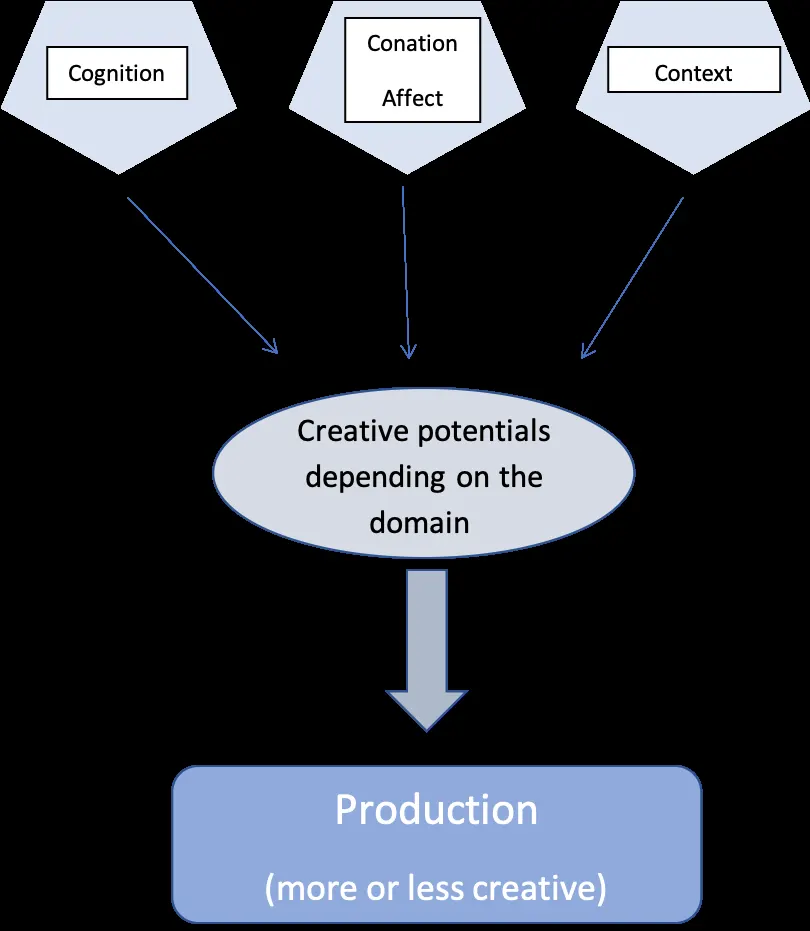
Figure 15.1: Multivariate approach to creativity.
It is important to note that a given person’s ingredients can be seen as offering various degrees of creative potential, depending on the task or domain of work. For example, in Figure 15.2, a hypothetical “radar” profile of a person’s ingredients is depicted together with the expected ingredients that are needed to be highly creative in task A and B; the individual depicted (i) has relatively more potential to be creative in task A compared with task B, because the required ingredients are somewhat different for each task and the individual’s profile matches best the profile needed for task A. For task A, only some extra risk taking may be needed, whereas in task B, additional mental flexibility, knowledge, risk taking, idiosyncrasy, and intrinsic motivation will be required. This type of model shows how the partial domain specificity of creative ability can be understood. The correlations of people’s performance across creativity tasks are positive, in general, but weak to moderate ranging often from .20 to .60 (Baer, 1993). The correlations observered between creative performance tasks reflect the fact that even when some ingredients are shared in common across
all tasks, some of them are weighted” differently in each tasks’ own specific mix of ingredients.
To illustrate these person-centered ingredients for creativity, consider the following examples. Two “cognitive” ingredients and two “conative” ingre-
dients will be described, although there are many others that play important roles as well.
First, the capacity to engage in flexible thinking can be highlighted. Cognitive flexibility refers to the ability to approach a topic from an alternative perspective compared to the standard view, it involves letting go of one idea in order to explore a different one. Cognitive flexibility is the capacity to sidestep thinking habits, to get out of a stereotyped way of seeing an issue or solving a problem; it is the opposite of rigid thinking, which characterizes a locked perspective, more likely to lead to being conceptually blocked in problem-solving. Habits are learned patterns that facilitate cognition, and often reduce the mental workload. However, habits also inhibit original thinking. In this regard, flexibility supports creativity.
280 • Psychology of Human Thought • Chapter 15
Creators: Person-Centered Characteristics Lubart & Thornhill-Miller
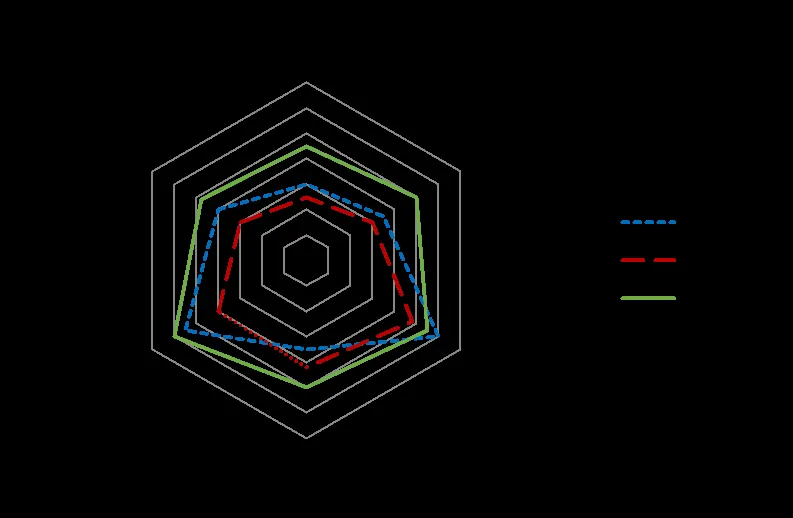
Figure 15.2: Individual profile and two sample task profiles.
With respect to cognitive capacities, one issue that has been studied consistently for more than half a century is the relationship between creativity and intelligence. Guilford and Christensen(1973) noted that studies on intelligence tests and creativity (mainly through divergent-thinking tasks) showed weak positive correlations and the scatterplots often had a “triangular-shaped” distribution of data points, with few people who had low intelligence test scores showing moderate to high levels of creativity. Later, a meta-analysis of studies correlating intelligence and creativity showed an average correlation of .17 (Kim, 2005). Whereas there is no clear consensus concerning a threshold beyond which more intelligence does not matter, Karwowski et al. (2016) used necessary condition analysis—which tests for the systematic absence of a phenomenon (creativity) at certain levels of a variable (intelligence)—and found that low levels of intelligence are a limiting condition for the manifestation of creativity.
the past, and to focus attention on what is new and valuable in a field. In this sense, depth of knowledge can facilitate creativity to some extent. However, too much of a good thing can be a problem. In fact, some research suggests that high levels of expertise can hinder creative thinking because experts get stuck in routine ways of approaching an issue, even when new ways may be more appropriate (Dror, 2011; Frensch & Sternberg, 1989; Simonton, 1984). Breadth of knowledge offers the opportunity to associate concepts that may not be habitually connected. Knowing about diverse topics may facilitate analogical or metaphorical thinking because one can apply concepts from a different domain to the topic or problem. Analyses of Charles Darwin’s notebooks during his trip to the Galapagos Islands, when he proposed the theory of evolution, for example, clearly illustrate the ways in which his botanical knowledge served as a basis for thinking about the mechanisms at work in animal species (Gruber, 1981).
A second example of a characteristic that is important for creativity is knowledge. Knowledge refers to information that may be characterized by its depth or its breadth. Both facets of knowledge are important for creativity. In general, knowledge about a topic potentially allows a person to build on existing ideas, to avoid repeating what has been done in
A third example can be drawn from the conative domain, which refers to the wish, intention and motivation to engage in an activity. The proclivity for risk taking refers to the tendency to engage in behaviors in which there is potential for gain or loss and the outcome is not completely predictable. For example, in a high-risk situation, the odds may be
Psychology of Human Thought • Chapter 15 • 281
Lubart & Thornhill-Miller Creativity
low that a new approach to a problem could lead to a desired, valued solution. In this case, a person oriented toward risk taking may choose to invest his or her resources, energy, and time in this nascent idea. Despite the probability of failure, some people will go “against the odds” and pursue a new idea. Risk taking supports creativity, in general, because creativity by nature requires breaking away from what exists already, what is tried-and-true, what is known (and perhaps not optimal) but predictable. Research suggests that people’s preferred levels of risk taking can vary from one domain of activity to another. For example, a person may be willing to take a risk in sports and attempt a new style in ice skating during a competition, but will not necessarily be willing to try a new style in a visual-arts task; another person may invest his or her energy in a new entrepreneurial business idea but not be at ease with proposing new ideas in a writing task. Therefore, it is useful to consider risk taking patterns by activity domains instead of referring to a general risk-taking trait. In the investment theory of creativity, Sternberg and Lubart (1995) highlight the importance of risk taking, which supports the engagement in the search for new ideas which break from tradition. Even if a person has the needed cognitive abilities, there may be no engagement with new ideas if the person fears failure.
be solved (Averill, 1999). For example, people with unusual affects associated with a given topic can benefit from this idiosyncrasy by developing unusual associations or approaches that people experiencing “standard” emotions about the same topic would not.
A poet can, for example, use this affective richness to provide a unique, fresh perspective when engaged in literary creation.
15.2 Creating: The Creative Process
The creative process refers to the sequence of thoughts and actions that characterizes the generative act, resulting in an original, valuable production (Lubart, 2001, Finke, Ward & Smith, 1992). This act has traditionally been decomposed in terms of stages, steps, or sub-processes (Sternberg, 2017). Early work based on introspective accounts of eminent creators and observational studies using thinkaloud protocols or analyses of traces of activity (such as creators’ notebooks or drafts), suggested four main stages, traditionally labeled, preparation, incubation, illumination, and verification (Sadler-Smith, 2015). Preparation refers to the accumulation of background knowledge and active thinking that may span a relatively long period when a topic is engaged. Incubation notes a type of mental activity in which ideas may be associated, explored in the fringe of consciousness, or reworked in the “back of one’s mind” (Sio & Ormerod, 2009). Illumination is the “eureka” moment when a promising, new idea appears. This may in some cases be called an insight and is marked in particular by the novel nature of the idea that emerges. Verification is usually considered a mode of thinking in which new ideas are tested and refined. Numerous authors have proposed and examined additional steps, sub-processes, or modes of thinking, including problem-finding, problem formulation, frustration, divergent thinking, association, idea resonance, benefiting from chance events, analysis, and synthesis (Mumford et al., 1991; Yokochi & Okada, 2005). All of these have enriched and expanded our understanding of the creative process.
A fourth and final example of an ingredient for creativity is idiosyncrasy or the tendency to experience the world in non-standard ways (Bierhoff & Bierhoff-Alfermann, 1973; Eysenck, 1995). Idiosyncrasy can be considered as a personality trait that may express itself in one’s way of perceiving and acting in the world. One form of idiosyncrasy that has been extensively explored and shown to be related to creativity is known as “positive schizotypy”, which is a tendency to have unusual cognitive, perceptual, or emotional experiences that is well distributed in the normal population (Claridge, 1997). Idiosyncrasy in several forms may apply in all facets of life. For example, in the emotional sphere, a person may experience non-standard emotions, or express their feelings in atypical ways. This could be termed “emotional idiosyncrasy.” It is a potential source of personalized non-typical associations, or approaches to a situation, a topic, or a problem to
Guilford (1950), in a classic presidential speech to the American Psychological Association, empha-
282 • Psychology of Human Thought • Chapter 15
Creating: The Creative Process Lubart & Thornhill-Miller
sized the topic of creativity and highlighted diver-gent thinking as a special part of the creative process. Divergent thinking characterizes an idea search conducted in multiple directions in order to obtain a large number of possibilities. In particular, “fluency” of a performance on a divergent-thinking task refers to the number of ideas generated, whereas flexibility refers to the diversity of the ideas generated. It has been shown that generating many different ideas is likely to enhance chances of generating an original idea; this is at least partly attributable to the nature of a typical sequence of ideas, which is characterized by more common ideas coming first and more idiosyncratic ones arriving later on in the sequence once the common, shared ideas have been exhausted. Guilford’s (1985) work, including his contribution to the structure of intelligence model (SOI), provided attention to two other processes that play a major role in creative thinking. These are “evaluative” and “convergent” thinking. Evaluation
generate many different original ideas using verbal or image-based stimuli. There are, for example, tasks that require thinking of ways to use a common object, drawing tasks in which a basic geometric form needs to be used in each different drawing, and title-generation tasks based on a picture that is provided. The number of ideas (called “fluency”), flexibility, and originality of ideas are often scored. Other measures, such as the Test of Creative Thinking – Drawing Production (Urban, 2005), or the Remote Associate Test (Mednick, 1962), involve several elements (graphic, or verbal) that the individual must find a way to synthesize and combine to express an original idea. In these later cases, the production of one synthetic idea is required rather than the production of many different ideas.
Based on these process-oriented measures of creative thinking, Lubart, Besançon, and Barbot (2011) proposed the Evaluation of Potential Creativity (EPoC). This test battery is organized by domain of creation (visual art, literary-verbal, social, mathematical, scientific, music, and body movement). In each domain, there are two types of tasks: divergentexploratory thinking to generate as many original ideas as possible, and convergent-integrative thinking that involves generating one elaborated production that takes into account the elements provided. As illustrated in the graphic-artistic domain, one task is to generate as many sketches as possible in a limited time using a graphic form or image that is provided. In Figure 15.3, a child produced 10 drawings using the banana shape. Using norms for children of the same age, it can be noted that this is a relatively large number of ideas, slightly more than the average child. In Figure 15.4, several children’s drawings from the convergent-integrative task are illustrated. In this particular task, photos of eight objects are presented and the children made a single elaborated drawing that integrated at least four objects. The extent to which the drawing integrates the objects, the number of objects used, and the originality of the drawing are assessed. In the first drawing illustration (drawing 4A), the child has arranged the objects in a typical fishing scene, whereas in drawing example 4B there is a greater integration of objects, which form a single “rabbit” composed of a valise, light bulbs for feet, and carrots for ears.
refers to an analytic mode of thinking, in which strengths and weaknesses are assessed and then provide guidance for further action. Convergence refers to thinking that leads to a single answer. Convergent thinking has often been associated with getting the single “right” answer, but this meaning of convergence is relevant in run-of-the-mill cognitive tasks, which tend to yield relatively non-creative, standard ideas. Instead, consider the more general sense of convergence in which various elements are brought together to lead to a single response. This act of converging may be achieved through an integration and synthesis of disparate elements, or their transformation, and leads—in the case of creative thinking—to a new idea. Thus, Guilford’s legacy leads us to describe a three-mode process involving divergent-exploratory thinking, evaluative thinking, and convergent-integrative thinking.
Based on Guilford’s research as well as seminal work by Binet and Simon, in 1904, and other pioneers, creativity tests such as the Torrance Tests of Creative Thinking and Wallach and Kogan’s Creative Thinking measures were developed to assess the degree to which people can successfully engage the creative process (see Glaveanu, 2019; Torrance, 1974; Wallach & Kogan, 1965). In these batteries of creativity tests, people are essentially asked to
Psychology of Human Thought • Chapter 15 • 283
Lubart & Thornhill-Miller Creativity
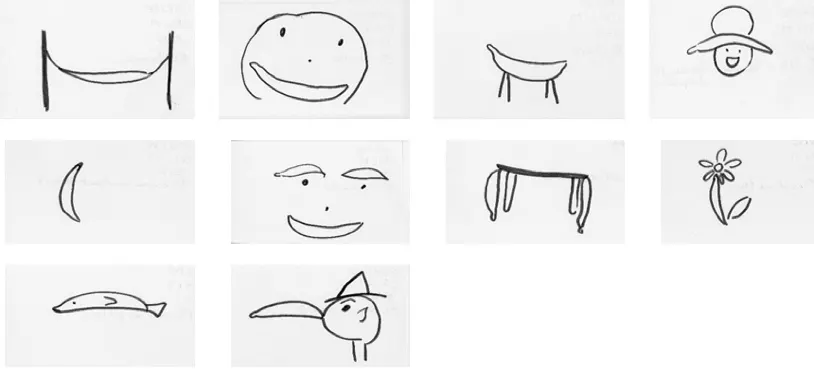
Figure 15.3: Responses to a divergent-exploratory task in the EPoC battery.
Finally, in example drawing 4C, a highly original idea of a “Samurai” warrior (as named by the child) uses all eight objects, integrated in unusual ways, with the sword formed by a carrot and a wooden manikin’s body, the warrior’s head being made of the fish, and the arm made of a shovel. The creativity of the integrative drawing is assessed by judges who examine the number of objects used and the originality of the resulting drawing production.
creative process in engineering or musical composition. Within these domains, the creative process of sculpting is not necessarily the same as the process of painting. Additionally, each creator may engage in his or her own personalized sequence, and bring the ingredients to bear at different moments during the creative act. Recent work has sought to compare and contrast the creative process across domains (Lubart, 2018). For example, using an actiontheory approach focusing on the impetus, activity engaged, materials used, and social connections involved, Glaveanu and colleagues (2013) observered differences and similarities across descriptions of the creative process based on interviews with visual artists, writers, scientists, designers and music composers.
Emotions are an integral part of the creative process. Engaging in creative productive work may allow individuals to express their emotions, or alternatively may lead people to experience emotions resulting from their creative thinking process. A large number of studies have examined the impact of positive and negative mood states, and emotional arousal on the creative process (Baas, de Dreu & Nijstad, 2008). There are mixed results, but one of the main findings is enhanced divergent-thinking productivity in the presence of a positive mood state, perhaps due to more relaxed evaluative criteria for deciding that an idea is worthy of some attention (Davis, 2009).
In addition, it is possible to contrast the process traces of individuals who show relatively high levels of creativity in their productions in a given task, with those who show relatively low levels of creativity in the same task (Lubart, 2018). The results of this type of study show that contrasting sequences of specific activities (such as idea evaluation, association, taking a break from work, etc.) characterize the more successful creators in comparison to less successful ones. For example, in a study of fine-arts students in a sculpture task, those who were judged to be highly creative showed different process traces (based on a self-report diary), when compared with those who
Part of understanding the natural creative process involves recognition of the diversity with which it can unfold. The creative process varies from individual to individual, but also across tasks and within the different domains. Thus, the creative process in the visual arts is not necessarily the same as the
284 • Psychology of Human Thought • Chapter 15
Creating: The Creative Process Lubart & Thornhill-Miller
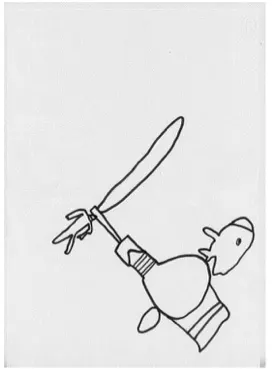
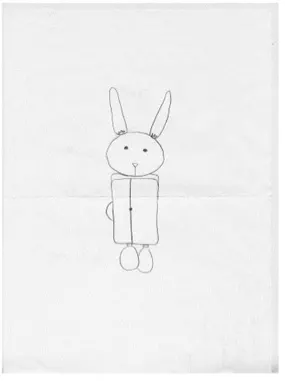
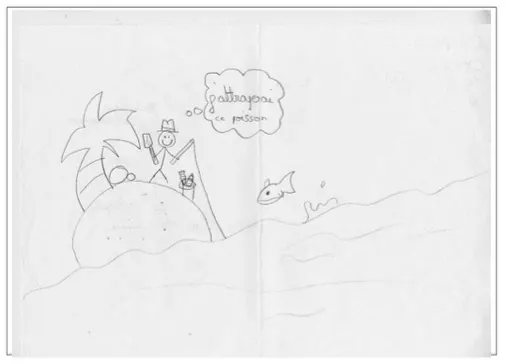
Figure 15.4: Children’s responses to a convergent-integrative task in the EPoC battery (4A: fishing scene, 4B: Rabbit, 4C: Warrior).
©2011. Editions Hogrefe France. Reproduced by permission from Hogrefe France.
were not very creative: after defining the problem those who were more creative in the end tended to seek information whereas those who were less creative tended to start their sculpture right away. In addition, when returning from a break, students who reengaged the sculpture by associating new ideas with their project tended to be more creative in the end than those who reengaged their sculpture work by critiquing what they had accomplished up to that point. In other process tracing work, Pringle and Sowden (2017) examined the creative process in a garden-design task and found that tightly linked shifts between associative and analytic processing modes were characteristic of the most creative work. In general, it is increasingly recognized that the creative process is a dynamic flow that offers nearly unlimited opportunities for individual differences (Beghetto & Corazza, 2019).
TRIZ (Russian acronym for the “Theory of Inventive Problem Solving”, based on analyses of inventors’ methods), and design thinking (user-oriented techniques), just to mention some of the most developed methods (Brown, 2008; De Bono, 2010; Osborn, 1953; Puccio & Cabra, 2009). The term “creative thinking method” is used here to describe a
structured-process approach that may be composed of several steps and may deploy several specific thinking techniques within the global method. For example, creative problem solving is a formalized method composed of several steps, such as exploring the challenge (problem finding and formulating), generating solutions, and generating an action plan for solution implementation. Within each step, which can occur in dynamic sequences, several techniques can be employed. One example is a problemexploration technique in which an initial problem statement is proposed and then each word is expanded to become a list of synonyms. Based on the alternative words, the problem space can be explored and perhaps a new problem formulation will offer original opportunities and approaches for idea generation. For example, given an initial problem statement, “How can we raise sales of toys in our store?”, several alternative words could be listed for “sales”(profits, client satisfaction), “toys” (games,
Some work has, additionally, focused on methods that formally structure the process of creating, in order to help creators enhance the originality of the resulting productions. Thus, a large literature exists on creative thinking methods designed to guide the creative process through brainstorming(divergent thinking-based procedure), lateral thinking (flexibility-based techniques), creative problem solving methods (strategies sequencing and integrating divergent and convergent thinking techniques),
hobby items), and “store” (internet site, shopping
Psychology of Human Thought • Chapter 15 • 285
Lubart & Thornhill-Miller Creativity
mall outlet). Based on the alternate words, a new problem formulation could be: “How can we raise client satisfaction of game items in our shopping mall outlet?”. This problem may lead to very different solutions than the initial one, because divergent exploratory thinking applied in the problem formulation phase opens up the range of options. As John Dewey noted, a problem well stated is half solved.
time, and also that multi-authored papers were more likely to be cited in the future (Wuchty, Jones, & Uzzi, 2007). The lone creative genius may still appear in some fields, but given the effects of globalization, increasing technological complexity, and the concomitant specialization of expertise, in many areas of endeavor, collaboration is becoming more of a necessity.
In general, it is also important to note that the creative process is a meaningful endeavor, which assumes that it is, and should be, to some extent goal-driven and purposeful. The meaning and goal of creating may of course be defined at a strictly personal level (intrapsychic), or at a social level, as in productions generated for one’s familial or professional setting. Thus, special cases in which an agent engages in random acts with no goal or recognition of seeking a creative production (such as a human or non-human typing random keys that yield a “text”) will not typically be considered part of authentic “creating”, even though a production that has some interest may eventually result from this random activity.
From another perspective, however, one can also clearly argue that all creativity is, and always has been—at least implicitly—collaborative. Every work of art or scientific discovery, for example, is based on shared, pre-existing foundations of culture and language, as well as the ideas and methods borrowed from more immediate disciplinary predecessors. Some creativity is simply more easily recognized and labeled as “collaborative” because of its proximity in time or space to the others that helped make it happen. Einstein’s discoveries, no matter how single-handed and revolutionary they might seem, are impossible without the history of science before him. And, as commonly observed, no single individual knows how to make a new pen, automobile, or the majority of common cultural objects in their entirety because the materials and knowledge are coming from everywhere.
15.3 Collaboration: Co-Creation
Collaboration refers to the process through which two or more people, often with different or complementary skills, engage in shared creation, frequently producing something that they could not or would not produce on their own. From the science of Marie and Pierre Currie to the cubism of Pablo Picasso and Georges Braque and the music of the Beatles, the history of great cultural contributions demonstrates that much creative genius results from collaboration—from the extraordinarily important and enhancing effects of support, differing and complementary skills and dispositions, and even the competition that dyads and groups provide (see Clydesdale, 2006; John-Steiner, 2006). Today, thinkers from many different fields believe that the future of human work will be both more creativityfocused and more collaborative in nature. A study of almost 20 million research papers and 2 million patents over 45 years, for example, showed the number of coauthors had almost doubled during that
Thus, the enterprise of understanding creativity should not, in fact, be confined to intra-individual psychological investigations, but must instead also be pursued social psychologically or sociologically at inter-personal and systemic levels. Such multileveled approaches to creativity were relatively uncommon until recently, but they do have some good foundations in the field. For example, Csikszentmihalyi (1988) proposed a “systems model”, and helpfully asked not “what is creativity” but “whereis creativity?” The answer, as Figure 15.5 suggests, is that “creativity”—whatever one decides it is—is found in the triangular inter-relationship between the individual talent, the parameters of the particular creative domain in which a person works, and the field of experts that help define and identify the other two components. Another good starting point within psychology can be found in Vygotsky’s sociocultural developmental approach (John-Steiner & Mahn, 1996), which (seeing human cognition as
286 • Psychology of Human Thought • Chapter 15
Collaboration: Co-Creation Lubart & Thornhill-Miller
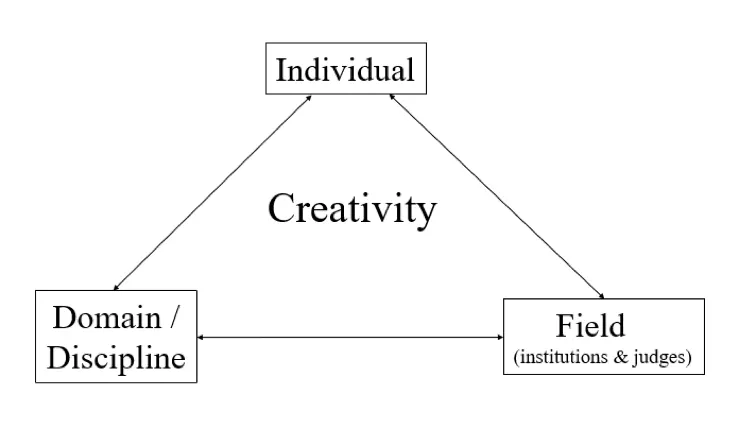
Figure 15.5: Csikszentmihalyi’s (1988) system’s view of creativity.
developing through social dialogue) also offers the possibility of a multilevel approach to creativity.
based “group studies”, usually with no more than two to four members—often students—who are temporarily assigned to a group and observed under carefully controlled conditions, and 2) “team studies” of groups that are embedded in organizations and whose members are, therefore, in longer-term, less artificially arranged relationships and whose size and structure vary, as decided by supervisors for practical reasons, rather than being scientifically structured for experimental purposes. Although laboratory groups and organizational teams appear to engage in collaborative processes that can be described similarly (Mullen, Driskell, & Salas, 1998), most of the research on task performance and group creativity consists of lab group studies, whose weakness is their distance from the real-world contexts and relationships. With team studies, on the other hand, it can be very difficult to determine if results are caused by differences in group composition or by the processes in which they engage (Paulus, Dzindolet, & Kohn, 2012).
Psychologists could learn a great deal from entirely sociological work, such as Farrell’s (2001) description of the life cycles of “collaborative circles” of people who participate in the co-creation of a movement in art, literature, science or other fields. Gleaned from close study of groups like Sigmund Freud’s early followers, and the famous Oxford “Inklings”, which included J.R.R. Tolkien and C.S. Lewis amongst its ranks, Farrell shows how the group dynamics that accompany and generate creativity often seem to pass through seven stages: 1) group formation; 2) rebellion against authority; 3) questing and the development of new visions; 4) creative work (a stage when ideas are refined, often in direct dialogue and collaboration); 5) collective action, when larger projects are taken on; 6) separation, when differences cause disintegration of the group; and 7) nostalgic reunion. Working in similar directions and developing some of his own tools, psychologist Keith Sawyer’s notion of “collaborative emergence” aims to supplement individual level explanations with appropriately collective ones for more ephemeral or entirely collaborative creativity like jazz and improvisational theater (see Sawyer, 2010, 2017).
The actual goal of collaboration can be seen somewhat differently in different settings. In smallgroup research, the target is usually “creativity”; with the short life of these groups focused on ideagenerating stages of the process. Team research in organizational settings, in contrast to small-group research, more often claims “innovation” as its target. In this regard, the distinction often made
Most research on creative collaboration can be categorized further into two types: 1) small, laboratory-
Psychology of Human Thought • Chapter 15 • 287
Lubart & Thornhill-Miller Creativity
15.4 Contexts: EnvironmentalConditions
(but not always finding support) is that innovation as a concept is larger or more encompassing than creativity, innovation including an emphasis on successful implementation following initial, ideageneration.
The creative context is comprised of both physical and social spheres. It can be described as a multilayered environment in which a person’s local family, school, and work contexts are nested in their larger geographical, regional, national, and international contexts. There is a large literature on the impact of context on creativity (see Harrington, 2011). For example, children in a classroom with stimulating posters on the wall compared with children in a classroom without posters tend to produce a greater number of ideas, and more original ideas on a divergent-thinking task (see Beghetto & Kaufman, 2017). Some companies have a creative space, with colorful walls or furniture, white boards, and some play spaces featuring a basketball hoop or table football. Research has examined features of workplace environments, such as the presence of windows, a view of nature, wall color, odors, noise levels, temperature, light levels, the presence of green plants, and office organization in open space. All of these environmental features can impact creativity although the ideal conditions vary to some extent across the samples studied. The environment provides the affordances that set the stage for creativity to be able to occur; for example, if an individual has access to musical instruments and role models, this access offers a greater opportunity for musical creation compared to a person with more limited access.
Whereas some theorists are less accepting of the creativity/innovation difference, in practice, organizations tend to make the distinction, with CEOs, for example, generally seeing three types of innovation as shaping their goals at work:
(a) traditional innovation of products, markets, or
services;
(b) innovations of efficiency or effectiveness; and
(c) more structural, or fundamental business-
model innovations (Berman & Korsten, 2013).
Leadership has become inextricably linked to creativity through collaboration and their common, fundamental focus on problem-solving and organizational and social change (Puccio, Mance, & Murdock, 2010). The recent rise of the more empathy- and collaboratively-centered approaches to creativity, such as design thinking and even “design leadership”, further underscore this impor-
tant relationship (Thornhill-Miller & Muratovski, 2016). As we have argued, creativity is often collaborative and distributed. Economic history suggests it is, in fact, collective creativity and intelligence— the swift trade of ideas possible with a critical mass of population density and division of labor through specialized occupations—that has helped make humanity the planet-shaping force that it is (Ridley, 2010). The internet economy, virtual teams, online distributed problem-solving, and other forms of “crowdsourcing” creativity are all now established enough to become subjects of study (Gippel, 2018). Further applications and the rise of future technologies of collaboration seem poised to magnify the processes that already exist and are likely to be revolutionary in additional ways.
Dul (2019), in a survey of these studies, suggested that environments can support creativity in three fundamental ways, by providing,
(a) access to needed resources (such as mate-
rials to conduct a project and a sufficient workspace which can be individualized),
(b) symbolic content that sets the stage for cre-
ative work (such as inspiring statements like “Celebrate your originality”) or symbolic ob-
jects that emphasize the value placed on creativity (such as a lamp in the form of a giant lightbulb, symbolizing the emergence of an idea), and
288 • Psychology of Human Thought • Chapter 15
Contexts: Environmental Conditions Lubart & Thornhill-Miller
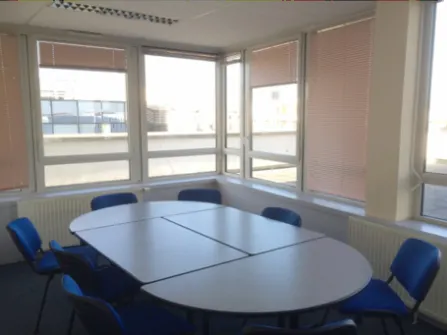


Figure 15.6: Conditions from a study of virtual environments (6A: Real meeting room; 6B: Virtual meeting room; 6C: Virtual artist’s
house, see Guegan, Nelson, & Lubart, 2018). Credits: J. Guegan & J. Nelson.
(c) a socio-emotional context that supports idea
cally present, termed “first life”). Using a standard divergent-thinking task to find unusual uses for a common object, we observed that students assigned to the “artist’s house” produced significantly more ideas than those in the virtual meeting room and the real meeting room (Guegan, Nelson & Lubart, 2017). These latter conditions did not differ significantly between each other. In addition to fluency, the originality of ideas showed the same pattern, favoring significantly the artist’s house condition. Thus, this study demonstrated the direct effect of the physical environment on creative output.
generation (such as a positive ambiance supported by “happy” colors and music).
A recent series of studies, looked at the effects of various environments using a virtual reality paradigm. Working within Linden Lab’s SecondLife, an online multi-user virtual environment, we created several workspaces, which were designed to represent a neutral meeting room and a supportive artist’s studio’ with many objects and attributes that previous research showed participants associate with a positive, creative space. These workspaces are illustrated in Figure 15.6. Students in preliminary studies described features of creative workspaces and these were then designed in the virtual world. New participants were assigned randomly to one of the rooms in this experimental study (in which they worked via their avatar), and a “real-life” control condition with a real meeting room was also included (in which participants worked being physi-
In another line of work, numerous studies focusing on organizational environments examined the social-contextual features related to creative workplace behavior. In most studies, respondents described their workplace by questionnaire and reported on their creative accomplishments. Based on the meta-analysis by Hunter, Bedell & Mumford (2007), there is clear evidence for the importance of
Psychology of Human Thought • Chapter 15 • 289
Lubart & Thornhill-Miller Creativity
(a) a positive social climate witinh a team, close
positive features supporting creativity (epitomized by Carl Roger’s theory of parents who provide psychological safety and freedom) and perhaps some negative conditions or hardships which help develop perseverance, motivation and other traits that are important for creativity (see Kohanyi, 2011).
colleagues and direct managers;
(b) the importance of a conducive “task” envi-
ronment that allows for autonomy, flexible work schedules, resource availability (including time), and goal setting that focuses on original productions; and
Historically, there are numerous examples of cultural spaces, like Florence in the Renaissance, late 16th century London, and early 20th century Paris, which illustrate the effects of a fertile setting for creative activity. These “creative cities” are typically located near other cultural centers, and offer the opportunity for multicultural experiences, which have also been positively linked to creativity. Creative cities provide a critical mass of people interested in cultural events and financial support for creative work which, in turn, attracts the creative class of artists, writers, designers, scientists and others in creative fields (Florida, 2005).
(c) an organizational mission statement, reward
structure, and top management support for creative work and risk taking.
Case studies in diverse fields, such as businesses inventing new products, provided further evidence for these findings. The invention of Post-Its® at 3M, for example, was facilitated by the presence of support for risk taking and trying new ideas (time and budget resources made explicitly available for such projects), support for idea development with internal competitions for new ideas and idea champions (who are resource people to help inventors move their project forward), and top management goals for the company to generate a large percentage of its future revenues from products that remain to be invented.
Research on cultural variations and creativity indicate that nuances of the definition of creativity, domains in which creative work is valued, and the extent to which creative work is encouraged are all subject to variation. Some cultures value the production that provides evidence of creative thinking whereas others focus relatively more on the creative act itself. In some cultures, creativity is more an individual act, whereas in others it is inherently more collective. Some cultures express a strong need for certainty or respect of tradition, which may place less value on risky, culturally novel endeavors (see Lubart, Glaveanu, De Vries, Camargo & Storme, 2019). According to the sociocultural approach, creativity is embedded as a phenomenon in a cultural time and space. It is inconceivable to separate creative thought from the cultural matrix that supports it and ultimately is shaped by it (Glaveanu et al., 2019).
Beyond the workplace, research has investigated a wide range of contexts from the family environment to macrosocial units such as cities, nations and international settings (Harrington, 2011). With respect to the family context, many important variables have been identified, including an enriched home environment with stimulating activities, access to cultural activities, role models of creative people (who may be a child’s own parents), a flexible parenting style that provides structure but also liberty, and support for a child’s expression of their originality, and perhaps idiosyncratic and imaginative interests. All of these factors are supportive of later creative development and accomplishment, according to biographical studies of eminent creators. However, some studies also point out that distress, trauma, stress and adversity that is also present in the family environment, may lead to resilience and character-building, which also serves to support later creative accomplishment (Kohanyi, 2011). There is therefore some evidence that family environments favoring creative development are complex, with some
15.5 Creations: The Nature of CreativeWork
The creative process results, in general, in a new state (outcome state) that is more or less different from the starting state (initial state). This new state may range from being slightly different to being
290 • Psychology of Human Thought • Chapter 15
Creations: The Nature of Creative Work Lubart & Thornhill-Miller
radically different from the initial state. In general, the new outcome state will be substantiated by a production—a “creation”—that was not present initially. For example, an artist may start with a blank canvas and he or she paints and transforms it into a painting. A writer may start with a blank page and a pen and end with a poem written on the page. These creations are “traces” indicating that a process was engaged. The creation, or production, may be tangible (such as a sculpture) or intangible (such as an idea). The extent to which the resulting creation is deemed to be original and valuable, however, is what will determine the creativity of the work. Not all creations are original or valuable. For example, a perfect copy of a famous painting is a creation; it may be valuable and appreciated by viewers for the technical skill that was required, but it is not original. To take another example, a very original sequence of words, generated perhaps by choosing words at random pages from a dictionary, that makes no sense to readers or the author him or herself, is a textual creation: a sequence of words. However, because it has no meaning, it is not considered creative. Thus, productions which are strange or bizarre and original but without value are not considered creative work.
the value of the work. Some authors have proposed creative product rating scales that help structure the judgment process by using a set of detailed descriptors. For example, Besemer and O’Quin (1986) have a rating scale in which descriptors concerning novelty, surprise, utility, authenticity, and other characteristics can be attributed to a product to code its degree of creativity. Studies of ratings on creativity as a global score, related to variability of diverse aspects of productions to be judged, show how judges may weigh more or less strongly the diverse criteria, and integrate the information about these criteria in various ways.
In general, the dual criteria of originality and value may have particular nuances in each domain of activity. For example, in engineering, the value may be the utility of an invention to solve an existing technical problem with a minimum of resources, whereas in visual arts, value may be framed in terms of the positive aesthetic experience or feeling of surprise or connection that the work produces in viewers. In addition, the relative importance of originality and value may differ in these two exemplary fields, engineering and visual art. Perhaps, for some, creativity judgments in the visual arts depend mainly on originality and secondarily on aesthetic value of the work, whereas in engineering, these two main criteria have equal importance.
The creative nature of a production can be determined by appreciating the originality and value of the work. In the first instance, creativity can be assessed by the creator, but ultimately, in most cases, this evaluation is made socially: there is a peer or expert review of the production, which situates the work with respect to other existing work. Thus, most creative work exists in a social setting, is destined to exist in a social context, and the evaluation is made by informed others. This social conception of creativity was formalized by Amabile (1996) in the “consensual assessment technique”. In this measurement approach, qualified judges evaluate independently a set of productions on a rating scale using their own criteria for creativity, and then the average judgment is calculated for each production. In most cases, the judges need to be knowledgeable in the domain to be assessed. Some studies have examined the criteria that judges use and the variability in these criteria across judges. In general, the most important criteria are originality (or novelty) and
The criterion of originality deserves special attention. It is possible to code originality in a statistical way, in terms of the prevalence with which an idea is produced in a given sample of people. Thus, when asked to list unusual uses for a box, a person may say it can be used to store things. This idea is quite common and not at all original. In contrast, the response that the box can be burned to provide a source of heat is quite rare, and statistically infrequent. It is “original” because it is rare or has a low frequency in a statistical sense. This statistical coding can provide support for evaluating the creativity of productions, but it has several limitations, including the significant burdens of requiring a comparison sample and the counting of the frequencies of all responses given for the task, as well as the fact that the value dimension is not taken into account.
A creation is a reflection of an individual’s creative ability and the environmental context that con-
Psychology of Human Thought • Chapter 15 • 291
Lubart & Thornhill-Miller Creativity
15.6 Consumption: The Adoption ofCreative Products
tributed to or supported the expression of this ability. It is possible that the judged creativity of a production (through social consensus of judges or by the creator him or herself) does not reflect the “true” originality or value of the work. In this case,
Creative productions are embedded in a social context, and may ultimately be adopted by it, becoming an accepted or important part of a particular culture or context. In the case of creativity in professional contexts, this is in principle one of the goals of the creative act. The “C” of consumption highlights the link between creativity and innovation. For many authors, an innovation refers to creativity in its applied context of consumption, with a focus on new products or services.
the judges may be biased and inaccurate estimators of the originality or value, because they may lack contextual knowledge of the field to ground their evaluation. Alternatively, the judgments of a work at the moment of the creative act do not reflect the potential value of the production in the future. Corazza (2016) suggested that the potential of a creation should also be considered when evaluating it. This potential can be linked to a work’s generative potential, what it may become in the future. This issue suggests that the creation is always contextdependent. A creation may also continue to evolve in terms of its value once it encounters the social world. For example, Nietzsche’s literary work was not particularly appreciated when he wrote it, but much later was evaluated by literary critics as very creative. Furthermore, as previously discussed, there are several kinds of creative contributions that range from advancing ideas within a paradigm to reorienting work in a new direction (Sternberg, Kaufman, & Pretz, 2002)
At a macro-economic level, the consumption of creative goods or services has been recognized as one of the main sources of long-term sustained economic growth since the industrial revolution (Lubart & Getz, 2011). Indeed, the creation of new products, new services, or more generally, new ideas that have some market value lead to opportunities to increase the diversity or quality of goods and services. Sometimes the introduction of new goods eliminates the value of previously existing goods, which Schumpeter (1942) called “creative destruction”. For example, the creation of automobiles has essentially eliminated the need for horse-pulled buggies. In general, novel productions or services that meet a need will attract attention and create economic growth. Thus, creativity is recognized by the Organization for Economic Cooperation and Development (OECD) as a crucial part of economic activity. In the educational domain, creativity is considered a 21st-century skill and the World Economic Forum lists creativity as a key capacity for employability in the next decade (World Economic Forum, 2016).
The originality and value of a creation is appreciated with respect to a culturally meaningful reference group. Some cultures especially value contributions that break with tradition, whereas other cultures value creations that work within traditions but renew or extend them. Some cultures value creative work in specific fields like science and technology more than others, such as the arts or humanities. Thus, just as originality is defined with reference to a comparison group, the value of creative contributions is also socio-culturally defined. For example, creative productions that contribute positively to societal development are generally valued across societies, but malevolent creativity, such as novel criminal activity, is not necessarily recognized as a creative production in every context due to the negative impact it has on society (Cropley, Cropley, Runco & Kaufman, 2010). This is, however, a subject of debate and related to cross-cultural variation in the conception and domains in which creativity is valued.
At the microeconomic level, some consumers are attracted to creative goods for their inherently stimulating value. They offer an unknown and a discoveryoriented experience, which the consumers value. To the extent that people seek these creative goods and services, the market will value these creative goods and potential creators will be attracted to invest their mental and financial resources in the production of more new ideas. Thus, the consumption of creativity fosters more creativity.
292 • Psychology of Human Thought • Chapter 15
Curricula: Developing Creativity Lubart & Thornhill-Miller
Some members of the public are more ready than others to adopt new ideas, new products, or new processes. The characteristics of lead users, or early adopters of creative goods, are somewhat similar to those who create themselves; they tend to be open minded, curious, and sometimes they are themselves creative individuals. Furthermore, it is possible to consider that when people consume creative goods, they may contribute themselves to inventing unexpected uses of the product. In some cases, consumers are directly involved in the product design process. This co-design, or user-based participatory design, illustrates how the public can be associated directly with the creative process.
ways by engaging in activities to discover concepts. In these pedagogies, domain-situated content (such as creating a school newspaper) is produced in the course of project activities in the classroom. Thus, these active pedagogies serve as a form of creativity training, by engaging pupils in creative activities and results comparing these types of pedagogies to more passive learning approaches suggest benefits for developing creativity (see Besançon & Lubart, 2016). A number of studies have examined how school grades are related to creative thinking. A metaanalysis by Gadja, Karwowski, and Beghetto (2017) showed the there was, in general a positive but weak correlation, suggesting that school performance was slightly related to creativity, which may be due to factors such as general motivation and knowledge of particular disciplines being important for both creativity and school achievement. Other research on characteristics that are important for creativity, such as risk taking and failure tolerance, suggest that school reward systems focusing on good grades for getting the “right” answer, may actually diminish risk taking behavior over the long term (Clifford, 1988). The impact of school environments on the development of creativity is a complex topic that is increasingly drawing attention (see Beghetto & Sriraman, 2017).
Another way in which consumers express their creativity is through the customization of products. Customization enhances the utility of a product, thanks to the creative act of the consumer. This customization can range from a small act of individual expression, such as decorating one’s computer with decals that reflect personal interests, to modifying a piece of standard furniture or painting a motorcycle in a special way. An example of largescale consumer participation in the creative process of product development is the invention of new SMS acronyms or abbreviations by telephone users that enhanced the value of SMS messages for communication by leading to a linguistic corpus of new shared terms that are particularly useful.
Second, there are training programs or activity modules which can foster creativity. These programs tend to focus either
15.7 Curricula: Developing Creativity
(a) on building up expertise about creativity and
its mechanisms by learning about the nature of creativity and practicing creative thinking, or
The term “Curricula” focuses on the development, education, or enhancement of creativity. This topic is the subject of growing interest at all levels of the educational system: primary, secondary, postsecondary, and continuing adult training. Here we can summarize several lines of work to provide a broad overview.
(b) learning specific techniques which are process-oriented skills or procedures that a person can implement to boost their creative thinking.
First, there are pedagogies that seek to stimulate creative thinking in a global way. These pedagogies have been most often used at the elementary and secondary-school levels. Two examples are Maria Montessori’s or Celestin Freinet’s approaches. These pedagogies can be considered active learning methods because the child thinks in inventive
In the first kind of learning programs, knowledge and expertise on creativity can be taught in order to raise awareness. For example, it is possible to explain the concept of creativity to children or adults, which will demystify it and facilitate the adoption of a view of creativity as an ability that can be devel-
Psychology of Human Thought • Chapter 15 • 293
Lubart & Thornhill-Miller Creativity
Table 15.2: Example Creativity Enhancing Strategies & Techniques.
Brainstorming-like techniques
A group of techniques that encourage the production or listing of ideas without constraints. They may involve differing rules about how ideas are generated and subsequently shared with other people, but tend to be more focused on exhaustive listing than on employing any specific technique for thinking differently.
“Brainstorming”: any of several variations on the classic creativity technique guiding individuals or groups to (a) generate as many new ideas as possible, (b) defer judgement and/or favor unusual ideas, and (c) encourage the integration and cross-fertilization of the ideas produced.
Osborn (1953)
“Brainwriting”: A variant of brainstorming which reduces some social pressures and group biases and enhances idea interactions by requiring participants to write down their ideas individually and silently share them with one another in a systematic, group format, thereby delaying public sharing and allowing ideas to interact and receive more equal consideration.
Rohrbach (1969)
Perspective- & Frame-changing Techniques
A broad family of techniques with different subtypes all aiming to change the frame of reference in which a topic or problem is considered. Deformation techniques produce new ideas by changing or distorting the topic or reality in some systematic way, for example by removing part of it, looking at it backwards, magnifying it, or making it smaller, seeking serendipitous input, etc.. Projective techniques involve using the imagination to place oneself in another mental perspective or another person’s emotional situation. These include role-playing games, empathy- or imagination-based projective profiling techniques, and other “detour” techniques to radically shift one’s point of view and processes of considering a problem.
“Lateral thinking”: Used as a generic term can refer to a large group of procedures helping to approach a problem from a new angle. For example, “deforming” the problem through exaggeration or minimization, reversing the order involved, deleting elements, or inverting the goal (i.e., if the goal is improving a product or a process, instead exploring all the ways to make it worse, as means of pursuing insights to make it better).
De Bono (2010)
“Disney method”: a process for creative generation attributed to film pioneered Walt Disney, according to which one produces ideas by taking on different roles and the thinking styles of the dreamer, the realist, and finally, the critic or spoiler in successive steps.
Dilts (1994)
“Daydream” (“Rêve éveillé”): A technique fostering a “detour” in perspective that involves pretending to enter into the world of dreams and imitating them in various ways, thus creating distance from reality and facilitating the emergence of new ideas.
Aznar (2005)
Continued on next page
oped. Another form of training provides examples of more and less creative productions so that people have a knowledge base against which they can compare their own ideas or judge other people’s ideas
(Storme et al.,2014). This knowledge about the criteria for creativity allows a person to be a better judge of their own ideas. Additionally, creativity can be taught through role modeling of creative be-
294 • Psychology of Human Thought • Chapter 15
Curricula: Developing Creativity Lubart & Thornhill-Miller
Table 15.2: Example Creativity Enhancing Strategies & Techniques. Continued from previous page.
Associative & analogic techniques
A group of techniques focused on making connections between the problem or topic of interest and other topics, ideas, or objects. The target for association can be unspecified and left open for individuals to freely find any and all relationships (in a manner more similar to brainstorming techniques). Or the targets can be “forced” on a particular topic, often requiring more remote associations and leading to more analogic thinking (in a manner similar to perspective- and frame-changing techniques).
“Mindmapping”: A drawing-based method of escaping linear thinking and generating new ideas by drawing the central concept in its web of associations with other issues, characteristics, and ideas.
Buzan & Buzan (1996)
“Bisociation”: A technique, and fundamental creative process, whereby two objects, frames of reference or systems of relationships that are usually separate, are combined or applied to each other allowing something new to emerge. Word puns or Edison’s combining the once separate ideas of “electricity” and “light” to invent the light bulb, are good examples.
Koestler (1964)
haviors demonstrated by the teacher, or case studies of creative people who can be sources of inspiration (see Starko, 2014; Kelly, 2016). Finally, some training programs, such as sequences of exercises to stimulate divergent thinking, have been developed (see Isaksen & Treffinger, 1985; Mansfield, Busse & Krepelka, 1978). These training sequences focus, in most cases, on practicing divergent thinking or insight problem solving and mental flexibility. Ma (2006) conducted a meta-analysis of the impact of these creativity training programs and found an average effect size of being able to boost creative thinking skills by a half a standard deviation after participation in a multi-week training program.
2017), a wide range of strategies and techniques have gained popularity due to their perceived practical value in applied situations. Although there is substantial overlap and they can be classified in different ways, a brief taxonomy of some important strategies and techniques might include at least three general categories which are presented in Table 15.2: brainstorming-like techniques, associative and analogic techniques, and perspective or frame-changing techniques (see Thornhill-Miller & Dupont, 2016; Debois et al., 2015, for more detailed taxonomies and further explanations).
The neurophysiological enhancement of creativity has recently become another prominent topic in the creativity-training literature. There are many competing neurobiological theories of creativity, ranging from hemisphere-dominance theories (see Mihov et al., 2010, for a review) and more specific regional specialization theories (e.g., Flaherty, 2005) to general neurological connectivity theories (e.g., Thalbourne, Houran, Alias, & Brugger, 2001) and lines of research now focusing on the brain activity at the moment of insight (Kounios & Beeman, 2014). The neuroscience of creativity is providing a growing understanding of the brain areas involved in creative thinking (e.g. Abraham, 2013; Arden et al., 2010; Beaty et al., 2016; Dietrich & Kanso, 2010; Gonen-
In terms of programs that teach specific creativitytechniques, these are often geared to adults in workplace contexts. The long history of idea-generating strategies and creative problem-solving techniques provides substantial support for the “trainability” of creativity on the individual and group levels (Nickerson, 1999; Scott, Leritz, & Mumford, 2004). From Osborn’s contributions to creative problem solving and the idea of “brainstorming” (Osborn, 1953) and Gordon’s (1961) synectics (an analogybased creativity technique), to Buzan and Buzan’s (1993) mindmapping (a visual representation technique) and more recent work on design thinking (e.g., Brown, 2008; Darbellay, Moody, & Lubart,
Psychology of Human Thought • Chapter 15 • 295
Lubart & Thornhill-Miller Creativity
Yaacovi et al., 2013; Jauk et al., 2013; Jung et al.,
found that 40% of their study participants who received tDCS over their anterior temporal lobes (in order to shift them toward right-hemispheric dominance) were able to solve a difficult insight problem (the “9 dot problem”) that none of the unstimulated participants in their study solved. Cerruti and Schlaung (2009) were able to use tDCS to enhance convergent creative thinking using the the Remote Associates Test. And Goel et al. (2015) have now also shown that it can be used to differentially modulate convergent/insight problem thinking and divergent thinking (see Zmigrod et al., 2015).
2010; Vartanian, Bristol & Kaufman, 2013). Martindale conducted an important series of experiments demonstrating that low cortical arousal was associated with superior performance on creative-thinking tasks, and creative individuals showed more variability in arousal especially during moments of creative inspiration (Martindale, 1978; 1999). He observed a clear decrease in levels of cortical arousal (as measured by alpha waves) among highly creative study participants as they shifted from analytic thinking to convergent creative thinking (on the Remote Associates Test) to divergent thinking (using the Alternate Uses Test). Similar results with different tasks and also suggesting differential recruitment of the parietal and frontal cortex of high versus low creatives have also appeared more recently (Jauk, Benedek, & Neubauer, 2012). Particular patterns of cortical arousal could be important to induce the different kinds of cognitive activation observed in successful execution of each stage of the creative process.
One major challenge that methods of brain stimulation must overcome to make even larger contributions to the enhancement of creativity (or the understanding of any complex state) is, of course, the difficulty of identifying the entire complex pattern of scattered activations involved in a particular mental state (e.g., the moment just before insight) or over time (e.g., during the different stages of the problem-solving process). Here the brain “connectome” approach—a wiring diagram or mapping of neural connections in the brain to study the structure of networks—is promising (Sporns, 2014, Deco et al., 2018 ). Much like biofeedback, neurofeedback based on EEG oscillations (alpha / beta) can be used to enhance cognition through mental training. Recently the causal role of beta oscillations on divergent thinking performance was highlighted in some seminal research showing that training self-control over brain activities specifically related to creative thinking could be particularly effective in producing a significant increase in individual creative potential (Agnoli, Zanon, Mastria, Avenanti, Corazza, 2018).
More directly important, however, is a strand of research on non-invasive brain stimulation (e.g., transcranial direct current stimulation techniques, tDCS, and transcranial alternating current stimulation, tACS). Transcranial stimulation of brain areas involves passing a weak electrical current between two poles over the scalp that modulates the excitability of neural tissue in the region, either increasing or decreasing it depending upon the polarity. Of particular interest, a small group of studies showed that tDCS and related techniques can enhance creative thinking and problem-solving ability. In one particularly dramatic example, Chi and Snyder (2012)
296 • Psychology of Human Thought • Chapter 15
Curricula: Developing Creativity Lubart & Thornhill-Miller
Summary
1. Creativity is a multifaceted phenomenon that can be understood by examining 7 aspects, called the 7 C’s: Creators (person-centered characteristics), Creating (the creative process), Collaborations (co-creating), Contexts (environmental conditions), Creations (the nature of creative work), Consumption (the adoption of creative products) and Curricula (developing creativity).
2. Creative people have a set of cognitive capacities, personality traits, affective and motivational characteristics that favor their engagement in original thinking.
3. Person-centered factors, environmental conditions and task-centered factors need to be jointly considered to describe creative potential and achievement.
4. The creative process involves multiple sub-processes, which can be described as divergentexploratory and convergent-integrative phases.
5. Creative potential and achievement can be measured with production tasks, and other assessment tools in diverse domains of expression.
6. Creativity can be collaborative and collective as expressed in team, group and societal forms of creativity.
7. Creativity is influenced by the physical and sociocultural context, which may boost or inhibit it, and direct creativity to certain expressive outlets.
8. Creativity is a topic that concerns both the production and the public who consum the creations, pointing to a co-constructive link between creators, consumers, and cultures.
9. Creativity can be developed through education. The school curriculum, or specific training activities and creativity techniques have been shown to boost original thinking in children and adults.

Review Questions
1. What mix of person-centered and environment-centered ingredients supports creativity?
2. Is creativity a general ability that unfolds in the same way across different tasks, domains, or contexts?
3. What makes a production creative?
4. How can we conceive of the adoption of creative ideas as part of creative activity?
5. How can creativity be enhanced or developed?
6. How does creativity relate to culture and manifest itself in different contexts?
Psychology of Human Thought • Chapter 15 • 297
Lubart & Thornhill-Miller Creativity
Hot Topic: Navigating the Future of Creativity
Complexity of measurement, Connected Constructs and Computer Technology
Readers might find it surprising that after almost a century of concerted empirical effort, the measurement of creativity actually remains a challenge in research and applied settings. Following the “multivariate approach” (discussed in section 15.1 and also illustrated by Table 15.1 and Figure 15.2), the authors have been developing the “Creative Profiler”, a multidimensional psychometric tool that gathers together research-validated measures of the full range of cognitive, conative, socio-emotional, and environmental resources that the literature suggests contribute to creative potential and performances of all kinds.

The Creative Profiler aims to enhance our understanding of creativity in general by offering “high resolution” mappings of the different resources that actually contribute to more or less creative performance in different professions (e.g., among designers, managers, lawyers, clinicians or teachers), in different domains (e.g. visual arts vs scientific research), or on different specific tasks (e.g. writing a poem vs writing a story). More information about the components, methods, and kinds of groups we are seeking to profile and train can be found on the Creativity and Innovation Profiling Project’s website, CreativityProfiling.org.
Todd Lubart
Creativity’s complexity and cultural embeddedness also links it to a constellation of other “hot topics” in psychology and society—such as leadership, intelligence, design, culture, and spirituality— many of which have also proven challenging to operationalize in research.
Creativity’s long association with “madness” in the popular imagination, for example, has now been scientifically redefined in a manner that suggests some of this creativity might be linked, instead, with group-enhancing and culture-shaping individual differences in the tendency to experience more wonder and/or to have more unusual emotional or mystical experiences (see Thornhill-Miller, 2007; 2014). In any event, the status of creativity as a universal human capacity and its close association with other quintessentially human activities—from art and spirituality, to language and scientific invention—has led both of us to reflect more deeply on the central role that creativity seems to play in the fundamental question of what it means to be human. Branden coined the terms “Homo mirans” (the “wondering ape”) and “Homo syntheticus” (the concept-synthesizing creature that lives more and more in a world of its own idiosyncratic and synthetic making) to address these definitively human phenomena (Thornhill-Miller, 2007; 2014). Todd Lubart has placed the entirety of the creative process squarely at the center of human identity, in his work by adopting the epithet “Homo creativus” (Lubart, Mouchiroud, Tordjman & Zenasni, 2015).

Branden Thornhill-Miller
Looking forward towards humanity’s creative future—computers and computational technologies offer an exciting new range of possibilities for both research and creativity enhancement, from artificial intelligence, brain-computer interfaces, and whole-brain emulation, to technologies of distributed creativity and direct brain stimulation—some of which we have already discussed. For both of us, however, our work in this area has focused more specifically on the ready accessibility of virtual reality technologies. Our research suggests virtual worlds offer great promise for exploring and expanding our understanding of human creativity (see Burkhardt & Lubart, 2010), and as a
298 • Psychology of Human Thought • Chapter 15
References Lubart & Thornhill-Miller
means of optimizing traditionally available creativity training and enhancement options (Thornhill- Miller & Dupont, 2016). As current reality now surpasses much of the science fiction of the recent past, it is only a matter of time before our creative capacities will again exceed our imaginations.
References
Burkhardt, J.-M., & Lubart, T. (2010). Creativity in the age of emerging technology. Creativity and Innovation
Management, 19(2), 160–166. doi:10.1111/j.1467-8691.2010.00559.x
Lubart, T., Mouchiroud, C., Tordjman, S. & Zenasni, F. (2015). Psychologie de la créativité. Paris: Armand
Colin.
Thornhill-Miller, B. (2007). The Experience of Religious Varieties: Psychology of Religion for the 21st Century.
65th Annual Minns Lecture Series, Harvard University, Boston, MA.
Thornhill-Miller, B. (2014). Creativity and religious experience: The potential contributions of a new
‘Extraordinary-Ordinary-Novelty-Sensitivity’ (EONS) theory of culture-shaping individual differences.
Oxford: University of Oxford.
Thornhill-Miller, B., & Dupont, J. (2016). Virtual reality and the enhancement of creativity and innova-
tion: Under-recognized potential among converging technologies? Journal for Cognitive Education andPsychology, 15(1), 102–121. doi:10.1891/1945-8959.15.1.102
References
Abraham, A. (2013). The promises and perils of the neu-
Aznar, G. (2005). Idées - 100 techniques de créativité
roscience of creativity. Frontiers in Human Neuro-science, 7(246). doi:10.3389/fnhum.2013.00246
pour les produire et les gérer. Paris: Eyrolles.
Baas, M., De Dreu, C. K., & Nijstad, B. A. (2008). A meta-
Agnoli, S., Zanon, M., Mastria, S., Avenanti, A.,
analysis of 25 years of mood-creativity research: Hedonic tone, activation, or regulatory focus? Psycholog-ical Bulletin, 134(6), 779–806. doi:10.1037/a0012815
& Corazza, G. E. (2018). Enhancing creative cognition with a rapid right-parietal neurofeedback procedure. Neuropsychologia, 118, 99–106. doi:10.1016/j.neuropsychologia.2018.02.015
Baer, J. (1993). Creativity and divergent thinking: A task-
specific approach. Hillsdale, NJ: Lawrence Erlbaum. doi:10.4324/9781315806785
Amabile, T. M. (1996). Creativity in context: Update
to the social psychology of creativity. Boulder, CO: Westview Press.
Batey, M., & Furnham, A. (2006). Creativity, intelligence, and personality: A critical review of the scattered literature. Genetic, Social, and Gen-eral Psychology Monographs, 132(4), 355–429. doi:10.3200/mono.132.4.355-430
Arden, R., Chavez, R. S., Grazioplene, R., Jung, R. E.
(2010). Neuroimaging creativity: A psychometric view. Behavioral Brain Research, 214(2), 143–156. doi:10.1016/j.bbr.2010.05.015
Beaty, R. E., Benedek, M., Silvia, P. J., & Schacter, D.
Lubart, T. & Getz, I. (2011). Economic perspectives on
L. (2016). Creative cognition and brain network dynamics. Trends in Cognitive Science, 20(2), 87–95. doi:10.1016/j.tics.2015.10.004
creativity. In M. A. Runco & S. R. Pritzker (Eds.), Encyclopedia of Creativity (Second Edition) (pp. 429– 434). San Diego: Academic Press.
Beghetto, R. A., & Corazza, G. E. (Eds.) (2019). Dy-
Averill, J. R. (1999). Individual differences in emotional
namic perspectives on creativity. New York: Springer. doi:10.1007/978-3-319-99163-4
creativity: Structure and correlates. Journal of Person-ality, 67(2), 331–371. doi:10.1111/1467-6494.00058
Psychology of Human Thought • Chapter 15 • 299
Lubart & Thornhill-Miller Creativity
Beghetto, R. A., & Kaufman, J. C. (2017). Nuturing cre-
Corazza, G. E. (2016). Potential originality and effectiveness: The dynamic definition of creativity. Creativity Research Journal, 28(3), 258–267. doi:10.1080/10400419.2016.1195627
ativity in the classroom (2nd Ed.). New York: Cambridge University Press. doi:10.1017/9781316212899
Beghetto, R. A., & Sriraman, B. (Eds.) (2017). Creative
contradictions in education. New York: Springer. doi:10.1007/978-3-319-21924-0
Cropley, D. H., Cropley, A. J., Kaufman, J. C., &
Runco, M. A. (Eds.) (2010). The dark side ofcreativity. New York: Cambridge University Press. doi:10.1017/cbo9780511761225
Berman, S., & Korsten, P. (2013). Embracing connectedness: Insights from the IBM 2012 CEO study. Strategy & Leadership, 41(2), 46–57. doi:10.1108/10878571311318240
Csikszentmihalyi, M. (1988). Society, culture, and person:
A systems view of creativity. In R. J. Sternberg (Ed.), The nature of creativity: Contemporary psychological
Besançon, M., & Lubart, T. I. (2008). Differences in the development of creative competencies in children schooled in diverse learning environments. Learning and Individual Differences, 18, 381–389. doi:10.1016/j.lindif.2007.11.009
perspectives (pp. 325–339). New York: Cambridge University Press.
Darbellay, F., Moody, Z., & Lubart, T. (Eds.) (2017). Cre-
ativity, design thinking and interdisciplinarity. Singapore: Springer. doi:10.1007/978-981-10-7524-7
Besemer, S., & O’Quin, K. (1986). Analyzing Creative
Products: Refinement and Test of a Judging Instrument. The Journal of Creative Behavior, 20(2), 115– 126. doi:10.1002/j.2162-6057.1986.tb00426.x
Davis, M. A. (2009). Understanding the relationship be-
tween mood and creativity: A meta-analysis. Orga-nizational behavior and human decision processes, 108(1), 25–38. doi:10.1016/j.obhdp.2008.04.001
Bierhoff, H. W., & Bierhoff-Alfermann, D. (1973). Per-
sonality characteristics and the prediction of social behavior. Archiv für Psychologie, 125(1), 50–72.
De Bono, E. (2010). Lateral thinking: A textbook of cre-
ativity. London: Penguin Books.
Brown, T. (2008). Design thinking. Harvard Business
Debois, F., Groff, A., & Chenevier, E. (2015). La boîte à
outils de la créativité (2nd edition). Malakoff, France: Dunod.
Review, 86(6), 84–92.
Buzan, T., & Buzan, B. (1993). The mind map book: Ra-
diant thinking, the major Evolution in human thought. London: BBC Books.
Deco, G., Cruzat J., Cabral, J., Knudsen, G. M.,
Carhart-Harris, R. L., Whybrow, P. C., Logothetis, N. K., & Kringelbach, M. L. (2018). Wholebrain multimodal neuroimaging model using serotonin receptor maps explains non-linear functional effects of LSD. Current Biology, 28(19), 3065–3074. doi:10.1016/j.cub.2018.07.083
Cerruti, C., & Schlaug, G. (2009). Anodal transcranial
direct current stimulation of the prefrontal cortex enhances complex verbal associative thought. Jour-nal of Cognitive Neuroscience, 21(10), 1980–1987. doi:10.1162/jocn.2008.21143
Dietrich, A., & Kanso, R. (2010). A review of EEG,
Chi, R. P., & Snyder, A. W. (2012). Brain stimulation enables the solution of an inherently difficult problem. Neuroscience Letters, 515(2), 121–124. doi:10.1016/j.neulet.2012.03.012
ERP, and neuroimaging studies of creativity and insight. Psychological Bulletin, 136(5), 822–848. doi:10.1037/a0019749
Dilts, R. B. (1994). Strategies of Genius: Aristotle, Sher-
Claridge, G. (Ed.). (1997). Schizo-typy:ImplicationsforIllnessandHealth. New York, NY: Oxford University Press. doi:10.1093/med:psych/9780198523536.001.0001
lock Holmes, Walt Disney, Wolfgang Amadeus Mozart(Vol. 1). Capitola: Meta Publications.
Dror, I. E. (2011). The paradox of human expertise: Why
experts get it wrong. In N. Kapur (Ed.), The paradoxi-cal brain (pp. 177–188). Cambridge: Cambridge University Press. doi:10.1017/cbo9780511978098.011
Clifford, M. M. (1988). Failure tolerance and academic
risk-taking in ten-to twelve-year-old students. BritishJournal of Educational Psychology, 58(1), 15–27. doi:10.1111/j.2044-8279.1988.tb00875.x
Dul, J. (2019). The physical environment and creativ-
ity. In J. C. Kaufman & R. J. Sternberg (Eds.) Cam-bridge handbook of creativity (2nd Edition)(pp. 481- 509). New York: Cambridge University Press.
Clydesdale, G. (2006). Creativity and competition: The
Beatles. Creativity Research Journal, 18(2), 129–139. doi:10.1207/s15326934crj1802_1
300 • Psychology of Human Thought • Chapter 15
References Lubart & Thornhill-Miller
Eysenck, H. J. (1995). Genius: The natural history of
Advancing Creativity Theory and Research: A Sociocultural Manifesto. The Journal of Creative Behavior. doi:10.1002/jocb.395
creativity. Cambridge: Cambridge University Press. doi:10.1017/cbo9780511752247
Farrell, M. P. (2001). Collaborative circles: Friendship
Glaveanu, V. P., Lubart, T., Bonnardel, N., Botella, M.,
dynamics and creative work (New edition). Chicago, IL: University of Chicago Press.
De Biasi, P.-M., De Sainte Catherine, M., Guillou, K., Kurtag, G., Mouchiroud, C., Storme, M., Wojtczuk, A., & Zenasni, F. (2013). Creativity as Action: Findings from Five Creative Domains. Fron-tiers in Educational Psychology, 4, 1–14. 10.3389/fpsyg.2013.00176
Feist, G. J. (1998). A meta-analysis of personality in scientific and artistic creativity. Personal-ity and Social Psychology Review, 2(4), 290–309. doi:10.1207/s15327957pspr0204_5
Feist, G. J., Reiter-Palmon, R., & Kaufman, J. C. (Eds.).
Goel, V., Eimontaite, I., Goel, A., & Schindler, I. (2015).
Differential modulation of performance in insight and divergent thinking tasks with tDCS. Journal ofProblem Solving, 8(1), 23–35. doi:10.7771/1932- 6246.1172
(2017). The Cambridge Handbook of Creativity andPersonality Research (Cambridge Handbooks in Psychology). Cambridge: Cambridge University Press. doi:10.1017/9781316228036
Gonen-Yaacovi, G., de Souza, L. C., Levy, R., Urbanski,
Finke, R. A., Ward, T. B., & Smith, S. M. (1992). Cre-
M., Josse, G., & Volle, E. (2013). Rostral and caudal prefrontal contribution to creativity: A meta-analysis of functional imaging data. Frontiers in Human Neu-roscience, 7(465). doi:10.3389/fnhum.2013.00465
ative cognition: Theory, research, and applications.Cambridge, MA: MIT Press.
Flaherty, A. W. (2005). Frontotemporal and dopamin-
ergic control of idea generation and creative drive. Journal of Comparative Neurology, 493(1), 147–153. doi:10.1002/cne.20768
Gordon, J. J. (1961). Synectics: The development of cre-
ative capacity (Vol. xi). Oxford, England: Harper.
Florida, R. (2005). Cities and the creative class. New
Gruber, H. E. (1981). Darwin on man: A psychological
study of scientific creativity. Chicago, IL: University of Chicago Press.
York: Routledge. doi:10.4324/9780203997673
Frensch, P. A., & Sternberg, R. J. (1989). Expertise and in-
telligent thinking: When is it worse to know better? In R. J. Sternberg (Ed.), Advances in the Psychology ofHuman Iintelligence (Vol. 5, pp. 157–188). Hillsdale, NJ: Lawrence Erlbaum Associates.
Guegan, J., Nelson, J., & Lubart, T. (2017). The re-
lationship between contextual cues in virtual environments and creative processes. Cyberpsychology,Behavior, and Social Networking, 20(3), 202–206. doi:10.1089/cyber.2016.0503
Gajda, A., Karwowski, M., & Beghetto, R. A. (2017). Cre-
Guilford, J. P, & Christensen, P. R. (1973). The one-way relation between creative potential and IQ. Journal of Creative Behavior, 7(4), 247–252. doi:10.1002/j.2162-6057.1973.tb01096.x
ativity and academic achievement: A meta-analysis. Journal of Educational Psychology, 109(2), 269. doi:10.1037/edu0000133
Gardner, H. (1993). Creating minds: An anatomy of
Guilford, J. P. (1985). The structure-of-intellect model. In
creativity seen through the lives of Freud, Einstein,Picasso, Stravinsky, Eliot, Graham, and Gandhi. New York: Basic Books.
B. B. Wolman (Ed.), Handbook of intelligence: Theo-ries, measurements, and applications (pp. 225–266). New York: Wiley.
Gippel, J. (2018). Crowdsourcing creativity and the theory and practice of organizational creative processes. ResearchGatePreprint. doi:10.13140/RG.2.2.30640.05125
Guilford, J. P. (1950). Creativity. American Psychologist,
5, 444–454. doi:10.1037/h0063487
Harrington, D. M. (2011). Creative Environments, Con-
Glaveanu, V. P (Ed), (2019). The creativity reader. New
ditions, and Settings. In M. A. Runco & S. R. Pritzker (Eds.), Encyclopedia of Creativity (Second Edition) (pp. 264–272). San Diego: Academic Press. doi:10.1016/b978-0-12-375038-9.00043-1
York: Oxford University Press.
Glaveanu, V. P., Hanchett Hanson, M., Baer, J., Barbot, B.,
Clapp, E. P., Corazza, G. E., Hennessey, B., Kaufman, J. C., Lebuda, I., Lubart, T., Montuori, A., Ness, I. J., Plucker, J., Reiter-Palmon, R., Sierra, Z., Simonton, D. K., Neves-Pereira, M. S., & Sternberg, R. J. (2019).
Hu, W., Wu, B., Jia, X., Yi, X., Duan, C., Meyer, W.,
& Kaufman, J. C. (2013). Increasing students’ scientific creativity: The “learn to think” intervention
Psychology of Human Thought • Chapter 15 • 301
Lubart & Thornhill-Miller Creativity
program. The Journal of Creative Behavior, 47(1), 3–21. doi:10.1002/jocb.20
Kohanyi, A. (2011). Families and creativity. In M. A.
Runco & S. R. Pritzker (Eds.), Encyclopedia of cre-ativity (pp. 503–508). San Diego, CA: Academic Press. doi:10.1016/b978-0-12-375038-9.00096-0
Hunter, S. T., Bedell, K. E., & Mumford, M. D.
(2007). Climate for creativity: A quantitative review. Creativity Research Journal, 19(1), 69–90. doi:10.1080/10400410709336883
Kounios, J., & Beeman, M. (2014). The cognitive neu-
roscience of insight. Annual Review of Psychology, 65(1), 71–93. doi:10.1146/annurev-psych-010213- 115154
Isaksen, S. G., & Treffinger, D. J. (1985). Creative prob-
lem solving: The basic course. Buffalo, NY: Bearly Ltd.
Kuhn, T. S. (2012). Thestructureofscien-tific revolutions. University of Chicago Press. doi:10.7208/chicago/9780226458144.001.0001
Jauk, E., Benedek, M., & Neubauer, A. C. (2012). Tack-
ling creativity at its roots: Evidence for different patterns of EEG alpha activity related to convergent and divergent modes of task processing. Interna-tional Journal of Psychophysiology, 84(2), 219–225. doi:10.1016/j.ijpsycho.2012.02.012
Lubart, T. I. (1999). Componential models of creativity.
In M. A. Runco & S. R Pritzer (Eds.), Encyclopediaof creativity (pp. 295–300). New York: Academic Press.
Jauk, E., Benedek, M., Dunst, B., & Neubauer, A. C.
Lubart, T. I. (2001). Models of the creative process: Past,
(2013). The relationship between intelligence and creativity: New support for the threshold hypothesis by means of empirical breakpoint detection. Intelligence, 41(4), 212–221. doi:10.1016/j.intell.2013.03.003
present and future. Creativity Research Journal, 13(3– 4), 295–308. doi:10.1207/s15326934crj1334_07
Lubart, T. (2017). The 7 C’s of creativity. Journal of Cre-
ative Behavior, 51(4), 293–296. doi:10.1002/jocb.190
John-Steiner, V. (2006). Creative Collaboration(New edition). Oxford: Oxford University Press. doi:10.1093/acprof:oso/9780195307702.001.0001
Lubart, T. (Ed.) (2018). The creative process: Per-spectives from multiple domains. London: Palgrave. doi:10.1057/978-1-137-50563-7
John-Steiner, V., & Mahn, H. (1996). Sociocultural ap-
Lubart, T. I., Besançon, M., & Barbot, B. (2011). EPoC:
proaches to learning and development: A Vygotskian framework. Educational Psychologist, 31(3–4), 191– 206. doi:10.1207/s15326985ep3103&4_4
Evaluation du potentiel créatif / Evaluation of Cre-ative Potential (Test et manuel). Paris: Hogrefe.
Lubart, T., Glaveanu, V. P., de Vries, H., Camargo, A., &
Jung, R. E., Segall, J. M., Bockholt, H. J., Flores, R. A.,
Storme, M (2019). Cultural perspectives on creativity. In J. C. Kaufman & R. J. Sternberg (Eds.), Cambridgehandbook of creativity (2nd Edition) (pp. 421–447). New York: Cambridge University Press
Smith, S. M., Chavez, R. S., & Haier, R. J. (2010). Neuroanatomy of creativity. Human Brain Mapping, 31(3), 398–409. doi:10.1002/hbm.20874
Karwowski, M., Dul, J., Gralewski, J., Jauk, E.,
Ma, H.-H. (2006). A synthetic analysis of the effective-
Jankowska, D. M., Gajda, A., ... & Benedek, M. (2016). Is creativity without intelligence possible? A necessary condition analysis. Intelligence, 57, 105– 117. doi:10.1016/j.intell.2016.04.006
ness of single components and packages in creativity training programs. Creativity Research Journal, 18(4), 435–446. doi:10.1207/s15326934crj1804_3
Mansfield, R. S., Busse, T. V., & Krepelka, E. J.
Kaufman, J. C., & Beghetto, R. A. (2009). Beyond big and
(1978). The effectiveness of creativity training. Review of Educational Research, 48(4), 517–536. doi:10.3102/00346543048004517
little: The four c model of creativity. Review of Gen-eral Psychology, 13(1), 1–12. doi:10.1037/a0013688
Kelly, R. (2016). Creative development.Edmonton, Canada: Brush Education.
Martindale, C. (1978). Creativity, consciousness, and
cortical arousal. Journal of Altered States of Con-sciousness, 3(1), 69–87.
Kim, K. H. (2005). Can only intelligent people be cre-
ative? A meta-analysis. Journal of Secondary GiftedEducation, 16(2–3), 57–66. doi:10.4219/jsge-2005- 473
Martindale, C. (1999). Biological bases of creativity.
In R. J. Sternberg (Ed.), Handbook of creativity (pp. 137–152). New York: Cambridge University Press. doi:10.1017/cbo9780511807916.009
Koestler, A. (1964). The act of creation. New York: Basic
Books.
302 • Psychology of Human Thought • Chapter 15
References Lubart & Thornhill-Miller
Mednick, S. (1962). The associative basis of the cre-
Runco, M. A., & Jaeger, G. J. (2012). The Standard defini-
ative process. Psychological Review, 69(3), 220–232. doi:10.1037/h0048850
tion of creativity. Creativity Research Journal, 24(1), 92–96. doi:10.1080/10400419.2012.650092
Mihov, K. M., Denzler, M., & Förster, J. (2010).
Sadler-Smith, E. (2015). Wallas’ four-stage model of the creative process: More than meets the eye? Creativity Research Journal, 27(4), 342–352. doi:10.1080/10400419.2015.1087277
Hemispheric specialization and creative thinking: A meta-analytic review of lateralization of creativity. Brain and cognition, 72(3), 442–448. doi:10.1016/j.bandc.2009.12.007
Sawyer, K. (2017). Group genius: The creative power of
collaboration (2nd edition). New York: Basic Books.
Mullen, B., Driskell, J. E., & Salas, E. (1998). Meta-
analysis and the study of group dynamics. GroupDynamics: Theory, Research, and Practice, 2, 213– 229. doi:10.1037//1089-2699.2.4.213
Sawyer, R. K. (2010). Individual and group creativity.
In J. C. Kaufman & R. J. Sternberg (Eds.), Cam-bridge handbook of creativity (pp. 366–380). Cambridge: Cambridge University Press. doi:10.1017/ CBO9780511763205.023
Mumford, M. D., Mobley, M. I., Reiter-Palmon, R., Uhlman, C. E., & Doares, L. M. (1991). Process analytic models of creative capacities. Creativity Research Journal, 4(2), 91–122. doi:10.1080/10400419109534380
Schumpeter, J. (1942). Creative destruction. Capitalism,
Socialism and Democracy, 825, 82–85.
Scott, G., Leritz, L. E., & Mumford, M. D. (2004). The
Nickerson, R. S. (1999). Enhancing creativity. In R. J. Sternberg (Ed.), Handbook of creativity (pp. 392–430). New York: Cambridge University Press. doi:10.1017/cbo9780511807916.022
effectiveness of creativity training: A quantitative review. Creativity Research Journal, 16(4), 361–388. doi:10.1207/s15326934crj1604_1
Simonton, D. K. (1984). Genius, creativity and lead-
Osborn, A. F. (1953). Applied imagination. Principles
ership. Cambridge: Harvard University Press. doi:10.4159/harvard.9780674424753
and procedures of creative problem solving. New York: Charles Scribner’s Sons.
Sio, U. N., & Ormerod, T. C. (2009). Does incubation enhance problem solving? A meta-analytic review. Psychological Bulletin, 135(1), 94–120. doi:10.1037/a0014212
Paulus, P. B., Dzindolet, M., & Kohn, N. W. (2012). Col-
laborative creativity—Group creativity and team innovation. In M. D. Mumford (Ed.), Handbook of or-ganizational creativity (pp. 327–357). San Diego: Academic Press. doi:10.1016/B978-0-12-374714- 3.00014-8
Sporns, O. (2014). Contributions and challenges for net-
work models in cognitive neuroscience. Nature Neu-roscience, 17(5), 652–660. doi:10.1038/nn.3690
Pringle, A., & Sowden, P. T. (2017). Unearthing the
Starko, A. J. (2014). Creativity in the classroom: Schools
creative thinking process: Fresh insights from a think-aloud study of garden design. Psychology ofAesthetics, Creativity, and the Arts, 11(3), 344-358.
of curious delight (5th edition). New York: Routledge.
Sternberg, R. J. (2017). A straight-A model of the creative
doi:10.1037/aca0000144
process and its relation to intelligence. Journal ofCreative Behavior, doi:10.1002/jocb.223.
Puccio, G. J., & Cabra, J. F. (2009). Creative problem solving: Past, present and future. The Routledge companion to creativity, 327–337.
Sternberg, R. J., Kaufman, J. C., & Pretz, J. (2002). The
creativity conundrum: A propulsion model of kinds ofcreative contributions. New York: Psychology Press. doi:10.4324/9780203759615
doi:10.4324/9780203888841.ch27
Puccio, G. J., Mance, M., & Murdock, M. C. (2010).
Creative Leadership: Skills That Drive Change. Los Angeles, CA: SAGE Publications.
Sternberg, R. J., & Davidson, J. E. (1995). Thenature of insight. New York: MIT Press. doi:10.7551/mitpress/4879.001.0001
Ridley, M. (2010). The Rational Optimist. New York:
Harper Collins. doi:10.1016/s0262-4079(10)61556-4
Sternberg, R. J., & Lubart, T. I. (1995). Defying the crowd:
Cultivating creativity in a culture of conformity. New York: Free Press.
Rohrbach, B. (1969). Kreativ nach Regeln – Methode
635, eine neue Technik zum Lösen von Problemen (Creative by rules - Method 635, a new technique for solving problems). Absatzwirtschaft, 12, 73–75.
Storme, M., Myszkowski, N., Çelik, P., & Lubart, T.
(2014). Learning to judge creativity: The underly-
Psychology of Human Thought • Chapter 15 • 303
Lubart & Thornhill-Miller Creativity
ing mechanisms in creativity training for non-expert judges. Learning and Individual Differences, 32, 19– 25. doi:10.1016/j.lindif.2014.03.002
Wallach, M. A., & Kogan, N. (1965). Modes of thinking
in young children. Oxford, England: Holt, Rinehart & Winston.
Thalbourne, M. A., Houran, J., Alias, A. G., & Brugger,
World Economic Forum. (2016). The Future of Jobs:
P. (2001). Transliminality, brain function, and synesthesia. The Journal of Nervous and Mental Disease, 189(3), 190–192. doi:10.1097/00005053-200103000- 00009
Emplyment, Skillls, and Workforce Strategy for theFourth Industrial Revolution (p. 167). Retrieved from
http://www3.weforum.org/docs/WEF_Future_of_Jo bs.pdf
Thornhill-Miller, B., & Dupont, J. (2016). Virtual re-
Wuchty, S., Jones, B. F., & Uzzi, B. (2007). The in-
ality and the enhancement of creativity and innovation: Under-recognized potential among converging technologies? Journal for Cognitive Educationand Psychology, 15(1), 102–121. doi:10.1891/1945- 8959.15.1.102
creasing dominance of teams in production of knowledge. Science, 316(5827), 1036–1039. doi:10.1126/ science.1136099
Yokochi, S., & Okada, T. (2005). Creative cognitive pro-
cess of art making: A field study of a traditional Chinese ink painter. Creativity Research Journal, 17(2– 3), 241–255. doi:10.1080/10400419.2005.9651482
Thornhill-Miller, B., & Muratovski, G. (2016). Design Leadership and Leadership by Design. Jour-nal of Design, Business & Society, 2(1), 3–7. doi:10.1386/dbs.2.1.3_2
Yu, L. L., Nickerson, J. V., & Sakamoto, Y. (2012). Collec-
tive creativity: Where we are and where we might go (SSRN Scholarly Paper No. ID 2037908). Rochester, NY: Social Science Research Network. Retrieved from https://papers.ssrn.com/abstract=2037908
Torrance, E. (1974). Torrance test of creativity thinking:
Norms technical manual. Bensenville, IL: Scholastic Testing Service.
Urban, K. K. (2005). Assessing creativity: The Test for
Zmigrod, S., Colzato, L. S., & Hommel, B. (2015). Stimu-
Creative Thinking-Drawing Production (TCT-DP). In-ternational Education Journal, 6(2), 272–280.
lating creativity: Modulation of convergent and divergent thinking by transcranial direct current stimulation (tDCS). Creativity Research Journal, 27(4), 353–360. doi:10.1080/10400419.2015.1087280
Vartanian, O., Bristol, A. S., & Kaufman, J. C.
(2013). Neuroscience of creativity. Cambridge, MA: MIT Press. doi:10.7551/mitpress/9780262019583. 001.0001
304 • Psychology of Human Thought • Chapter 15
Glossary Lubart & Thornhill-Miller
Glossary
brainstorming A technique proposed initially by
creativity techniques A range of specific proce-
Alex Osborn to encourage the unrestrained production of ideas. 285
dures that structure the work process in order to facilitate the generation of creative ideas. 295
creative potential The latent capacity that might
be developed into creative achievements given sufficient environmental support and opportunity. 279
divergent thinking Capacity to generate a variety
of ideas or solutions through an idea search conducted in multiple directions in order to obtain a large number of possibilities. 283
creative process The sequence of thoughts and
actions that characterizes the generative act, resulting in an original, valuable production. 290
innovation The generation, development, promo-
tion, adoption, assimilation, and exploitation of novelty that offers economic and social value. 287
creativity Ability to generate productions that are
novel and valuable in their context. 277
Psychology of Human Thought • Chapter 15 • 305